Hello everyone!
Still exploring Saitama Prefecture in depth these days… it’s Nobuyo (@nobuyo5696)!
The eastern area of Saitama Prefecture is home to a ton of day-trip hot spring facilities.
Each of them has its own unique character, and it’s great being able to choose one based on your preferences and purpose.
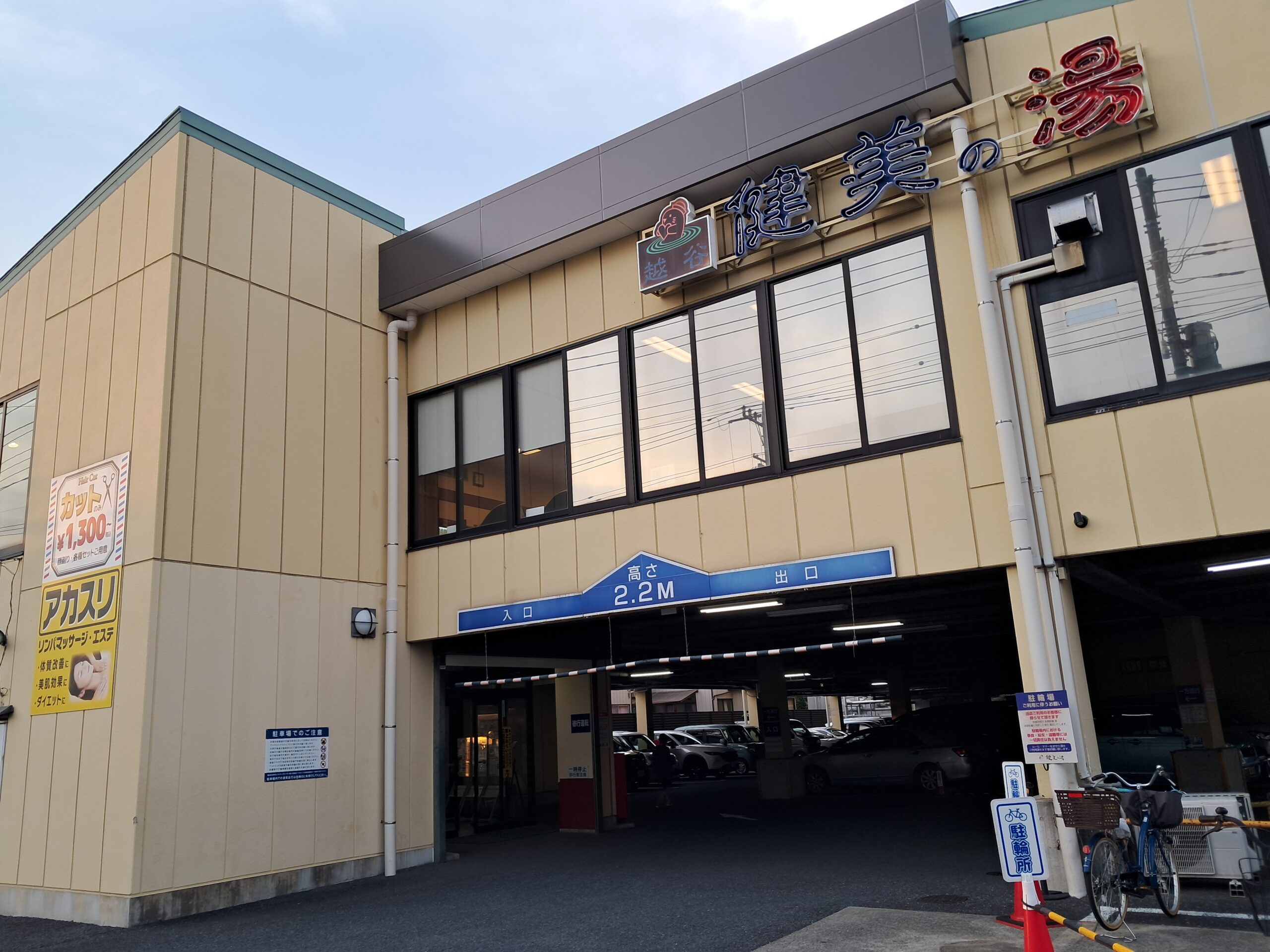
The place I visited this time is Koshigaya Kenbi no Yu, located in Koshigaya City, which boasts the largest population in eastern Saitama.
It’s a facility like a so-called “well-established super sento,” loved by the locals.
Both the exterior and interior of Koshigaya Kenbi no Yu feel like a scaled-up version of a Showa-era public bath.
Although the interior has been renovated, it’s a facility with a nostalgic atmosphere that gives off an indescribable retro vibe.
First of all, I have to mention that Koshigaya Kenbi no Yu is not a natural hot spring.
Personally, I consider “a bath facility without hot springs = super sento” and think of it as a different genre from a “day-trip hot spring,” but Koshigaya Kenbi no Yu goes beyond such genre classifications and was quite a fun place.
Even though it’s not a natural hot spring, the variety of bathtubs is richer than you might imagine.
There’s a highly concentrated carbonated spring, which is probably the highest concentration in history, and bathtubs using water from famous hot springs all over Japan. As for saunas, there are two types.
Because of that, I decided to include Koshigaya Kenbi no Yu in my “Day-trip Hot Spring Tour” series.
What kind of place is it…? Let’s sneak in together and find out!
Basic Information on Koshigaya Kenbi no Yu
What kind of place is Koshigaya Kenbi no Yu?
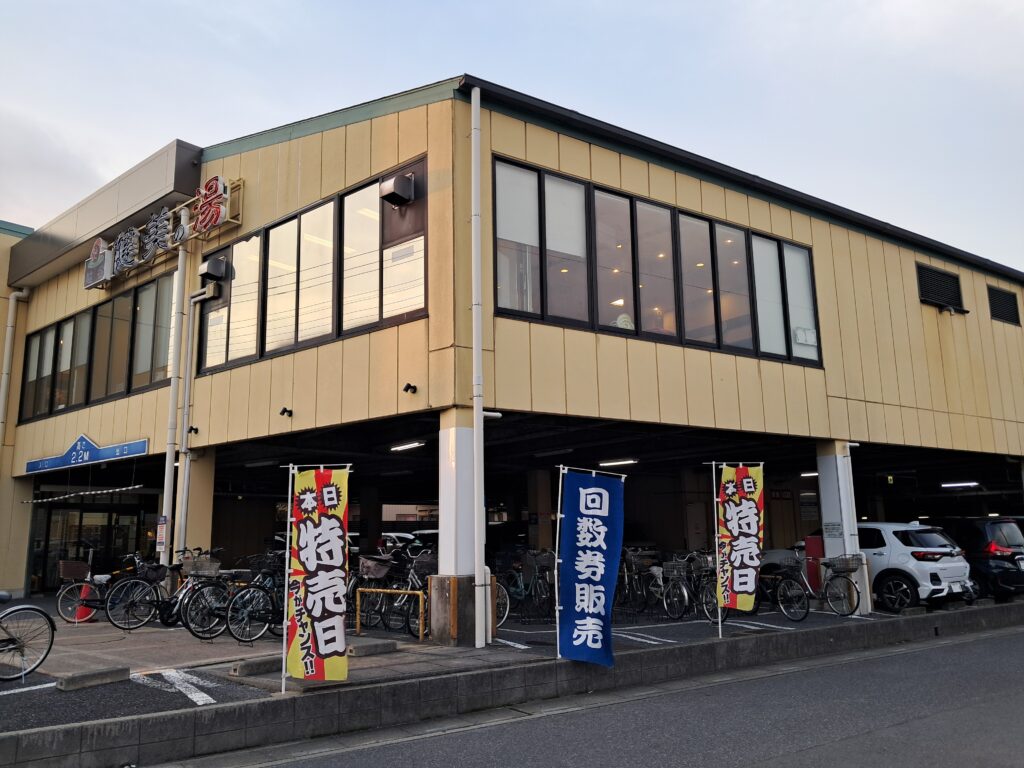
Koshigaya Kenbi no Yu is located in the area around Koshigaya Station on the Tobu Skytree Line.
Being close to the center of Koshigaya City, a major city in eastern Saitama, residential areas stretch out endlessly all around it.
The building of Koshigaya Kenbi no Yu has two stories, but it has a strange layout where almost the entire first floor is a parking lot.
Only the entrance and the shoe locker zone are on the first floor, and everything else spreads out across a single floor on the second floor.
The exterior looks exactly like a Showa-era super sento, and my first impression was “How austere…”
When you go up the stairs and reach the second floor, the austerity fades a bit, but you can still strongly feel the Showa-style atmosphere. ▼
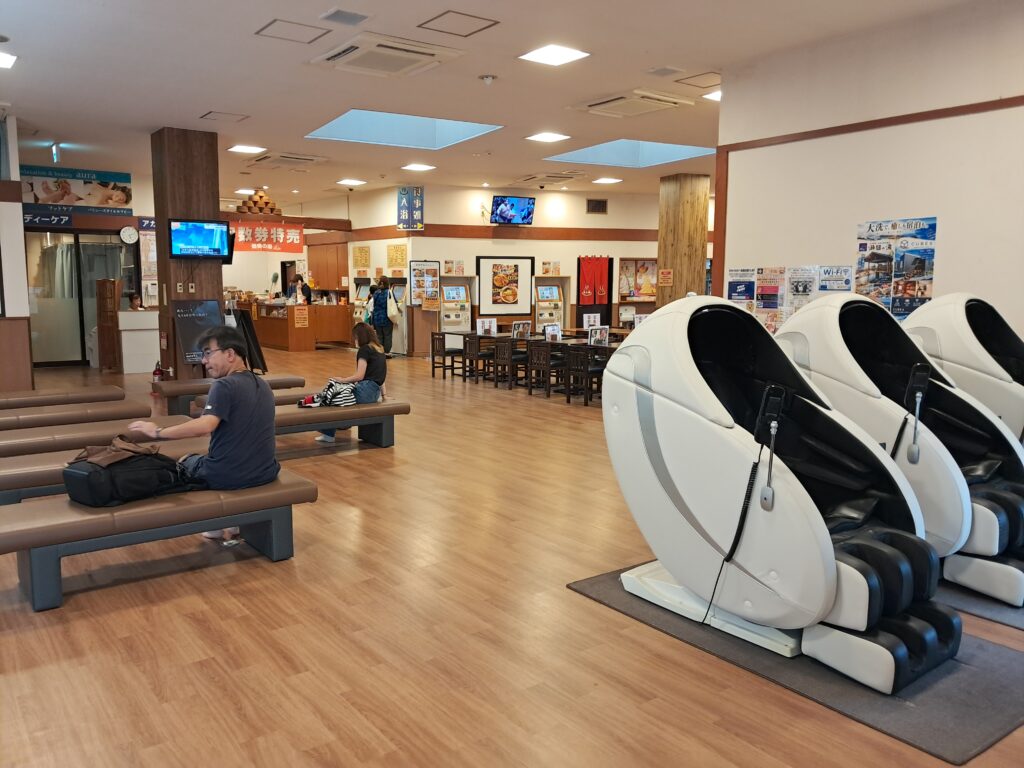
The first things you see after climbing the stairs are a barber shop and a relaxation space.
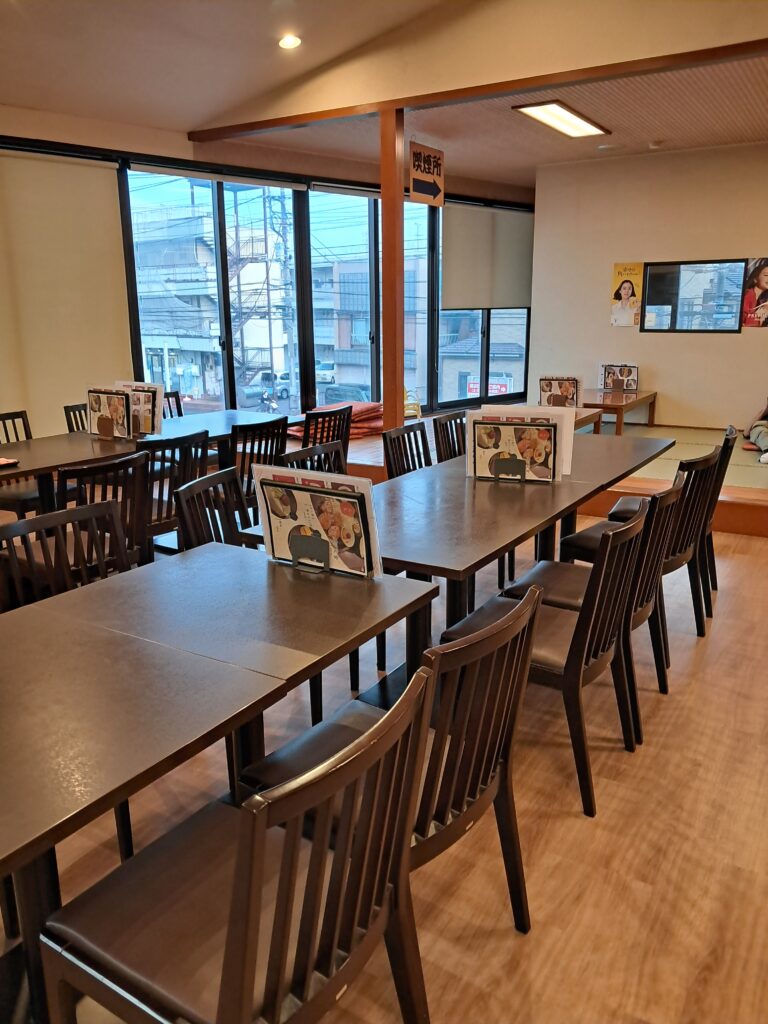
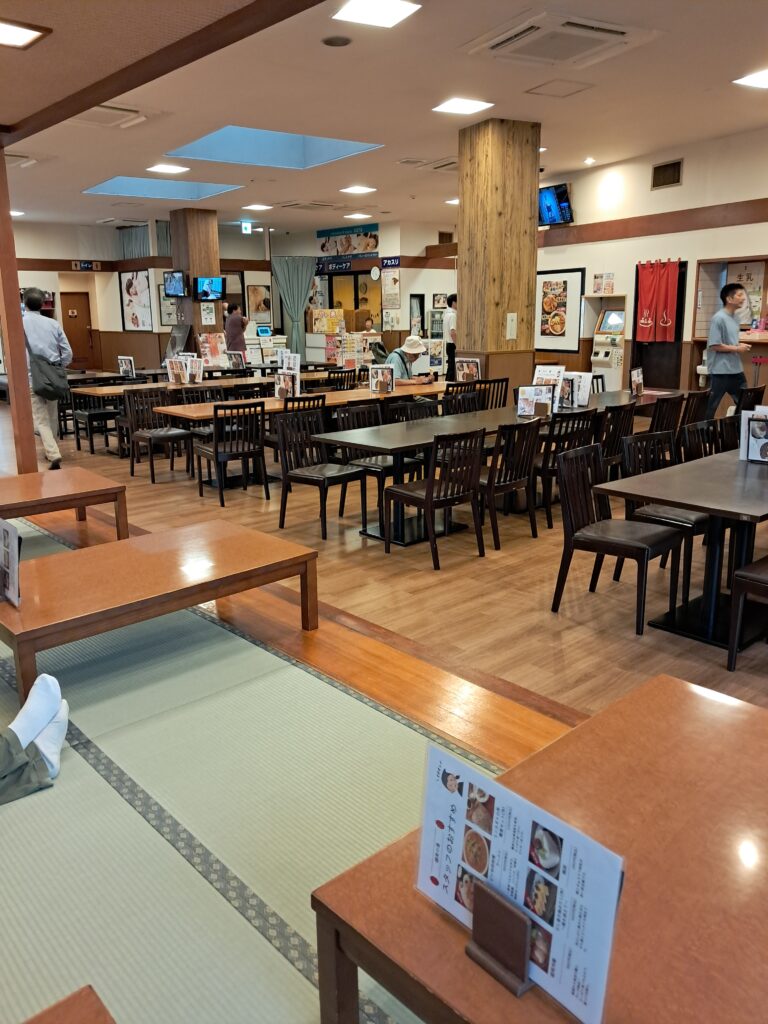
Beyond that is a large hall, which serves as both the dining area for the restaurant and a rest area.
This large hall has large windows, and I had a good impression of it having an unexpectedly open feel despite being indoors.
Since the reception counter and the large public baths are located further back in the large hall, it features a strange layout where you enter the restaurant area before going through the admission procedures.
The site area is by no means large, but perhaps because the flow of movement is well organized, it doesn’t feel cramped at all.
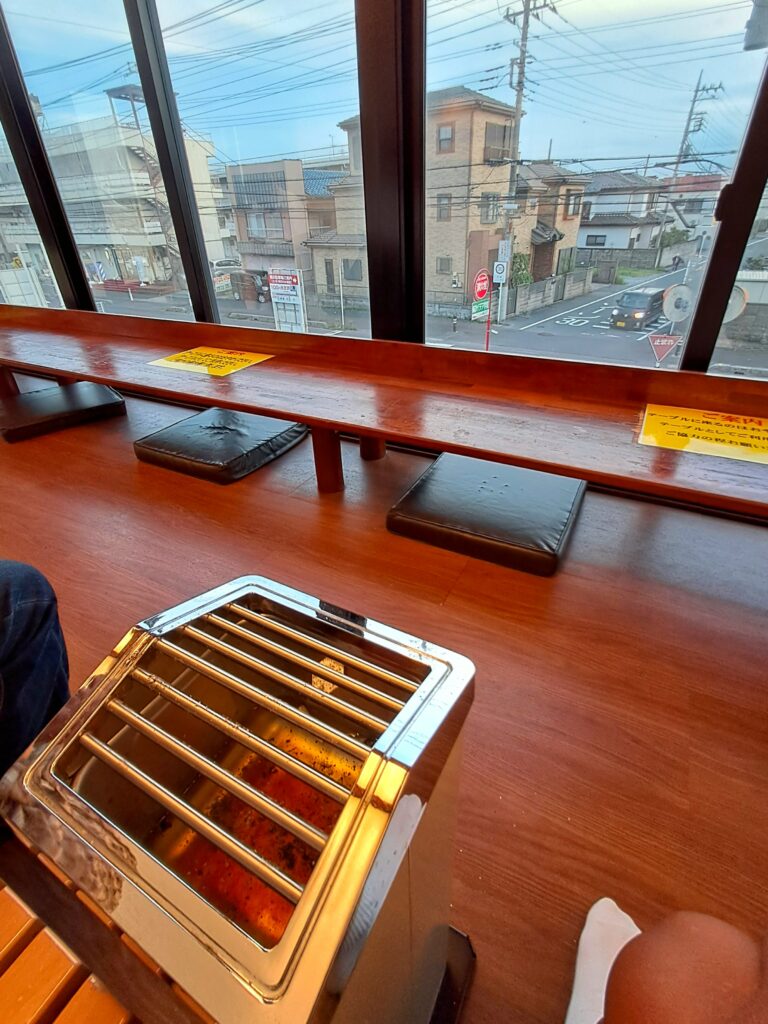
However, the fact that the overall Showa-style sense is strong might divide opinions.
Including the feel of the lighting, the taste of the interior, and even the size of the smoking area, there’s an atmosphere as if time has stopped somewhere (Does the overly spacious smoking area reflect Koshigaya’s high smoking rate?)
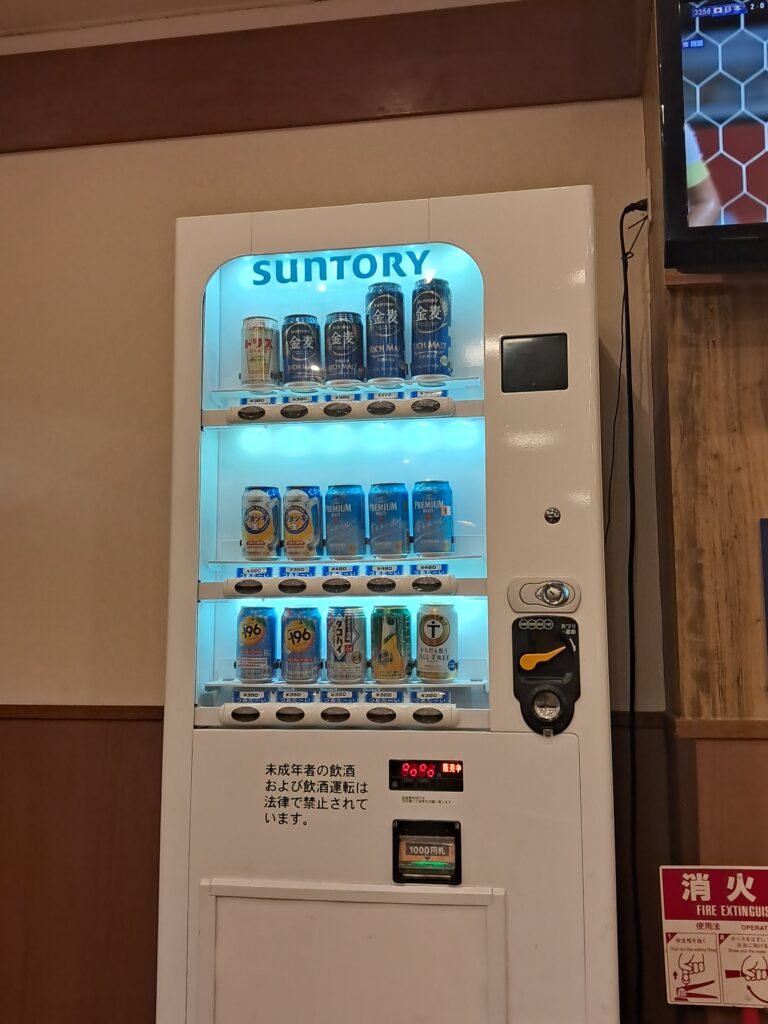
So, in a word, it feels “weathered by time,” but the inside has been properly renovated, and there’s no issue with cleanliness.
Since the fine details inevitably show how well-worn it is, “a facility that is a cleaned-up and enlarged Showa-era sento” might be the most accurate description.
Koshigaya Kenbi no Yu: Hours | Fees | System | Facilities
Here is the basic information for Koshigaya Kenbi no Yu.
The biggest points to note are that once you leave the dressing room, you cannot re-enter, and only cash is accepted.
The system at Kenbi no Yu is truly “THE Showa.”
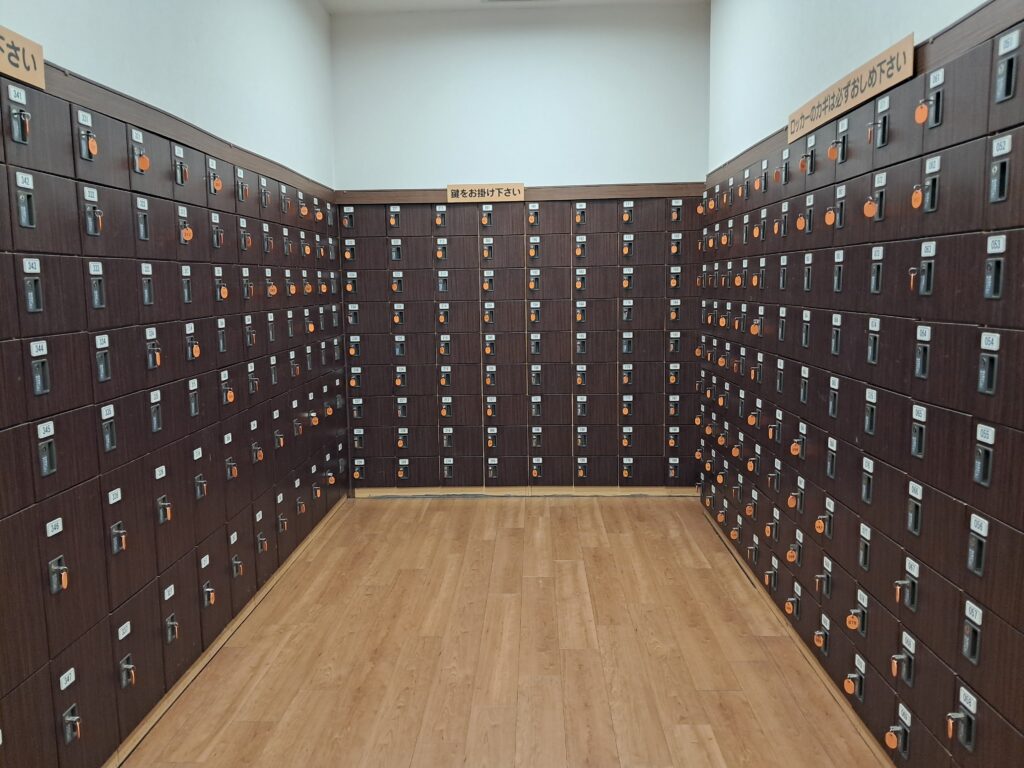
It uses a format where you keep the key to the shoe locker you put your shoes in upon entering, and there are no wristbands for in-facility payments.
Furthermore, it’s a bit of a hassle that a ¥100 coin is required to lock your locker in the dressing room (there is a change machine / the ¥100 coin is returned when you leave).
The dressing room locker key is separate from the shoe locker key, and you can pick any locker you like.
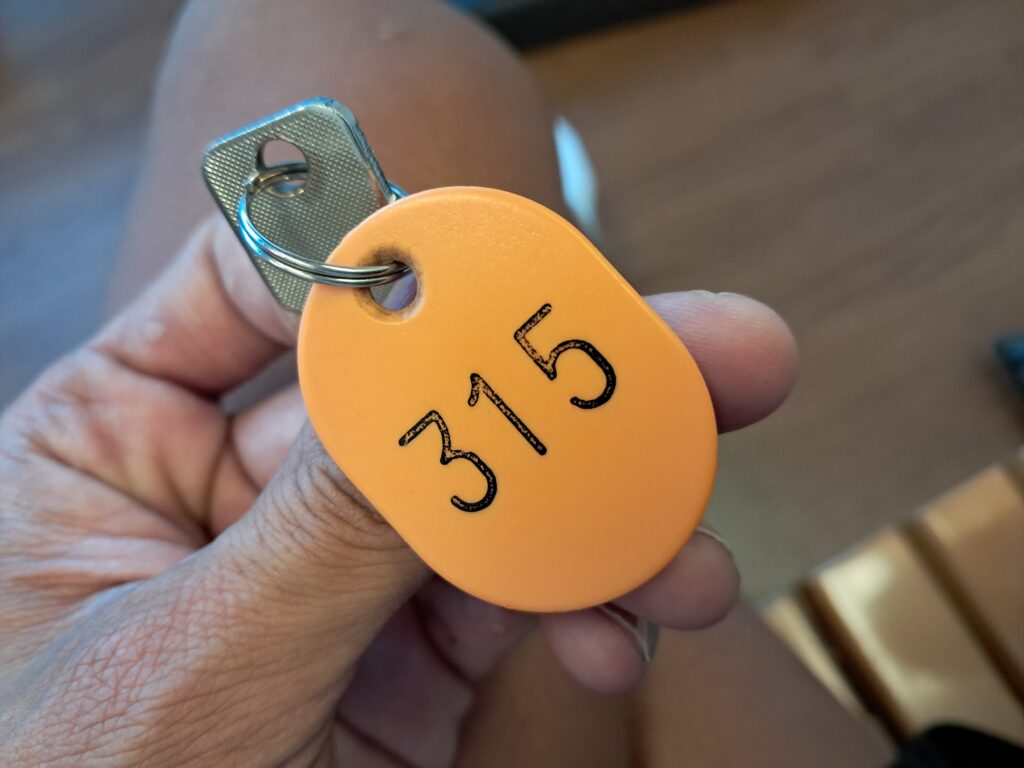
And something you absolutely must know is that Koshigaya Kenbi no Yu has a system where once you leave the large public bath & dressing room, you cannot re-enter.
If you want to re-enter, you have to buy a new admission ticket.
Nowadays, at most day-trip hot springs and super sentos, it’s normal to be able to bathe as many times as you like: bathe → eat → bathe → rest… but at Koshigaya Kenbi no Yu, you basically only get to bathe once.
In other words, your only choice is the flow of bathing → eating & resting → leaving, so it is not suited for people who want to spend the whole day relaxing.
For me, since I’m the type who wants to “stay for a long time and be completely healed while I’m at it,” I’m highly dissatisfied with this mysteriously stingy no-re-entry system. It’s not like the hot water decreases no matter how many times you bathe…
It’s probably a system aimed at easing congestion, but I wish they would create a plan where you can re-enter for an extra ¥100 or ¥200 on top of the general admission.
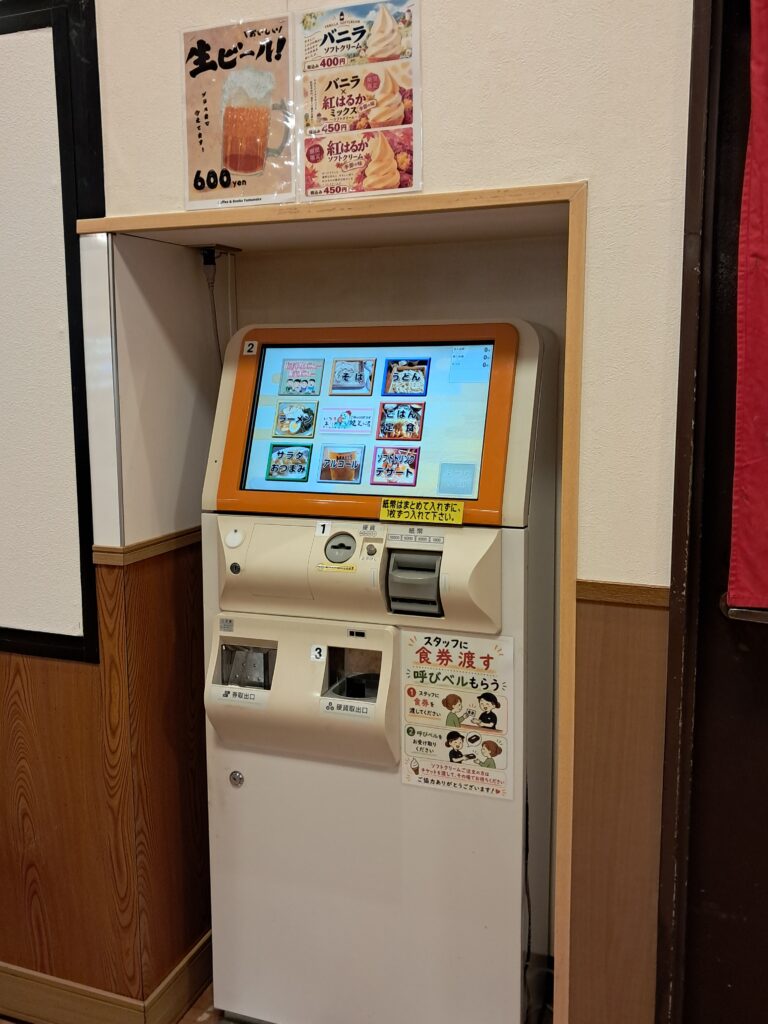
Because of all this, the system at Kenbi no Yu is quite analog and baffling in many ways.
However, it’s strange that it’s only partially mechanized—like buying admission tickets at a vending machine / meal tickets at a vending machine…
What makes it even more peculiar is that both the admission ticket machine and the meal ticket machine only accept cash.
Credit cards are naturally unusable, and smartphone payments cannot be used either. It’s cash only.
As for amenities, they feel like the bare minimum. Shampoo, body soap, and hair dryers can be used for free, but there’s no lotion or milky lotion in the men’s bath.
Also, since there are no facilities like a hot stone sauna (ganban-yoku), it really feels like “a place to just take a bath, eat a meal, and go home.”
Koshigaya Kenbi no Yu: Water Quality | Heating System
I’ll say it again, but Koshigaya Kenbi no Yu is not a natural hot spring.
So does it only have bathtubs filled with plain hot water? Well, that’s not the case.
The indoor bath has an “Event Bath,” which is a bath with bath salts added, and the open-air area has a bathtub named “Yumeguri no Yu” (Hot Spring Tour Bath).
This “Yumeguri no Yu” uses hot spring essences sent directly from famous hot spring resorts all over Japan, which are put into the bathtub and circulated.
When I visited, it was water from Beppu Onsen in Oita Prefecture, and the cloudy white water with a strong sulfur scent was exactly like Beppu itself. It’s a water quality you can hardly find in Saitama, so I enjoyed it quite a lot for its rarity.
And the biggest selling point of Koshigaya Kenbi no Yu is its carbonated spring, which confidently claims to have the “highest concentration in the region!”
There are two carbonated spring bathtubs in the open-air area, with slightly different temperatures and depths.
This carbonated spring is said to be very popular anyway, and after actually getting in, I understood why.
Anyway, the carbonation is quite dense, so much so that it sounded more like a strong fizzing (juwa-juwa) rather than a light bubbling (shuwa-shuwa).
Koshigaya Kenbi no Yu: Crowds | Demographics | Recommended Days/Times to Visit
According to prior information, Koshigaya Kenbi no Yu is quite a crowded facility.
So I visited prepared for that, but my impression was actually that the crowds were much better than I had imagined.
I visited on a Friday between about 5:00 PM and 9:00 PM.
There were a fair amount of people in the bath area when I arrived, but from 6:00 PM to 7:00 PM the number of people steadily decreased, making it feel quite empty.
After 7:00 PM, there was a sudden surge of people stopping by after work, making it reasonably lively.
Even so, it wasn’t insanely packed; it was a moderate level of crowding that allowed for normal enjoyment.
Given that it was like this on a Friday night before the weekend, I think it might surprisingly not be that crowded on regular weekdays from Monday to Thursday.
Conversely, weekends are likely to be very crowded during both day and night, so it’s probably better to avoid them.
Unlike other hot spring facilities, thanks to the “no re-entry once you leave the large bath” system, the flow of people might be moving smoothly despite the large number of guests.
If I had to describe the demographics of Koshigaya Kenbi no Yu in a phrase, it would be that it feels loved by men and women of all ages.
While the elderly make up the majority, just like at other hot spring facilities in Saitama Prefecture, there are also quite a few young people.
On the other hand, what I didn’t see much of were guests with children or couples (well, the atmosphere might be a bit too austere for young couples).
Most of the guests were solo visitors, and there were relatively few groups of young people. Regardless of age, everyone looked like locals living in the neighborhood.
There were quite a few strict etiquette posters in the large public bath prohibiting conversation, and perhaps because of the high proportion of solo guests, it wasn’t too noisy despite the number of people, which is great. ◎
However, there were times when I thought the guests’ manners were questionable; for example, there were quite a few old men casually diving into the cold plunge pool where diving is prohibited (Well, personally I don’t really mind… but it is a rule…).
Access to Koshigaya Kenbi no Yu
The closest station to Koshigaya Kenbi no Yu is Koshigaya Station on the Tobu Skytree Line.
It’s about a 12-minute walk from the west exit of Koshigaya Station, which is by no means far, but many people dislike this slightly awkward distance and come by car (personally, I can easily walk it).
There is no free shuttle bus, so I think a leisurely walk from the station is the best way to get there.
▶ Tokyo Station to Koshigaya Station: Approx. 50 min via various JR lines/Tokyo Metro → Tobu Skytree Line | ¥540 – ¥580
▶ Shinjuku Station to Koshigaya Station: Approx. 1 hr 15 min via various JR lines/Tokyo Metro → Tobu Skytree Line | ¥580 – ¥670
▶ Asakusa Station to Koshigaya Station: Approx. 30 min via Tobu Skytree Line | ¥380
▶ Omiya Station to Koshigaya Station: Approx. 40 min via Tobu Urban Park Line → Tobu Skytree Line | ¥430
Kenbi no Yu is located right next to the Route 4 Bypass, so accessing it by car is also convenient.
Besides the first-floor area of the building, there are several parking lots around the building, all of which are free to use.
Sneaking into Koshigaya Kenbi no Yu!
Now that you have a rough idea of what kind of place it is, let’s head to the bath… !
I will write frankly about my actual impressions of going in and even what I thought “would have been better if…”
Reception
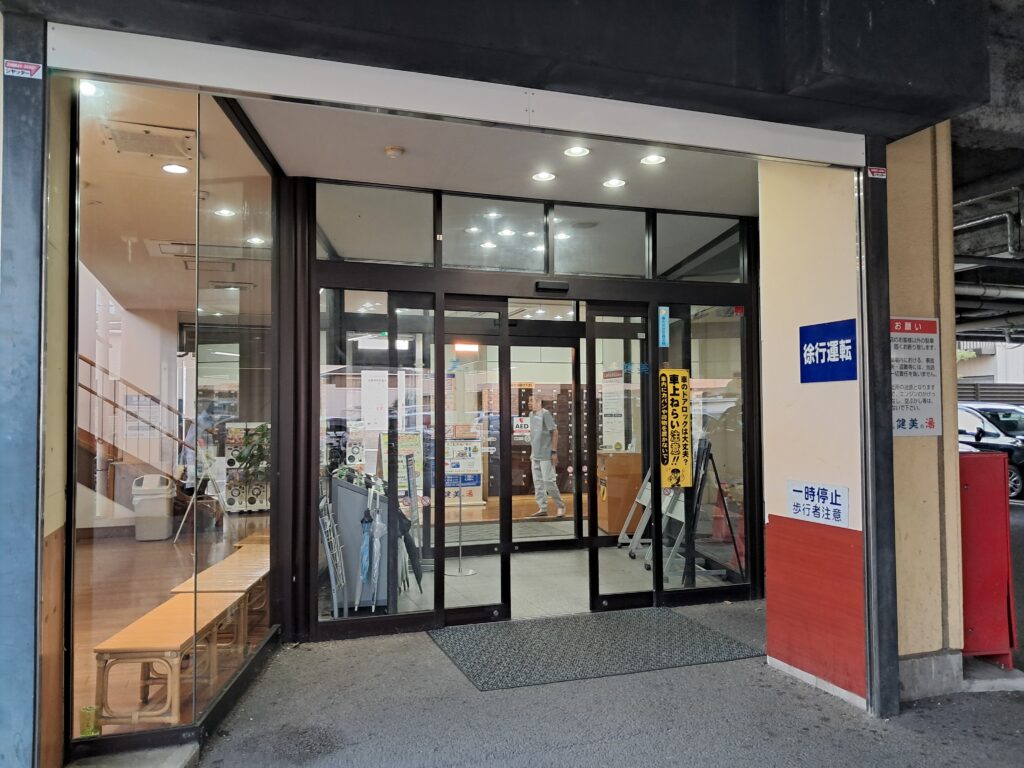
When you go inside the building with its indescribable Showa-style exterior and walk up the stairs, the inside also has a very Showa-like atmosphere.
Even so, because there are large windows facing the street, it does have a bright feel.
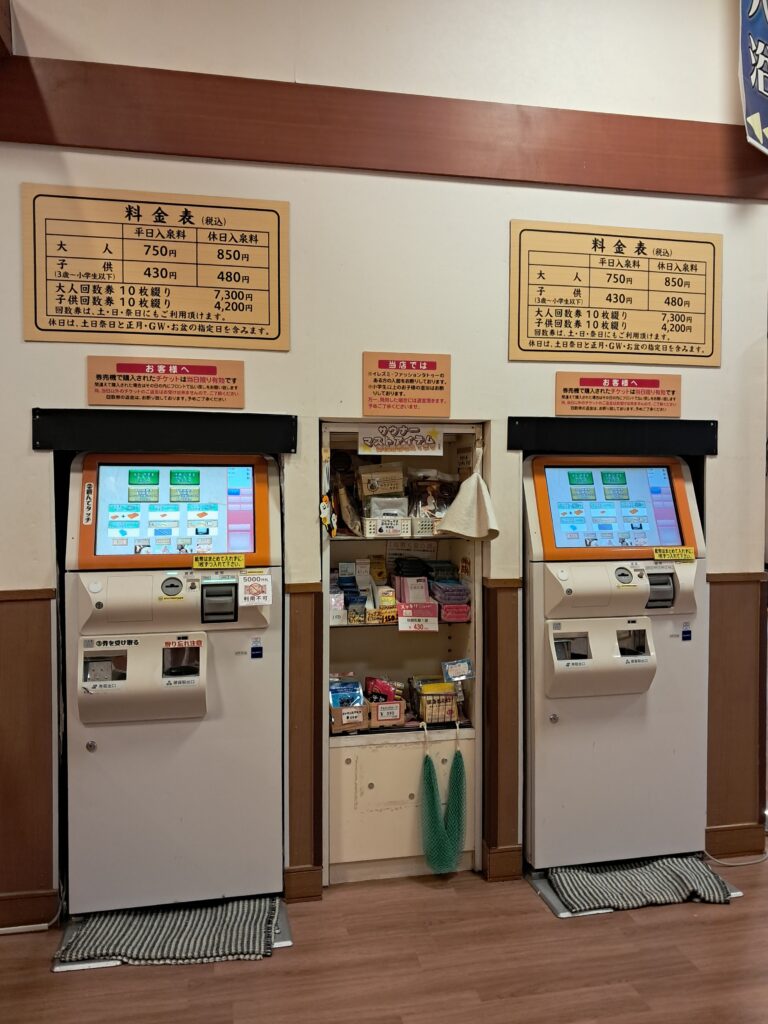
Purchase an admission ticket at the vending machine and head straight to the staffed counter right next to it.
The staff at the reception counter provide standard service, but if you tell them it’s your first time, they’ll properly explain the system.
Rather than being exceptionally friendly, the impression is that the other staff are just quietly doing their jobs.
Well, it wasn’t particularly unpleasant, so personally, it didn’t bother me.
An open open-air bath and substantial indoor baths
Open-Air Area
The open-air area at Kenbi no Yu is a cozy space spreading out past the indoor bath area.
It feels more like a rooftop terrace than an open-air bath and is quite narrow, but because there is no roof overhead, it surprisingly doesn’t feel cramped.
Unusually for a facility with such an overflowing Showa-era vibe, there is no TV installed in the open-air area.
Instead, the lack of noise, allowing you to relax, was a high point for me personally.
In the open-air area, there are several chairs set up for cooling down in the pathway, which sometimes feel in the way when walking past.
Also, the nighttime lighting feels a bit too bright. I feel like it would be more atmospheric if it were a little darker.
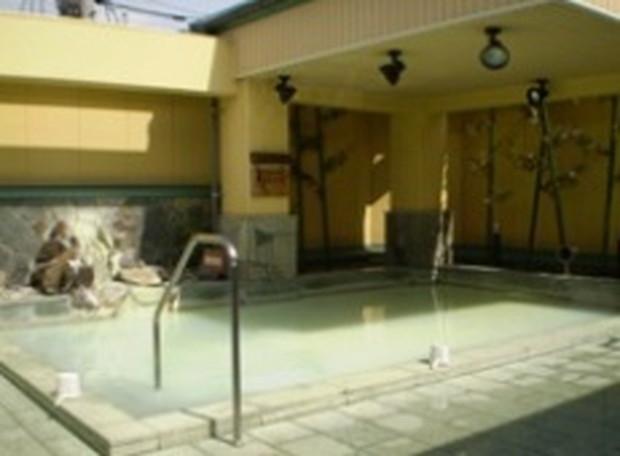
For me personally, the main bathtub in the open-air area is the 41°C Yumeguri no Yu.
It uses “hot spring essences” sent directly from famous hot spring resorts across Japan, and at this time, it was water from Beppu Onsen in Oita Prefecture.
When you hear “hot spring essence,” you might think, “Oh, it’s just bath salts…”, but I was surprised by how exceptionally good the actual water quality was.
Anyway, it felt just like the water in Beppu, and the strong sulfur smell and cloudy white water are really nice.
Is it possible they’re using the actual hot spring water itself rather than just an essence…?
I’m not sure about the truth here, but it was an outstanding bath that would satisfy even hot spring lovers.
Yumeguri no Yu isn’t always Beppu Onsen; they apparently use water from other famous hot spring resorts depending on the season.
Personally, hitting Beppu Onsen was a jackpot. You can feel your skin rejoicing in the milky white sulfur spring, which is rare in Saitama.
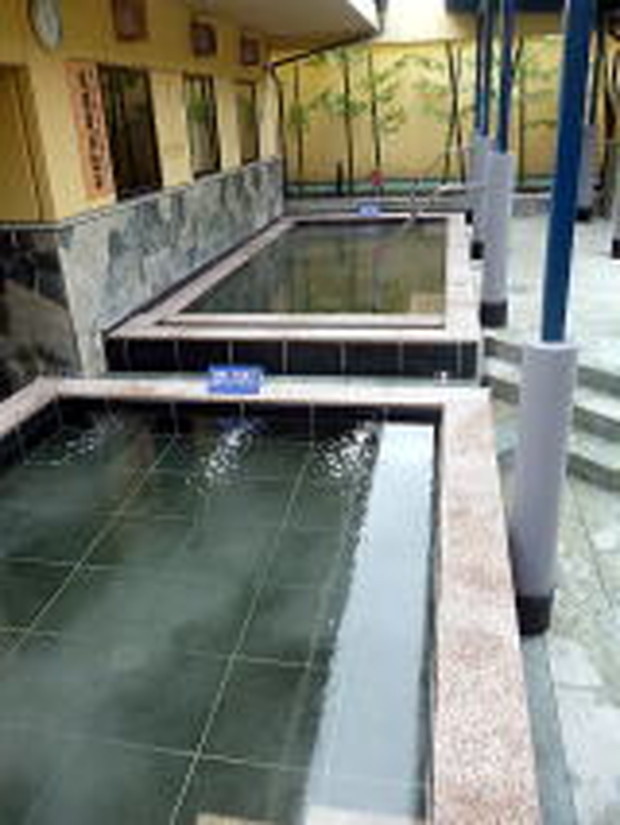
And Kenbi no Yu’s biggest selling point is the two carbonated springs in the open-air area.
The water temperatures are different for each bathtub, at 38°C and 36.5°C, and the depths are also different (the higher temperature one is deeper).
Kenbi no Yu’s carbonated spring boasts the highest concentration in the region.
Its reputation is no lie; both bathtubs have quite strong carbonation dissolved into them.
It feels like it fizzes deeply into your skin, and the amount of bubbles is incredible.
For those who love carbonated springs, it might very well be heaven.
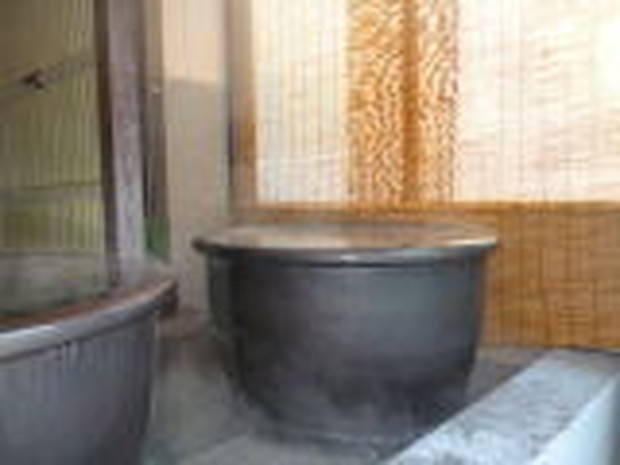
And located inside a space resembling a small shack at the edge of the open-air area is the 40°C Meiso no Yu (Meditation Bath).
It is essentially a standard pot bath (tsuboyu), but it carries the concept of “a bath for meditation.”
Inside the space of Meiso no Yu, some mysterious plants are hung, and the extracts from these plants affect your meditation… an unexpected spiritual twist.
The water is just regular heated water, and the atmosphere isn’t particularly conducive to meditation; it just feels like you’re inside a cramped shack, so personally, its purpose was unclear to me.
Showa Sento-like Indoor Bath Area
Kenbi no Yu’s indoor bath area has a larger floor space than the open-air area and is quite spacious.
Two-thirds of the area is a shower corner, with a total of about 30 to 40 showers, and it’s nice that several of them are separated by walls from the adjacent ones.
The remaining one-third of the space is crowded with various bathtubs and the sauna, but perhaps because each bathtub is independent, it surprisingly doesn’t feel cramped.
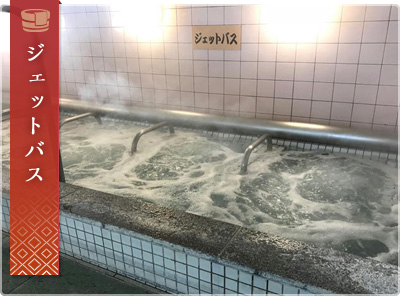
▲ Four seats are available for the Jet Bath, a staple of super sentos.
The position of the jets is quite exquisite, hitting the back, lower back, and calves perfectly, and the pressure is just right—neither too strong nor too weak.
There’s a clear sensation of stiffness being relieved, making you want to soak in it for a long time.
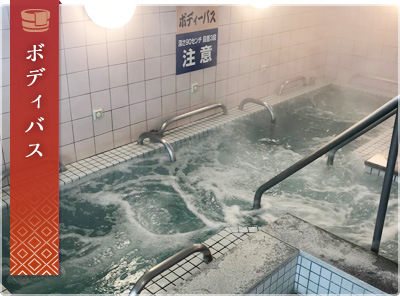
Right next to the Jet Bath is the three-seat Body Bath.
This is a type where jets hit your whole body while standing, but I felt the pressure here was a bit weak.
While it does hit the shoulders and back, overall there’s an unsatisfying feeling of “it could be a little stronger…”
Since the Jet Bath was so well done, the Body Bath gave the impression of being somewhat overshadowed.
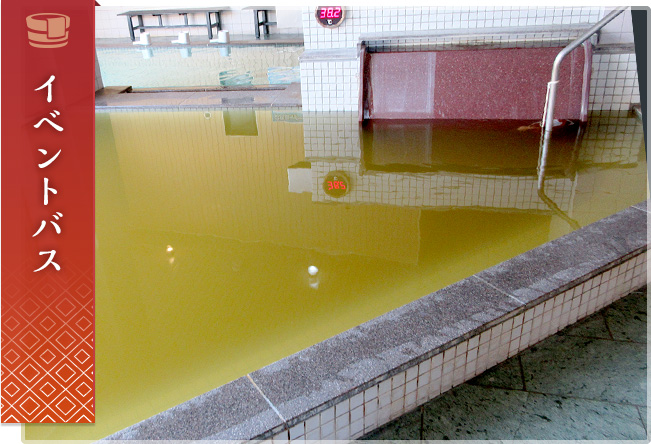
▲ And set up in a prime spot in the indoor bath area is the 39°C Event Bath.
It’s a common “changing bath,” and at this time, it was a mysteriously themed bath called “Negirai no Yu” (Bath of Appreciation).
Apparently, it’s meant to “soothe the fatigue of daily work,” but… honestly, I don’t really get it.
The water was at a decent temperature, but it had a rather toxic blue-green color and smelled a bit chemical, so personally, I didn’t care for it.
“Every Saturday you can enjoy a bath with fresh fruit,” they say, so it might be good to aim for that (though it’s unclear how long the fresh fruit bath event will continue).
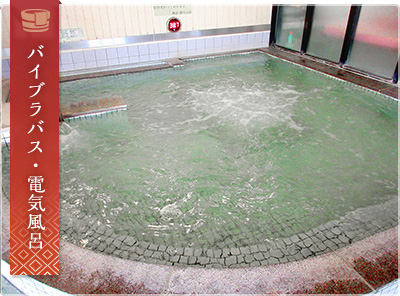
And located near the entrance of the indoor bath area are the 39°C Bubble Bath and Electric Bath.
These very Showa-esque sento bathtubs are connected to each other.
The Electric Bath in the back had just the right voltage and was surprisingly pleasant, so that’s a plus. ◎
On the other hand, the Bubble Bath only had bubble jets in a small area, just bubbling in the center of the bathtub, which was a bit underwhelming.
There are about 30 to 40 showers installed, and they always seem slightly crowded.
They are very standard push-button showers with strong water pressure, and the fact that several are partitioned off from the neighboring ones is a nice touch.
The sauna is spacious, but is the temperature a bit iffy?
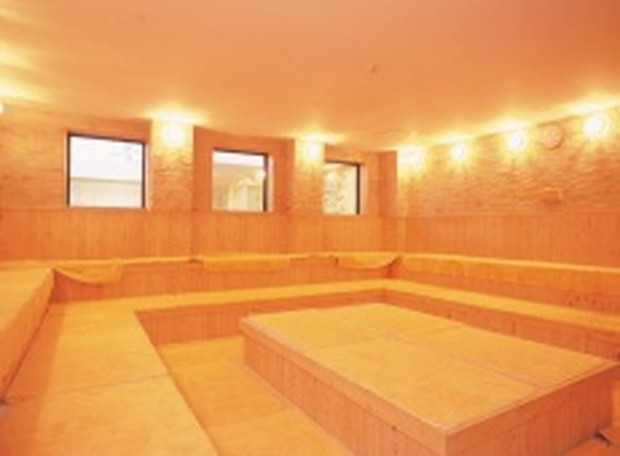
Kenbi no Yu’s High-Temperature Sauna has two tiers and is a spacious room that can fit about 40 people.
The temperature was displayed as 80°C on the lower tier and 90°C on the upper tier, but it felt about 5°C cooler than that in reality.
The cause of this lukewarm temperature is probably the aging heater.
Also, because the sauna is exceptionally large and has only a single door, the heat might escape easily.
I understand that this kind of temperature puts less strain on the body, but personally, I felt like, “I wish it were a bit hotter…”
There are fans for self-loyly (well, just regular hand fans) at the entrance of the sauna, so if you find it lacking, you can flap them inside the sauna room to slightly raise the perceived temperature.
What bothered me was that the towels laid on the floor of the sauna room are only replaced 4 times a day, and those towels looked like ragged, well-worn dust cloths.
Because the style is to sit on individual rubber sauna mats provided, you’re not sitting directly on the rag-like towels, but visually, it’s undeniably a bit off-putting…
I suppose the saving grace is that despite the infrequent cleaning, there were no weird smells, and the dirtiness of the room wasn’t that noticeable…
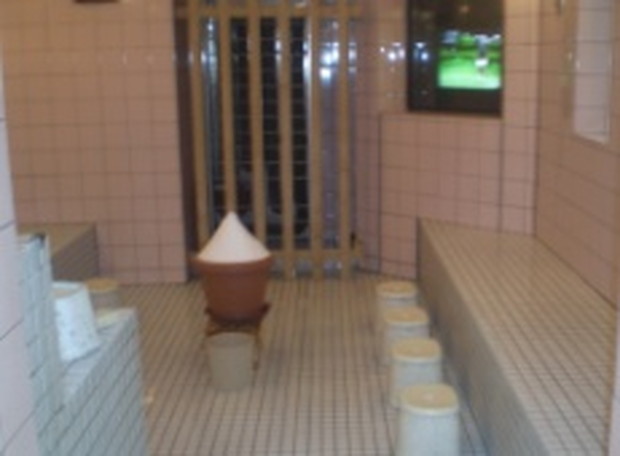
Also, Kenbi no Yu has another Salt Sauna, which has a slightly lower temperature of around 70°C.
As the name suggests, the salt sauna has a mound of salt in the center of the room, and it’s a type of sauna where you rub it on your body to induce sweating.
Salt saunas have become a rare sight at recent day-trip hot spring facilities, but I personally quite like them.
You can really feel your skin getting smooth and silky thanks to the effects of the salt.
The salt sauna’s room temperature of 70°C might sound a bit low in numbers, but I bet there are surprisingly many people who find this temperature just right.
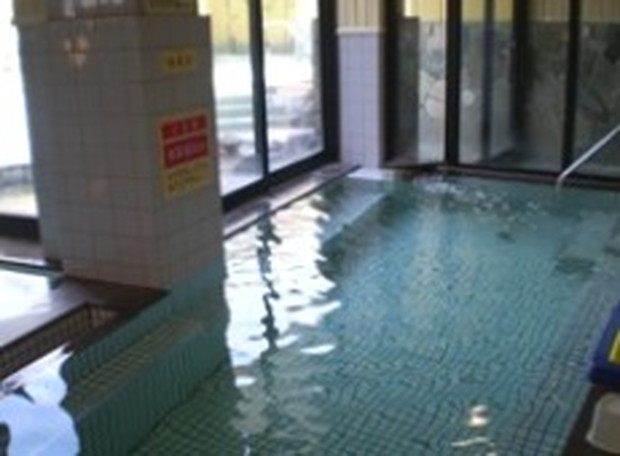
And Kenbi no Yu’s proud Cold Plunge Pool is quite spacious, easily fitting 10 people.
The water temperature isn’t freezing cold at 16°C, but since the sauna’s temperature isn’t scorchingly hot to begin with, a cold pool around this temperature is more suitable.
The cold pool is located right next to both the high-temperature sauna and the salt sauna, so being able to head straight there is great. ◎
There’s a large sign saying “No Diving,” but there were quite a few people ignoring it and diving in, which gave me an “Ah… this is Koshigaya…” feeling.
Both the sauna and the cold plunge pool were quite satisfying for me personally, but the bottleneck is that the water cooler for drinking water is only located in the dressing room.
You have to move all the way there just to drink water, and going back and forth was mildly annoying.
Other Facilities (Rest Areas | Dining, etc.)
Rest Area cum Restaurant
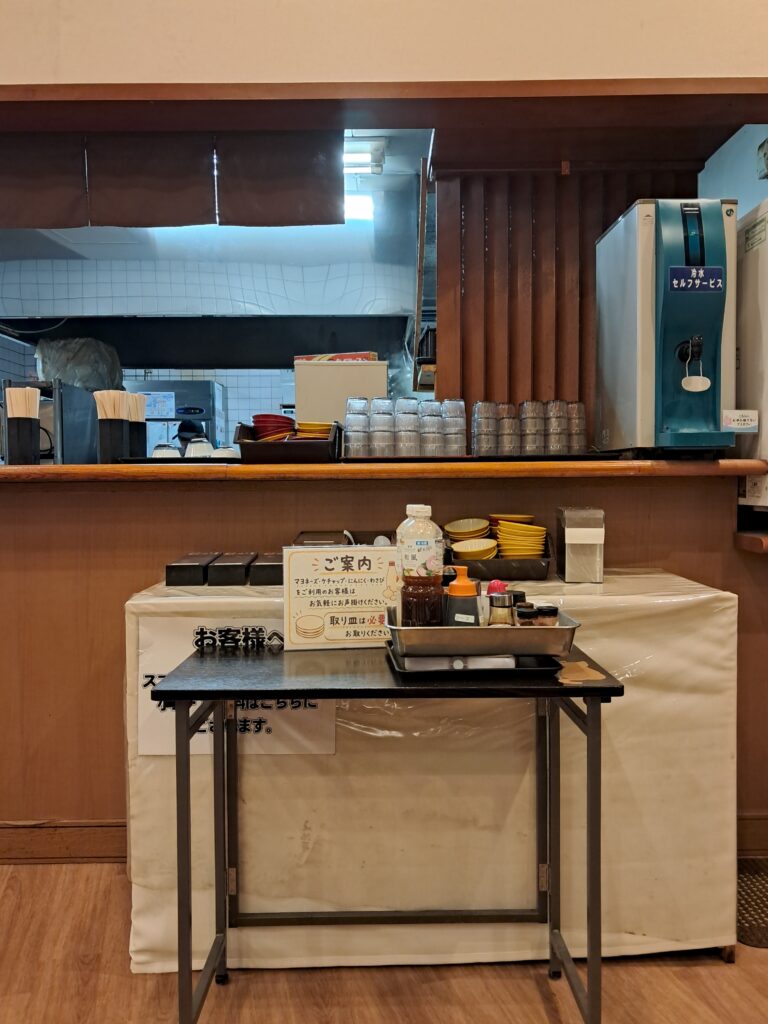
First of all, I have to point out that there is no independent rest space at Kenbi no Yu.
The fact that the restaurant’s dining area also serves as the rest area is the facility’s biggest feature and also its weakness.
The space mainly has table seating, with some tatami mat seating.
Even people who aren’t eating can relax here, and it’s a nice little bonus that you can drink water or tea for free.
It’s a bright space with large windows, and it was great that it wasn’t overly crowded. ◎
Honestly, it hurts that there is no dedicated rest space, but since the dining area is this large, I guess it’s fine…
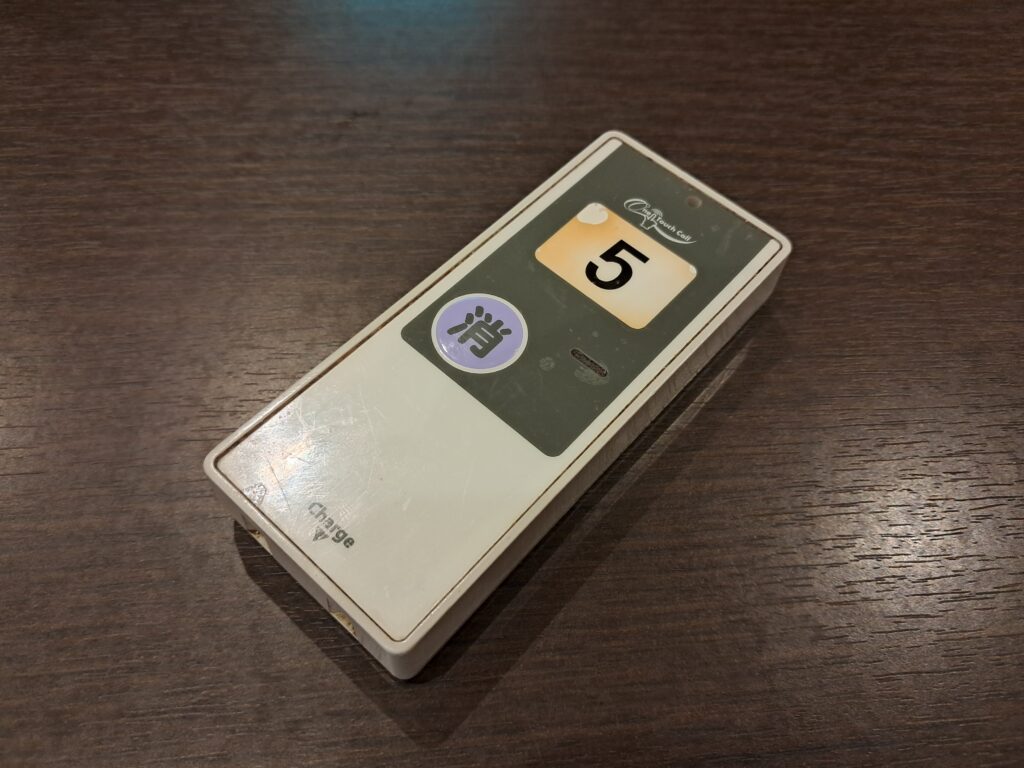
Kenbi no Yu’s restaurant is completely self-service.
You order by buying a meal ticket at the dedicated vending machine, handing that ticket to the staff at the counter, and receiving a buzzer. When the buzzer rings, you go pick up your food yourself.
What bothered me is that despite having many solo guests, there are no single-person counter seats.
You end up using a four-person table all by yourself, which makes you feel somewhat apologetic.
The restaurant is relatively empty even during peak meal times, so it’s easy to use.
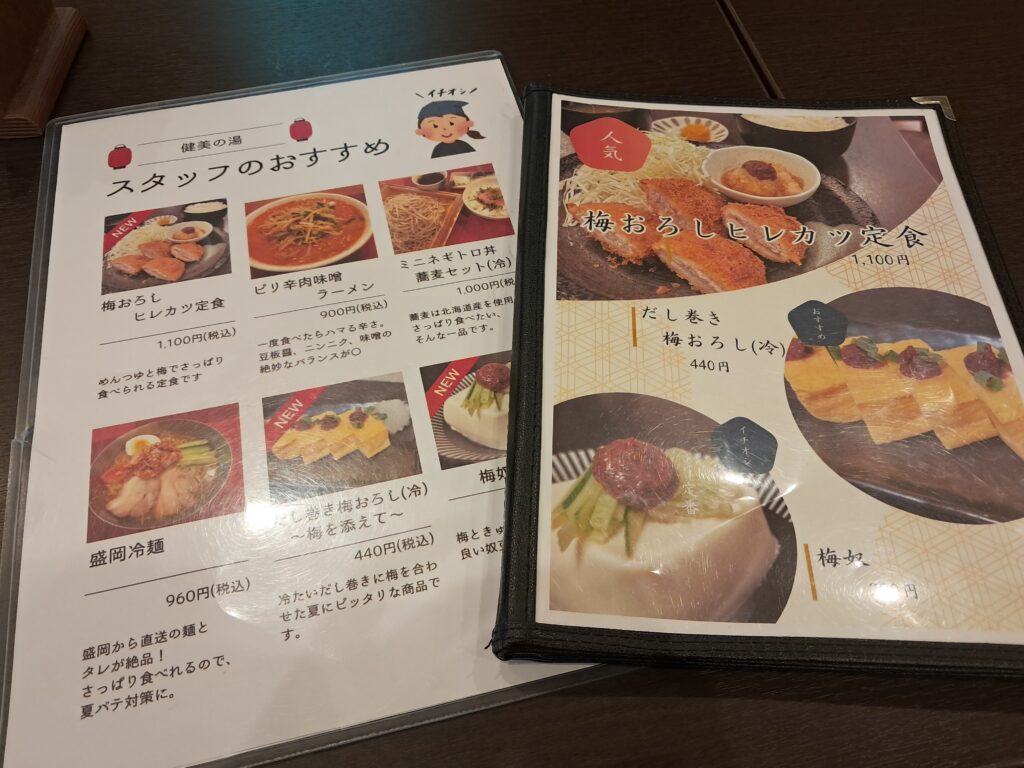
The menu has all the basics you’d expect at a day-trip hot spring facility’s restaurant, but contrary to the facility’s atmosphere, the price range feels a bit high.
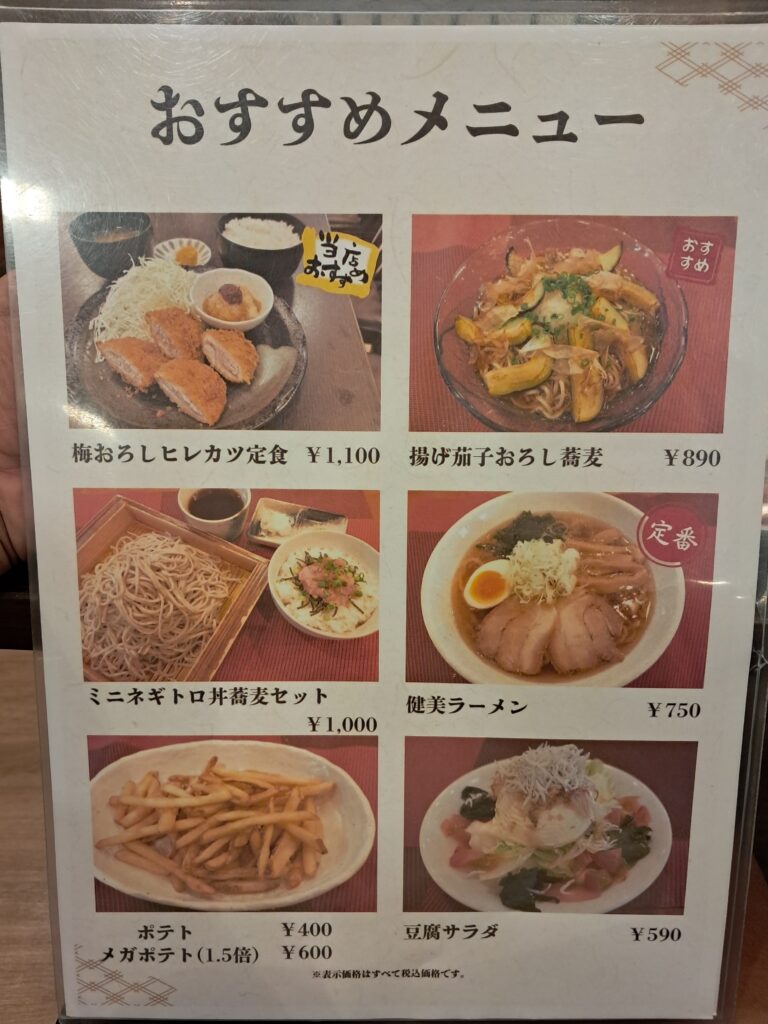
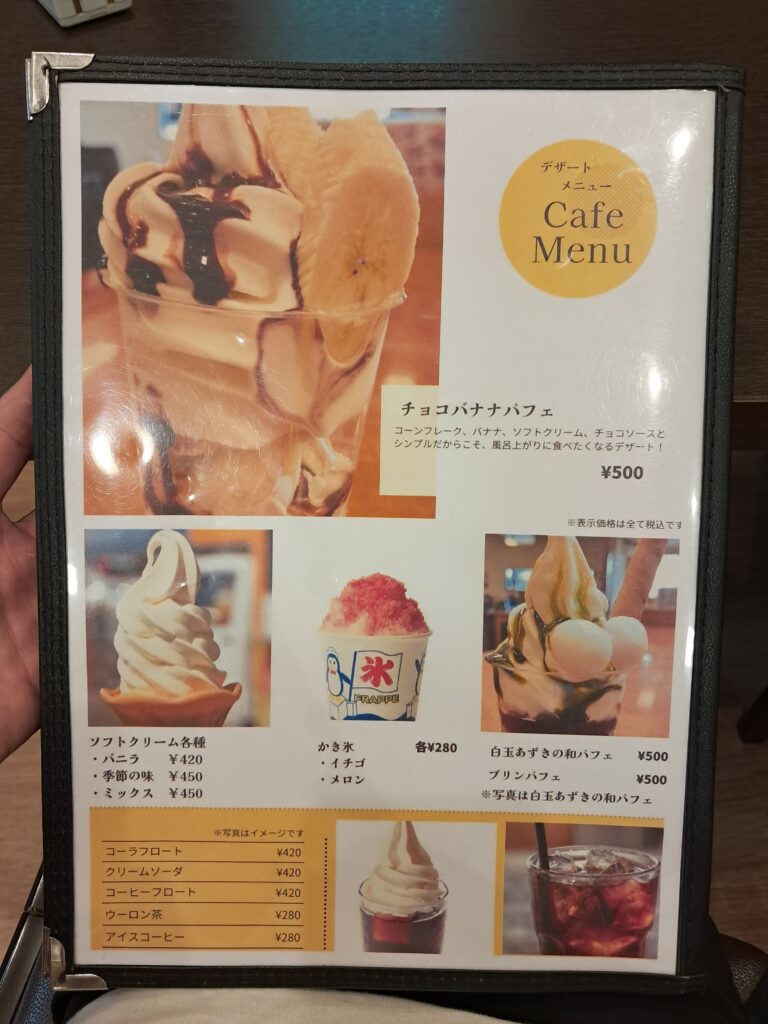
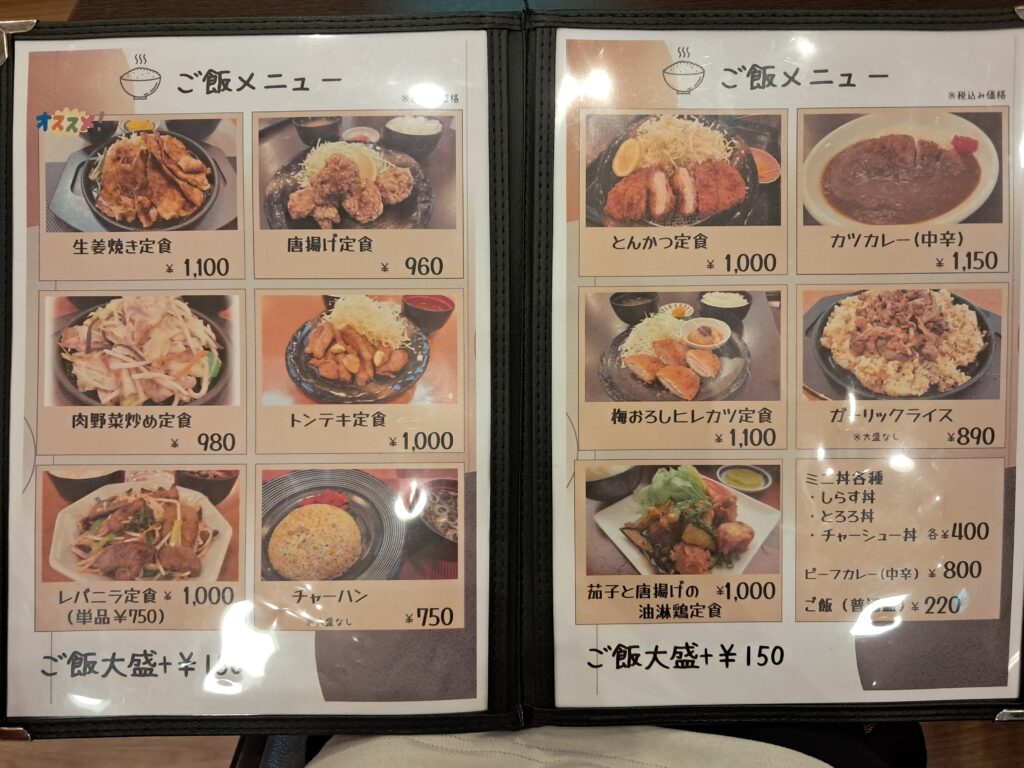
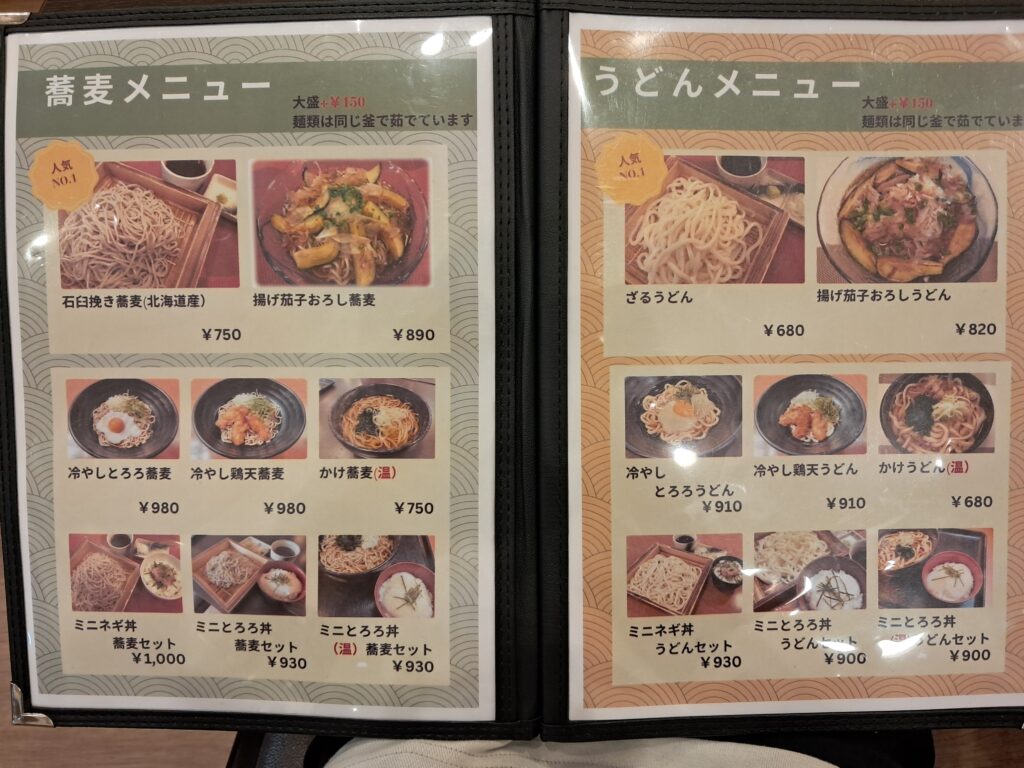
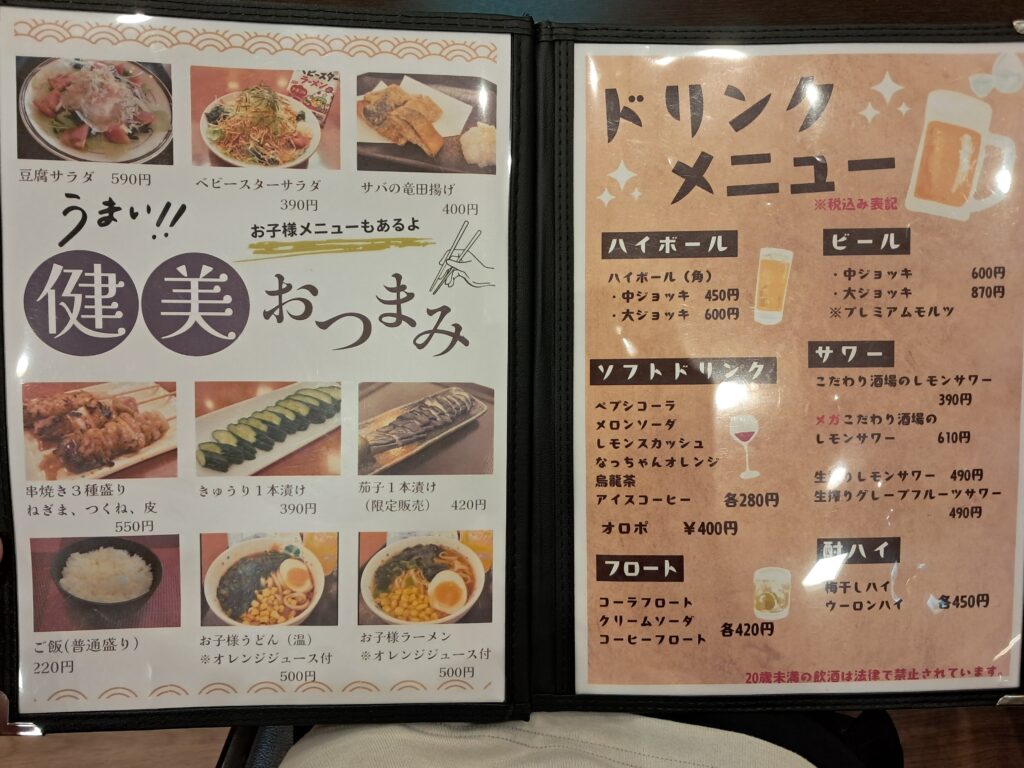
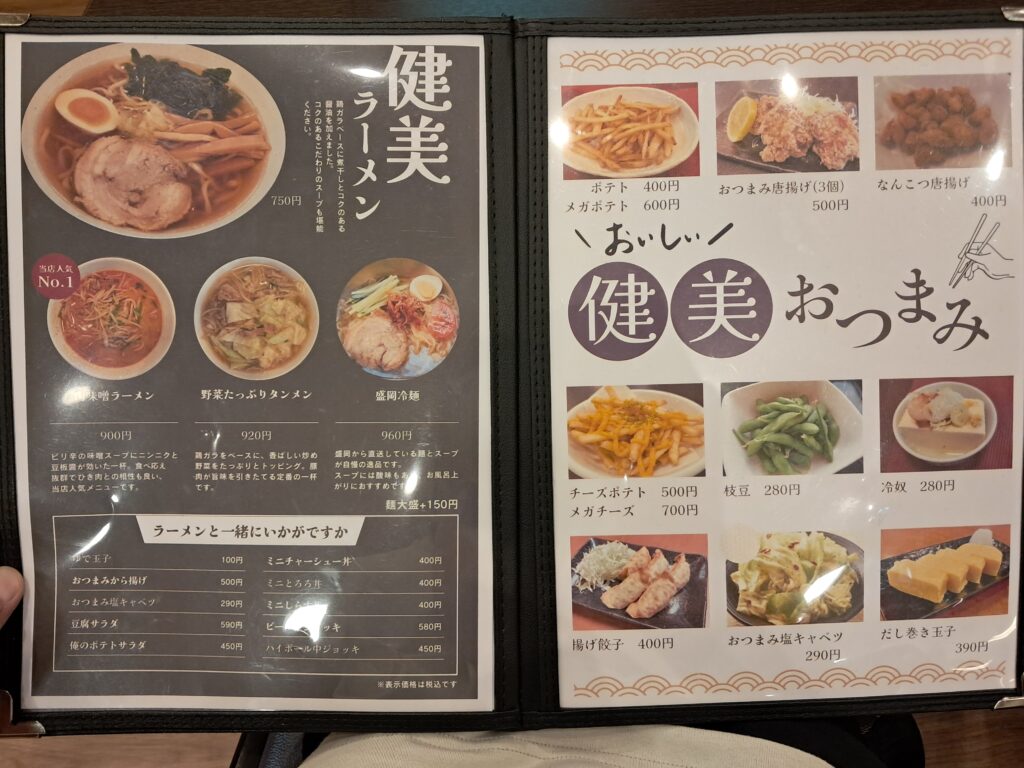
The menu has a decent lineup, like this.
There were a few dishes marked “Kenbi no Yu Recommended!”, and since it was my first time, I decided to choose from among them.
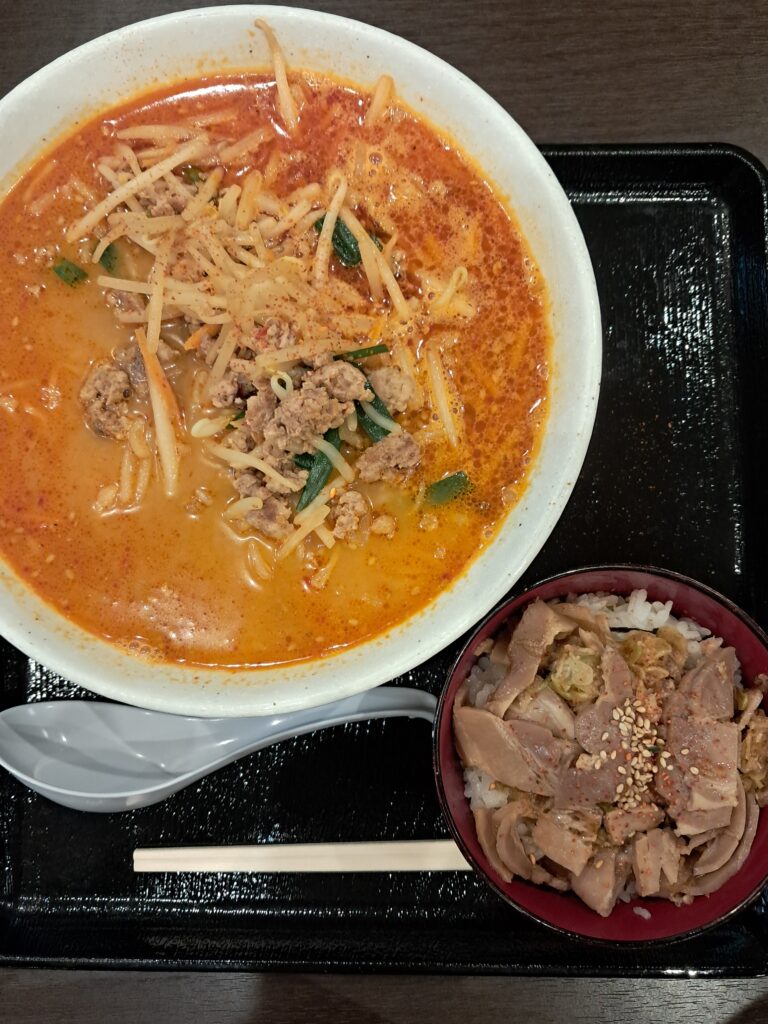
Served speedily in just over 5 minutes after ordering was the Meat Miso Ramen, which was marked as recommended.
I also added a mini Chashu bowl.
First, I tried the Meat Miso Ramen… huh? Hmmm??? Wait???
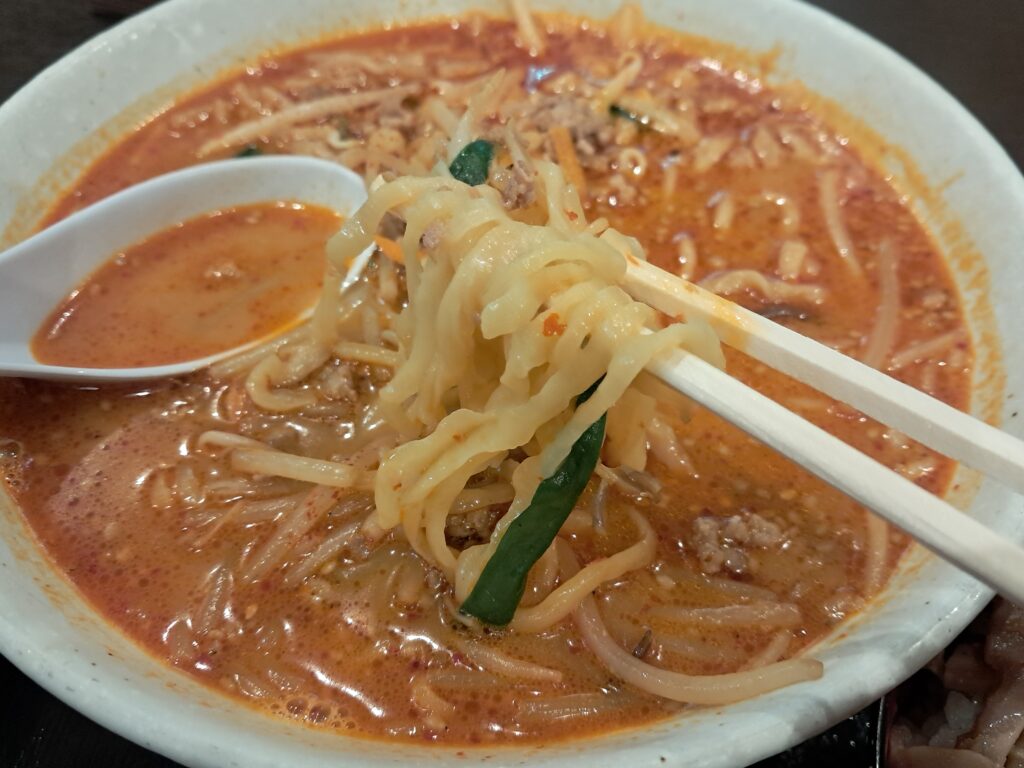
Ummm… how should I put this…
It’s by no means bad. But it’s not exactly “delicious!” either…
The biggest reason for this mediocrity is the soup, which only brings out the strong saltiness of the miso with almost no richness or umami.
In a word, it’s kind of watery. Wait? Isn’t deep richness the charm and the very lifeblood of miso ramen…?
So, as for the Meat Miso Ramen, the verdict is: “It’s not a total miss, but if you ask me if I can recommend it, the answer is No.”
My expectations grew for the mini Chashu bowl I ordered on the side…!
Huh? Hmmmmmm??? Ugh?????
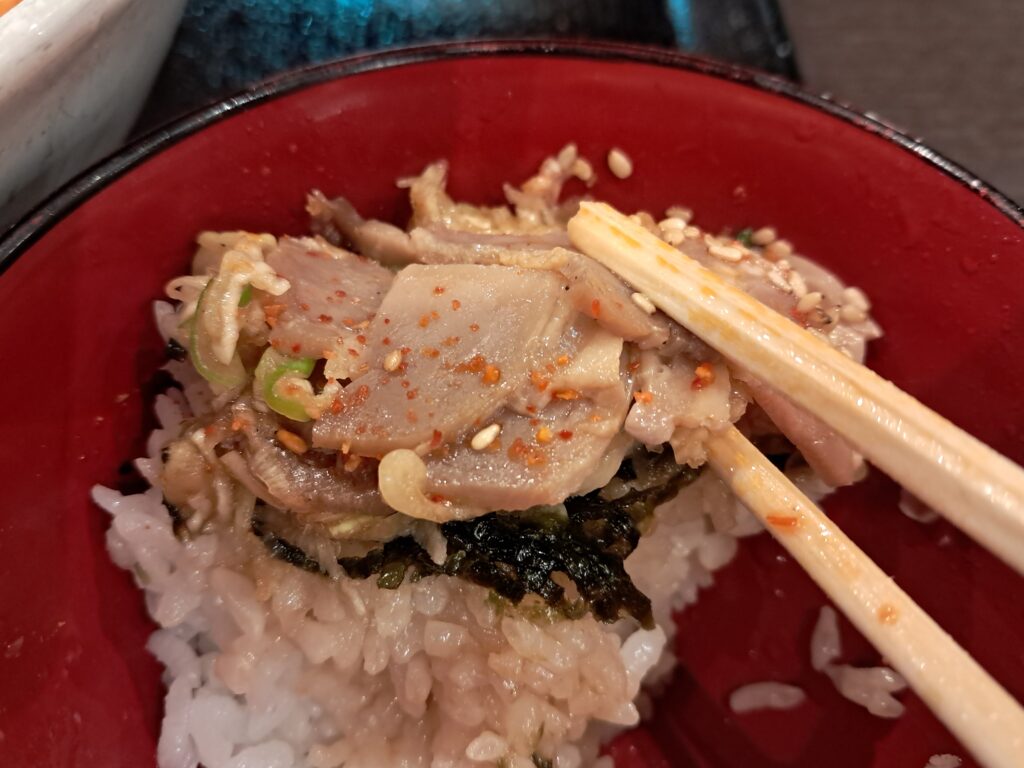
No seriously, what is this? It’s just way too salty?!??
And the quality of the Chashu meat is incredibly poor, with a rubbery, spongy texture.
It’s at a level where you seriously doubt, “Is this really Chashu? Isn’t it some kind of ham?”
To top it off, the white rice is mushy, making matters worse.
I’ve said this many times, but in this country where the sun rises—Japan—a restaurant that can’t cook rice properly is a failure. Please go extinct.
Because of this, the restaurant at Kenbi no Yu remains a bitter memory for me personally.
I’m not sure if the dishes I ordered were just uniquely bad, or if the food is universally unappetizing, but knowing they serve mushy rice, I don’t think I have the courage to try again…
Summary: Overall Evaluation & Recommended Sightseeing Plans
And so, that was a rather harsh report on Koshigaya Kenbi no Yu.
How will this reflect in the overall evaluation…?
・Access: 8/10
・Lack of Crowds: 6/10
・Staff: 5/10
・Bath Spaciousness: 6/10
・Cleanliness: 4/10
・Hot Spring Quality: 5/10
・Bath Variety: 8/10
・Sauna: 7/10
・Dressing Room Amenities & Equipment: 5/10
・System Convenience: 1/10
・Customer Quality: 4/10
・Atmosphere: 5/10
・Food: 3/10
・Rest Area: 2/10
・Cost Performance: 4/10
・Total: 4.9/10
…So, it’s a very middling score, neither good nor bad, but personally, I was quite satisfied with Beppu Onsen, the sauna, and the cold plunge pool.
For those who like the atmosphere of a folksy super sento, it might be a facility that really clicks with you.
Even though it’s not a natural hot spring, the rich variety of bathtubs and having two types of saunas earn high marks.
On the other hand, the age of the building, the indescribable Showa feel, and the iffy taste of the restaurant were major negative points.
Above all, that system where you can only enter the large bath once, what is up with that? Is it necessary?
From October 2026, the admission fee is rising to ¥800 for adults. Honestly, if I’m paying ¥800 and can only use the large bath once, and it’s not even a natural hot spring, I feel like adding a few hundred yen more and heading to a free-flowing natural hot spring facility where you can bathe and stay as long as you want…
I’ve written a lot, but here is a quick recap of the good points and iffy points of Koshigaya Kenbi no Yu. ▼
・The quality of the highly concentrated carbonated spring is very high.
・The variety of bathtubs is surprisingly rich.
・There are 2 types of saunas (High-temperature + Salt sauna).
・You can experience the feeling of a real hot spring with Yumeguri no Yu.
・There are many solo guests, so it’s not too noisy.
・The mysterious system where re-entry is impossible once you leave the large bath.
・The Showa-style system of cash only & requiring a ¥100 coin.
・There is no dedicated rest space.
・The restaurant’s food is iffy & the rice is mushy.
・The whole building is old & the Showa vibe is strong.
So, that’s about it.
It might appeal to fans of carbonated springs or those who love the atmosphere of a Showa-era super sento, but it’s safe to say it’s a facility that depends on the person due to the outdated system and the mysterious no re-entry rule.
It might be debatable whether it’s worth visiting specifically as a primary destination, but it’s not a bad place to stop by and wash away the sweat after sightseeing in Koshigaya City.
If you’re combining Koshigaya Kenbi no Yu with sightseeing…
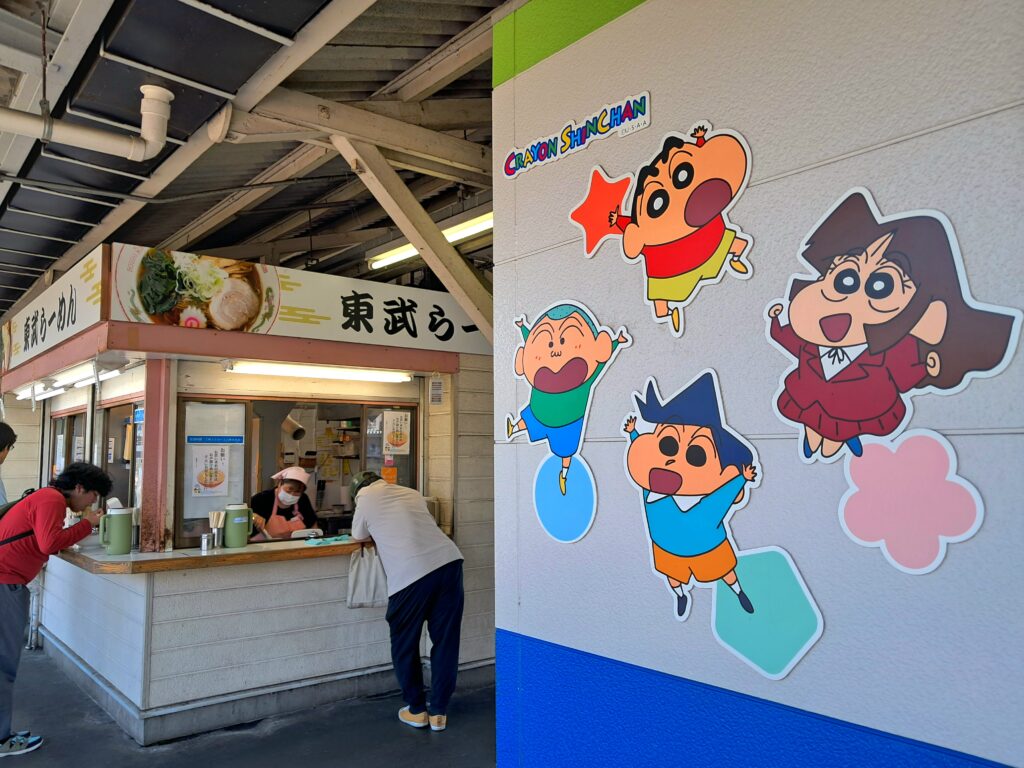
The area around Koshigaya City, where Koshigaya Kenbi no Yu is located, has many charming towns that aren’t very well known.
There are plenty of highlights just within Koshigaya City, and if you take a short train ride, you can explore areas with a completely different vibe!
A post town atmosphere and rich nature spots: Koshigaya City
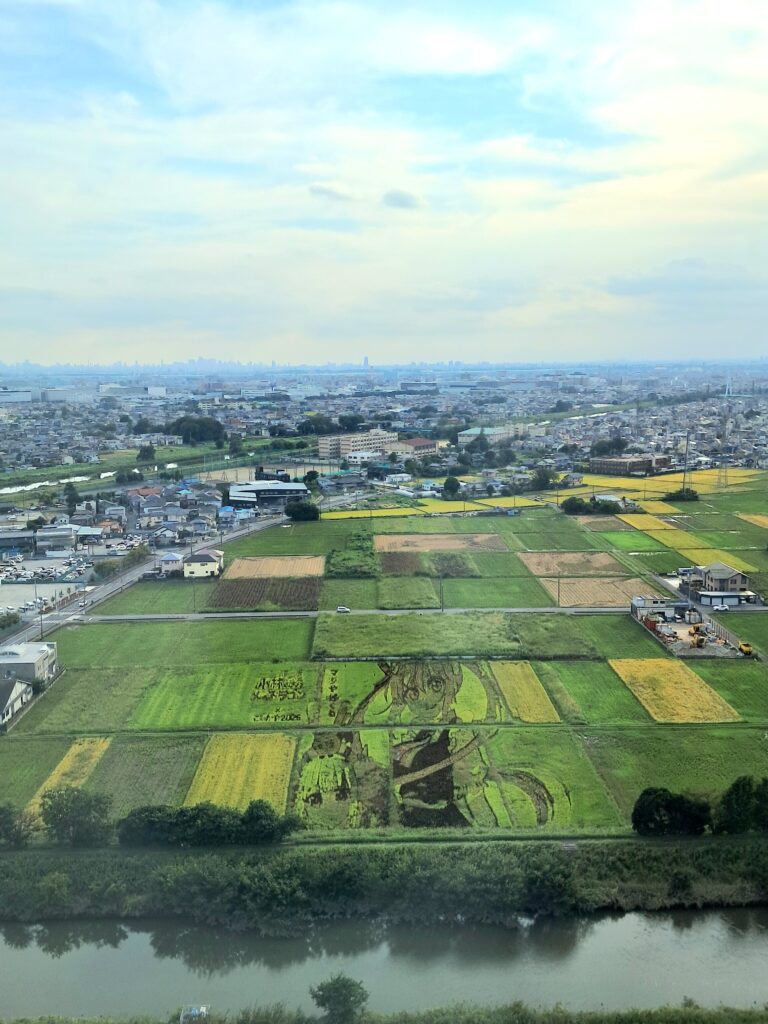
Koshigaya City, where Kenbi no Yu is located, is the city with the largest population in the eastern Saitama area.
It has a history of developing as a post town on the Nikko Kaido road, and the townscape that strongly conveys the atmosphere of yesteryear is wonderful.
In recent years, Koshigaya City has also become a popular residential area for families, thanks to “Koshigaya Lake Town,” one of the largest shopping malls in the Kanto region, and its excellent access to Tokyo.
The fact that you can feel rich nature while still enjoying convenience is also appealing, making it perfect for a leisurely trip!
A post town breathing with the soul of Crayon Shin-chan: Kasukabe City
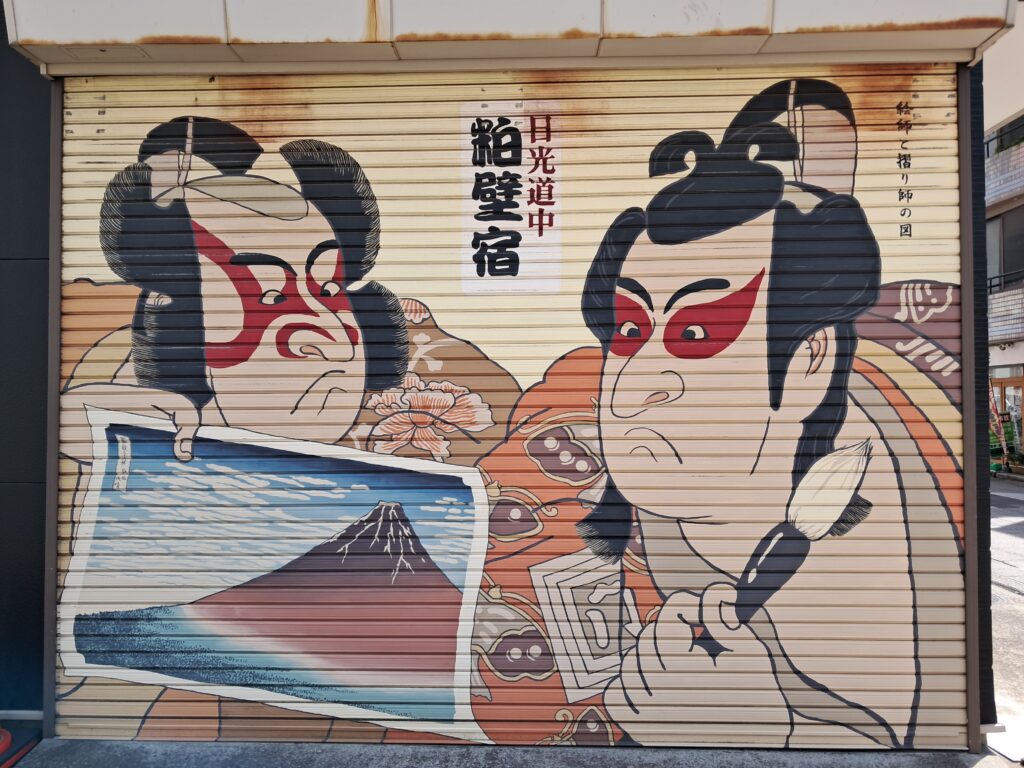
Kasukabe City in Saitama Prefecture, spreading out to the west across the Edo River from Noda City, is a major transportation hub in eastern Saitama.
During the Edo period, it flourished as a post town on the Nikko Kaido road, and even today, it’s a bustling town with a terminal station connecting Saitama, Chiba, and Tokyo.
For many Japanese people, Kasukabe is known as “Crayon Shin-chan’s town.”
The series features facilities that actually exist in Kasukabe City, and includes local inside jokes that make Kasukabe residents involuntarily grin, so it’s an absolute must-visit town for fans.
Besides that, Kasukabe’s charm lies in how it can be enjoyed from various angles, such as hot spring facilities boasting unique water qualities and a somewhat eccentric ramen culture.
It can be accessed in about 15 minutes by train from Noda, so visiting it as a set is also recommended.
A town of concept cafes surrounded by rice paddies: Matsubushi Town
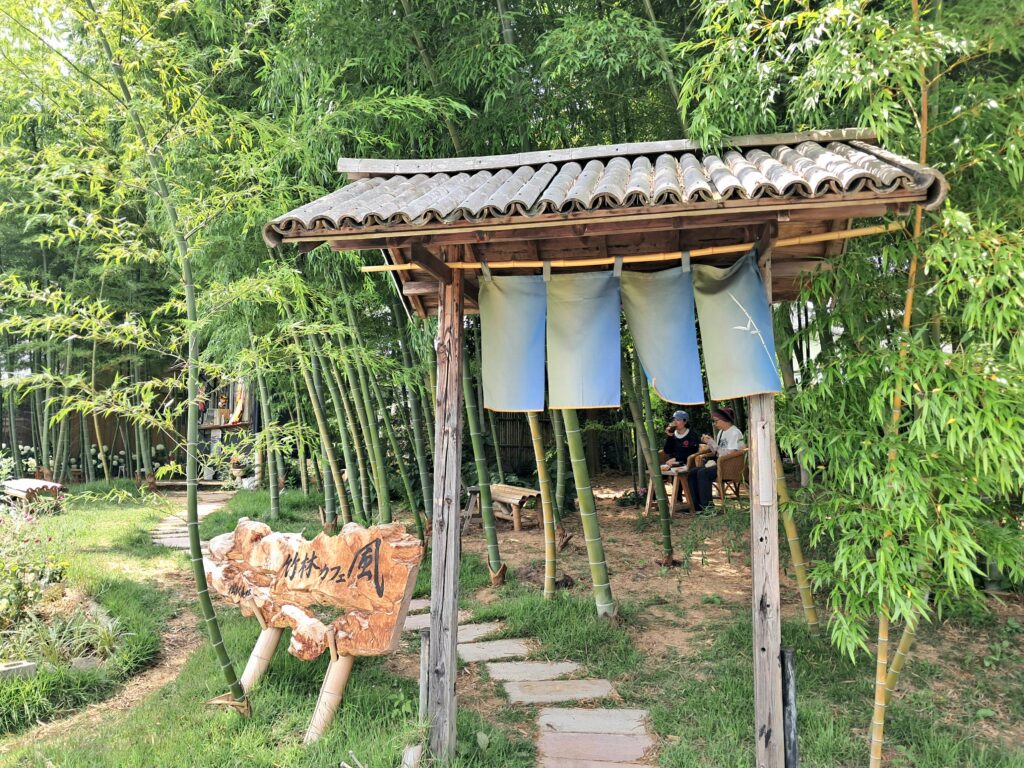
Located just across the Noda Bridge spanning the Edo River from Noda City, Matsubushi Town in Saitama Prefecture looks like an unremarkable country town at first glance.
The landscape of endlessly spreading rice paddies and rivers looks like something you could find anywhere in eastern Saitama.
Because there are no railway stations and the flow of people is limited, major restaurant chains haven’t really expanded into Matsubushi Town.
As a result, many privately owned diners and cafes have survived, giving birth to a unique dining culture where the majority of them operate with unique (and mysterious) concepts as their selling point.
Touring unique cafes while surrounded by a nature-rich landscape is an activity unique to Matsubushi.
The dishes and sweets made with vegetables and fruits produced in Matsubushi are also something to look forward to.
Comments