Hello!
Currently deeply immersed in uncovering the hidden gems of Saitama Prefecture… I’m Nobuyo (@nobuyo5696)!
I recently visited Saitama City, the capital of Saitama Prefecture, for the first time, and I was shocked by how much more of a major metropolis it was than I had imagined.
It’s not just urban—it has a genuine local vibe and unique local gourmet foods, making it a wonderful town that I want to explore even more deeply from now on.
Another thing that surprised me about Saitama City is how unusually scattered day-trip hot spring facilities are.
This is probably due to the considerable population and the high demand for taking a quick bath on the way home from work or school, but above all, the environment where “natural hot springs gush out if you dig” must be a major factor.
That being said, what I’m introducing this time is one of those day-trip hot spring facilities scattered across Saitama City.
It is Yaten Yumoto Yukaisoukai “Yukemuri Yokocho” Omiya (commonly known as Yukemuri Yokocho) located in Nishi Ward, Saitama City.
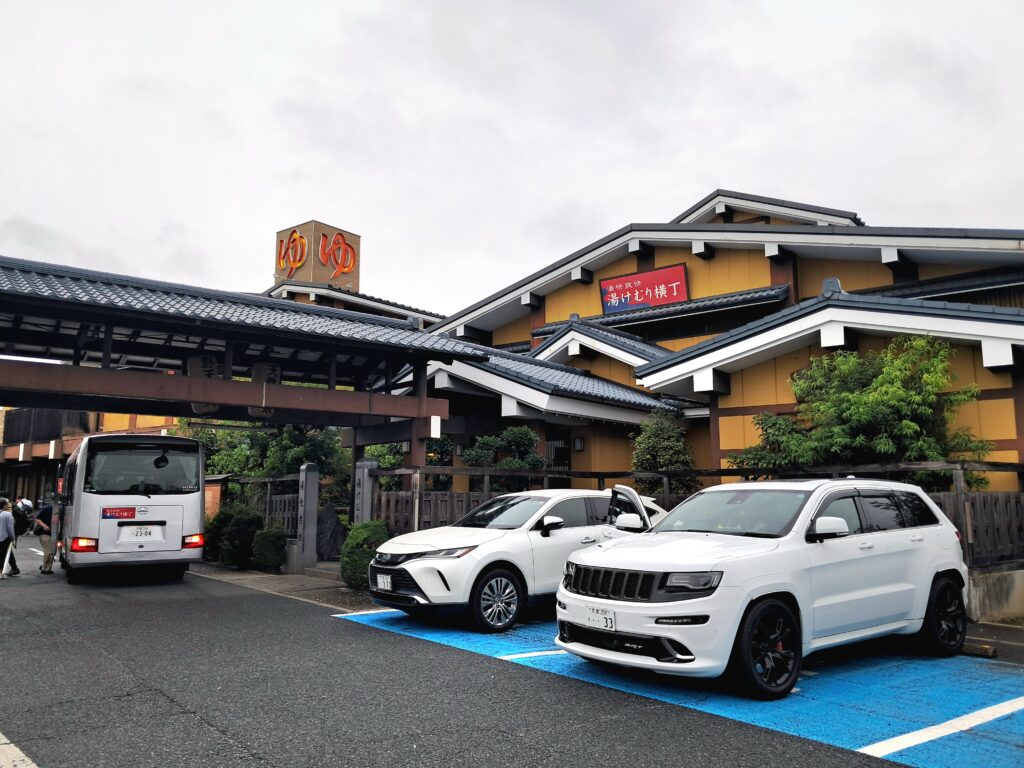
How should I put it? The confidence to proudly display “Yukaisoukai” (Hot Water Pleasure Refreshment) gives off an intensely “Saitama-esque” vibe, but in reality, both the exterior and interior are quite elaborately constructed.
It’s a unique day-trip hot spring facility themed around a Japanese-style inn and an Edo-period alley (yokocho).
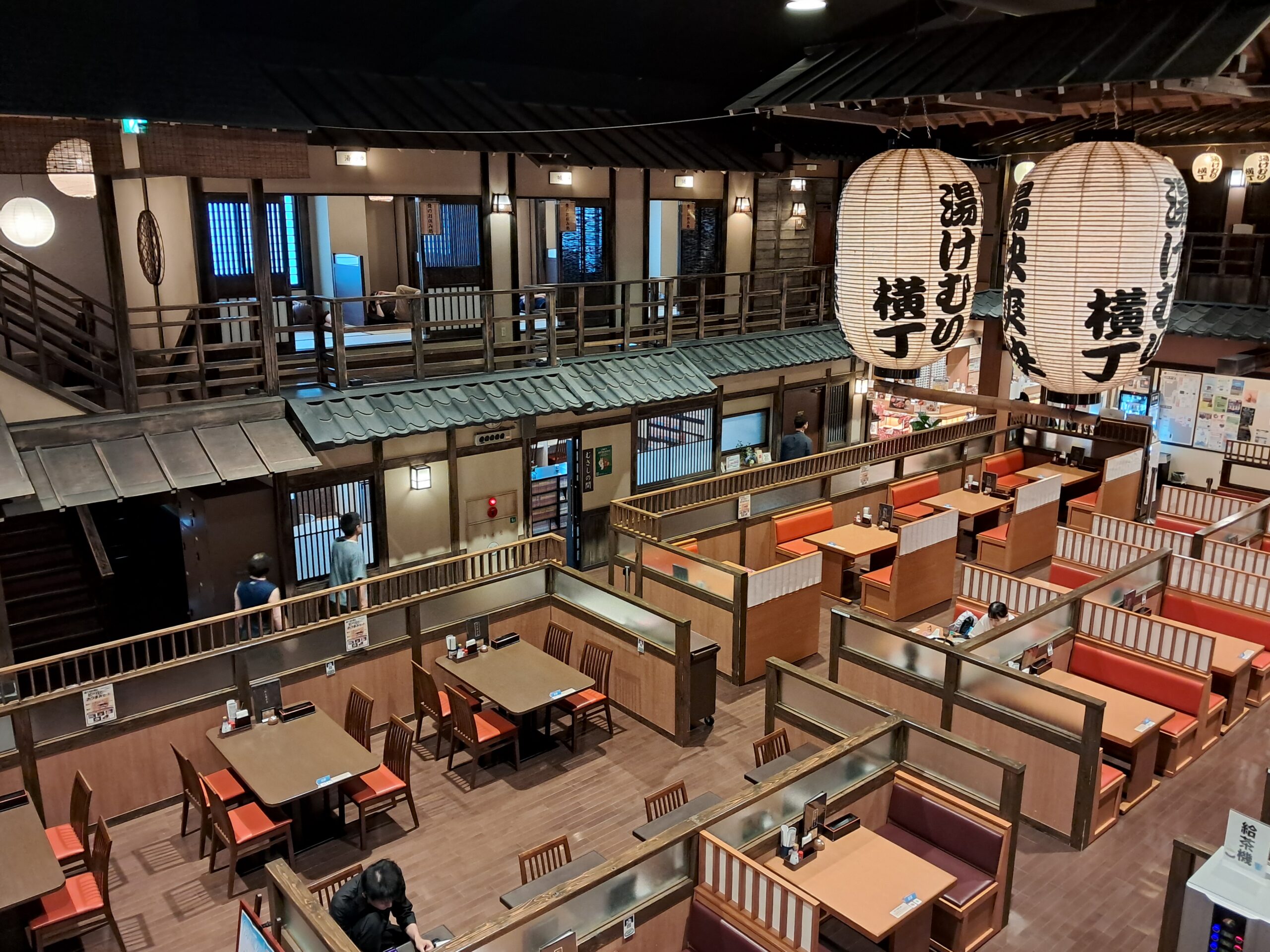
Reminiscent of the atmosphere of “Spirited Away,” the interior is overflowing with an Edo period mood.
While the design of areas like the restaurant is wonderful, the grand bath equipped with a wide variety of tubs is also quite good.
So, this article is a report on actually visiting Yukemuri Yokocho Omiya.
I will report in detail on the types of hot springs and facilities inside, as well as the congestion levels, clientele, and more!
- Time Slip to the Edo Period! What is Yukemuri Yokocho Omiya?
- A day-trip hot spring aiming for a Japanese alley? Here’s what Yukemuri Yokocho Omiya is like!
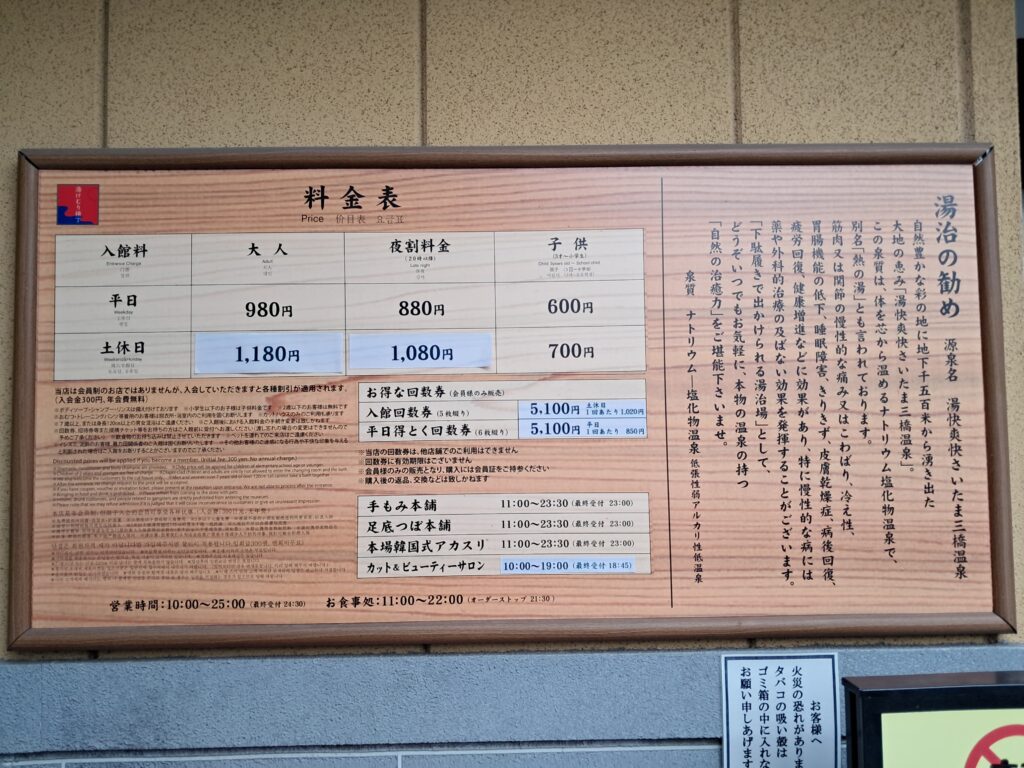
- Yukemuri Yokocho Omiya: Hours | Fees
- Yukemuri Yokocho Omiya: Spring Quality | Water Supply System
- Yukemuri Yokocho Omiya: Crowds | Clientele | Recommended Days & Times to Visit
- Access to Yukemuri Yokocho Omiya
- Sneaking into Yukemuri Yokocho Omiya!
- Conclusion: Overall Rating & Recommended Points
Time Slip to the Edo Period! What is Yukemuri Yokocho Omiya?
A day-trip hot spring aiming for a Japanese alley? Here’s what Yukemuri Yokocho Omiya is like!
Yukemuri Yokocho Omiya is a bath facility located in Mitsuhashi, Nishi Ward, Saitama City.
It is built on a reasonably sized plot of land, and the restaurant located right in the center features an innovative structure with an open-ceiling atrium on the second floor.
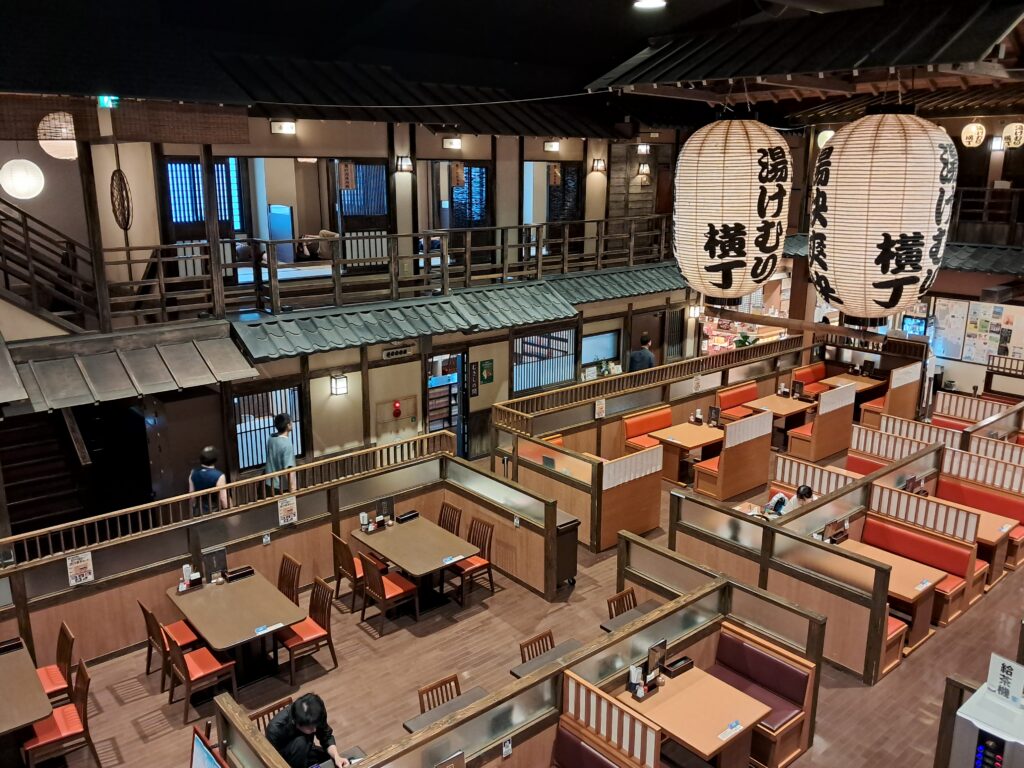
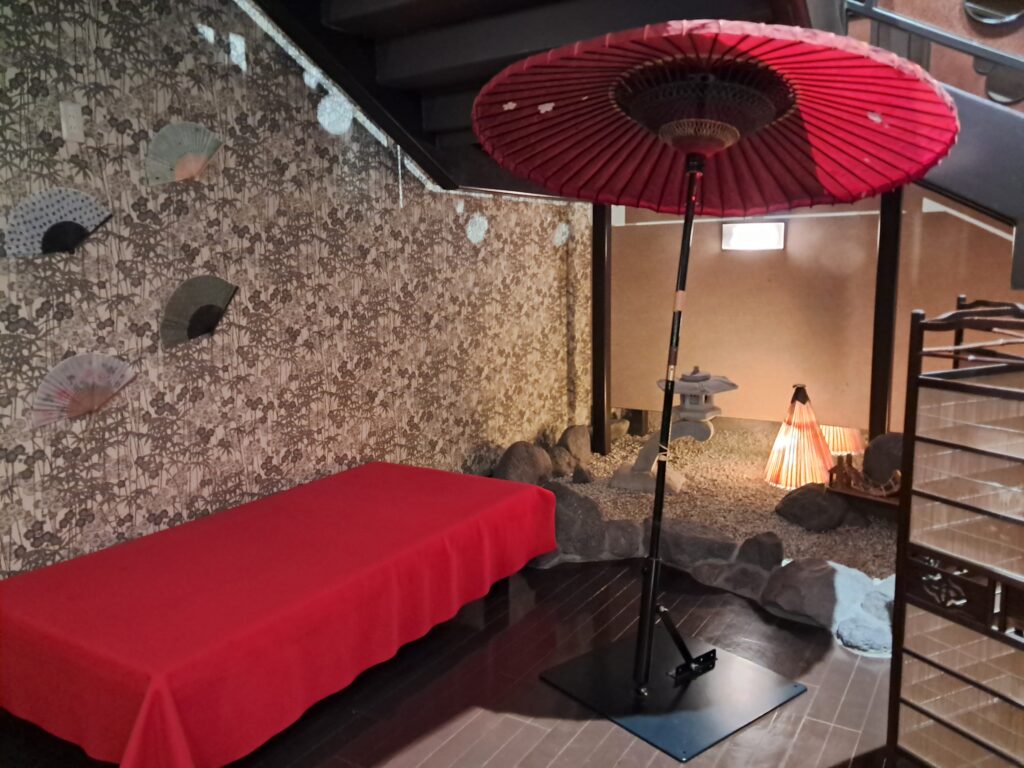
It seems to be themed around a Japanese-style inn and an Edo-period alley. Roughly speaking, the exterior feels like an inn, and the interior feels like an Edo alley.
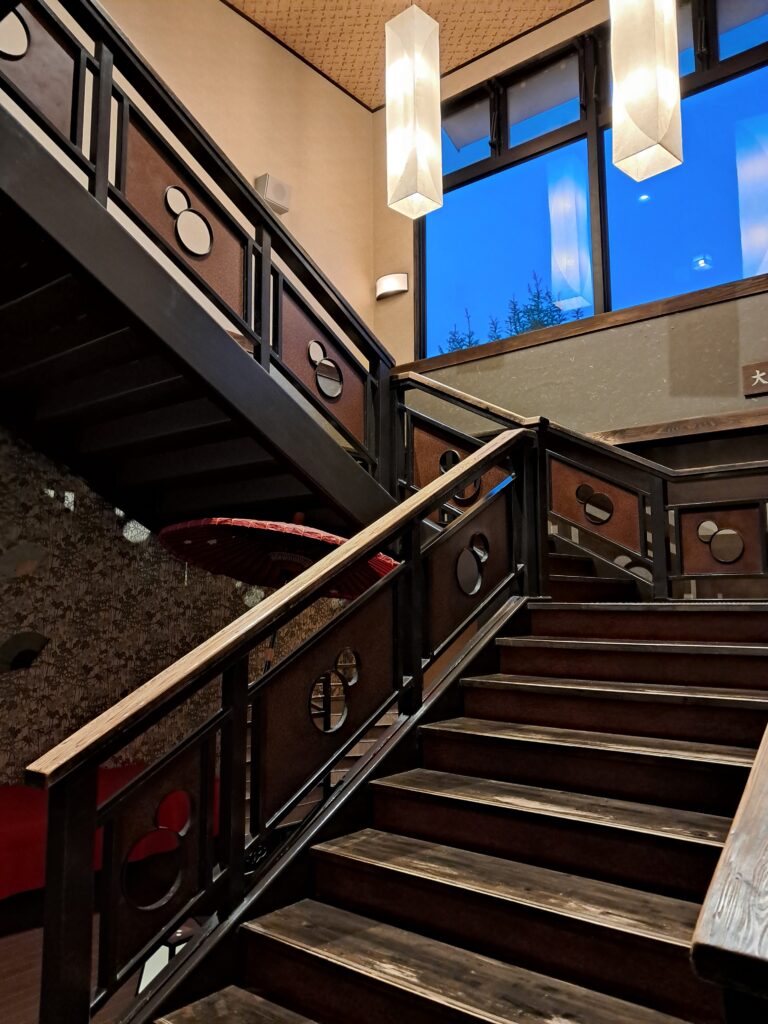
The second-floor open ceiling is wrapped by a corridor, and traditional Japanese umbrellas reminiscent of a tea house are placed in the relaxation area, making a pretty solid effort to evoke an Edo mood.
Even for Japanese people, first-time visitors will go “Whoa!!!”, so foreign tourists would probably love it even more.
It feels like it could function well as a facility geared toward inbound travelers, but when I visited, I didn’t see any foreign guests at all (well, because this is Saitama…).
Yukemuri Yokocho Omiya: Hours | Fees
The basic info for Yukemuri Yokocho Omiya is as follows.
Personally, I high-key appreciate that it stays open until late.
The admission fee is an average price where you think, “Well, about what you’d expect.”
Regardless of weekdays or weekends, a night discount applies for entries after 20:00, making it just a tiny bit cheaper to enter.
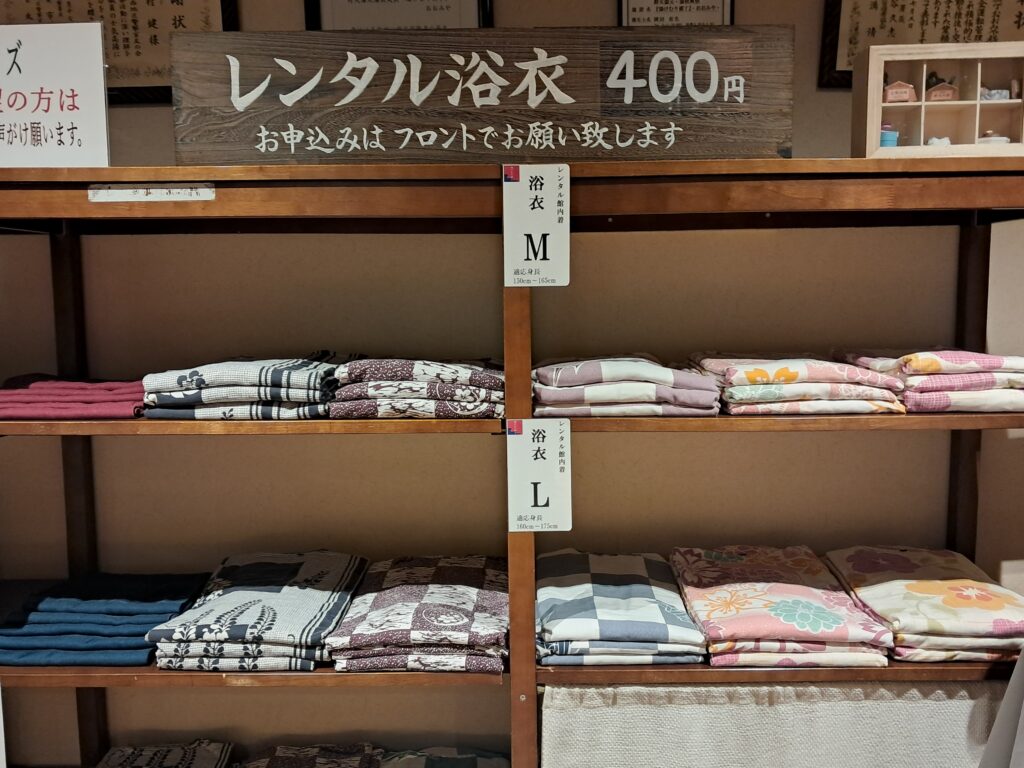
Towels are not included in the admission fee, so renting them is convenient if you go empty-handed.
Shampoo, conditioner, and body soap are provided in the bathing area and can be used for free.
The system at Yukemuri Yokocho Omiya is a format where you exchange your shoe locker key for an in-facility payment wristband at the manned reception counter.
The changing room locker key is separate, and you can freely choose whichever locker you like.
It’s a disappointment that the men’s bath lacks skin lotion and milky lotion.
There is no bedrock bath (ganbanyoku), but a massage parlor, exfoliating scrub service, and barbershop are attached, which you can use if desired.
What I personally rated high was that there was an employee permanently stationed dedicated to cleaning inside the bathing area.
They frequently cleaned the shower area in particular, and although the building and facilities are not new, they were kept relatively clean. The reception staff’s attitude was also bright, crisp, and made a good impression.
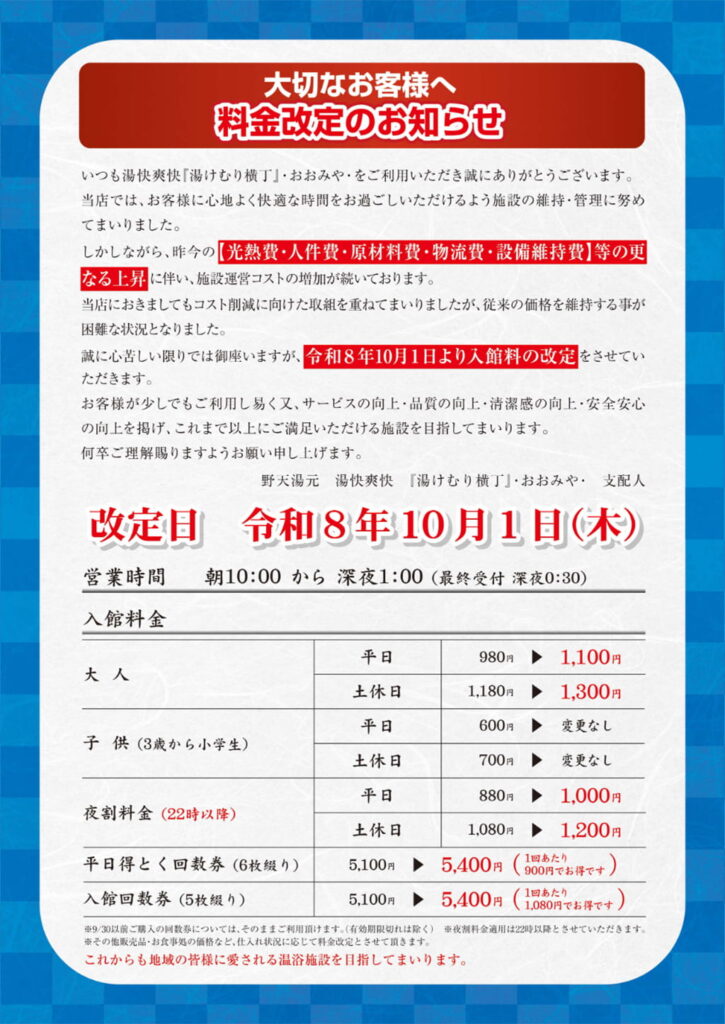
Starting October 2026, admission fees for Yukemuri Yokocho Omiya will be increased.
The details are below. Well, in this day and age of high inflation, part of it can’t be helped, but ¥1,100 on weekdays feels like quite a bold pricing strategy to me (personally, considering the quality of the baths, I think this price is way too high).
Yukemuri Yokocho Omiya: Spring Quality | Water Supply System
The hot spring at Yukemuri Yokocho Omiya is a natural hot spring named “Saitama Mitsuhashi Onsen” gushing from 1,500m underground.
The spring quality is a sodium-chloride spring, and the golden-tinged transparent water has hardly any odor or unique texture on the skin.
While it glides smoothly onto the skin, there isn’t much of a silky-smooth feeling left behind.
Despite ostensibly pushing the selling point of a “warming hot spring” (netsu-no-yu), there isn’t much of a feeling of your core staying warm either. Could the hot spring components not be all that concentrated…?
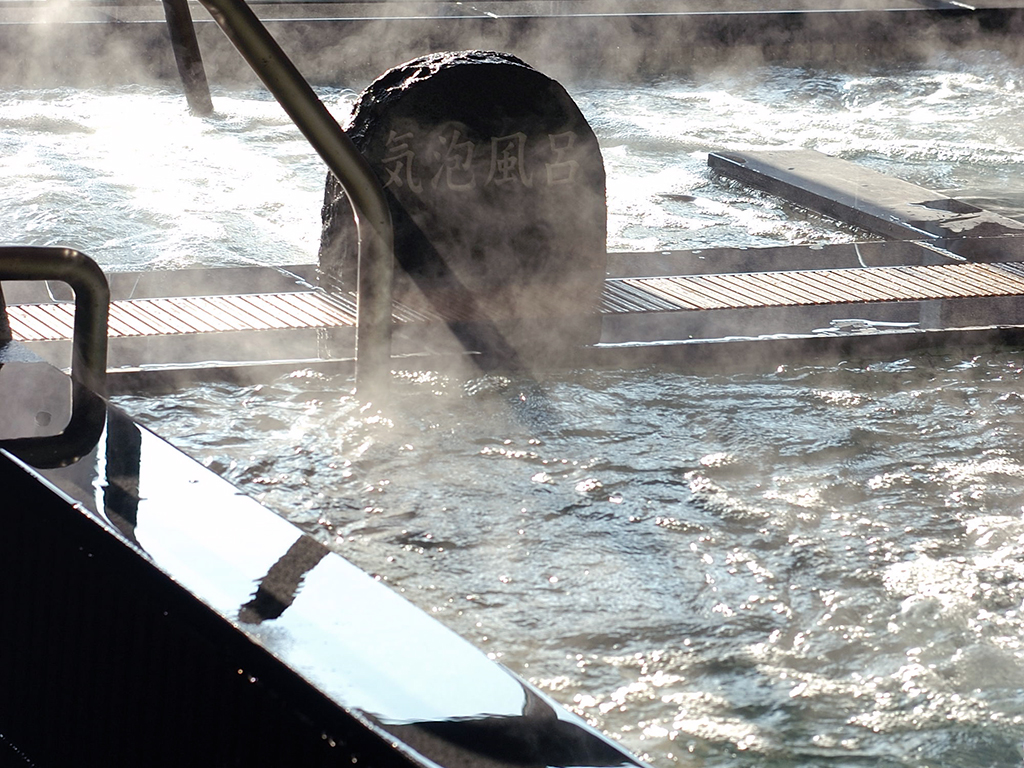
The water supply system at Yukemuri Yokocho Omiya is basically a circulation system.
Only the free-flowing source rock bath (37.5℃) in the outdoor area uses a direct, unheated free-flowing flow from the source, while all other tubs using hot spring water (such as the hot bath and lying bath) use heated, circulated water.
A good point was that almost all tubs had barely any chlorine smell and very little visible bath scum.
However, I still feel like it falls short in terms of hot spring quality (since Saitama has quite a few seriously rich, heavy hot spring sources, it might make me feel this way all the more).
Yukemuri Yokocho Omiya: Crowds | Clientele | Recommended Days & Times to Visit
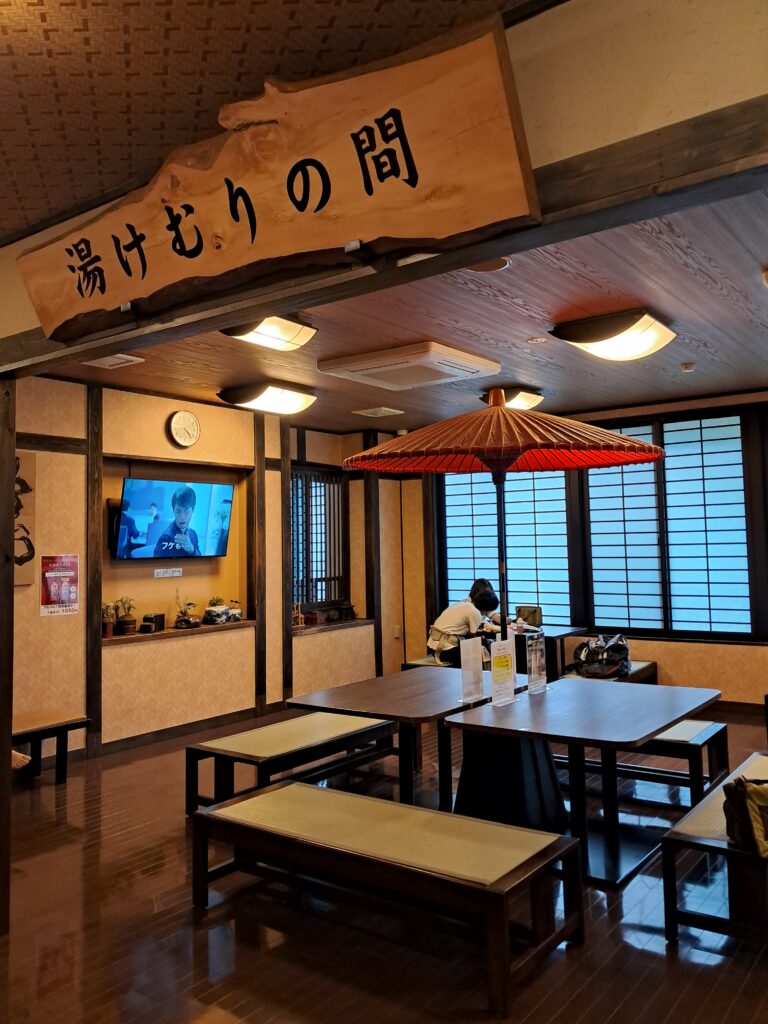
The facility of Yukemuri Yokocho Omiya itself is of a decent scale.
Perhaps because it is located somewhat away from major stations within Saitama City, they were able to secure a fairly large plot of land.
In contrast to the spacious grounds, the bathing area itself isn’t all that large.
It gives the impression that the majority of the property is occupied by the restaurant.
I (Nobuyo) visited Yukemuri Yokocho Omiya from Saturday afternoon into the night.
Regarding congestion, spanning the baths, restaurant, and relaxation areas, it felt reasonably crowded at all times of the day.
However, at many day-trip hot spring facilities, Saturday evenings get intensely packed, sometimes frustrating visitors with crowds so dense it’s hard to find personal space.
In that regard, the congestion level at Yukemuri Yokocho Omiya might actually be on the milder side for a Saturday. If you go on a weekday, you probably wouldn’t have to mind crowds at all and could spend your time even more comfortably.
One thing to keep in mind is the night discount starting at 20:00.
Past 20:00, people increase so drastically it’s almost funny, and the reception turns chaotic with entry-waiting and checkout queues mixed together… This is an area where I’d love to see slightly tighter operations.
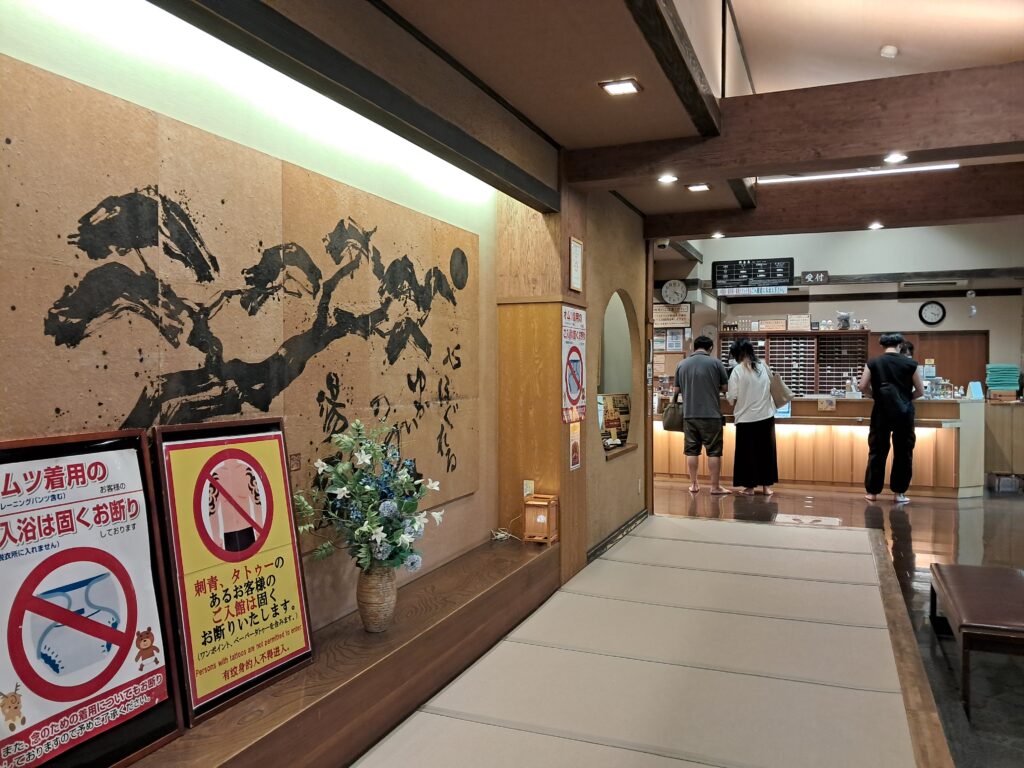
The core clientele of Yukemuri Yokocho Omiya consists of couples and adult family groups.
Despite visiting on a Saturday, there were strangely few small children, and corporate workers in their 20s to 40s were sparse.
The core crowd from midday to evening is people in their 50s and 60s, while high schoolers surge in after 20:00 when the night discount kicks in.
Almost everyone comes in groups of multiple people rather than solo, giving the impression that solo guests are fewer compared to other facilities.
Perhaps because the bathing areas (especially the outdoor section and sauna) aren’t very large, you get a strong impression that there are a lot of people present.
On the other hand, the restaurant and relaxation spaces aren’t overly crowded, though around 19:00—the peak dinner hour—the restaurant hit full capacity, so the swing between empty and crowded might be quite dramatic.
There aren’t many strict rules or signs posted prohibiting conversation, and customer manners are generally good, which is a plus.
However, because many people come with friends, it is naturally a bit livelier compared to other facilities. Solo guests might feel slightly out of place.
Access to Yukemuri Yokocho Omiya
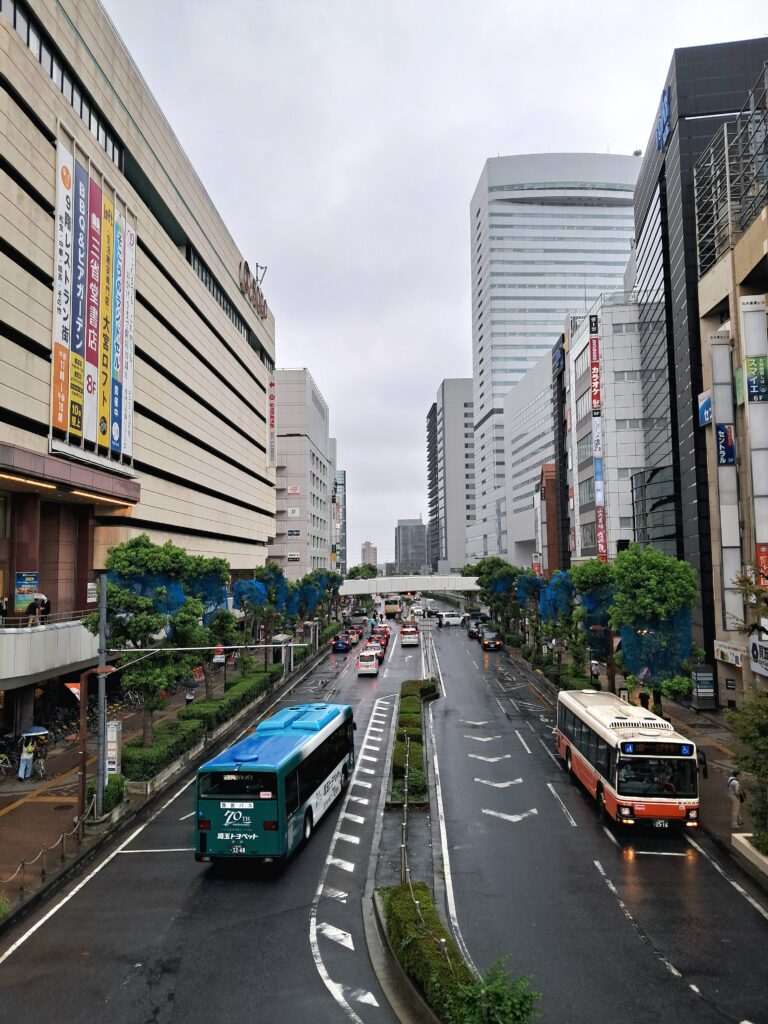
The nearest station to Yukemuri Yokocho Omiya is Omiya Station, served by JR and private railways like Tobu.
▶ Tokyo Station to Omiya Station: 35 minutes via JR Utsunomiya Line (no transfers) | ¥620
▶ Shinjuku Station to Omiya Station: 30 minutes via JR Shonan-Shinjuku Line (no transfers) | ¥530
▶ Kasukabe Station to Omiya Station: 20 minutes via Tobu Urban Park Line (no transfers) | ¥330
▶ Kawagoe Station to Omiya Station: 25 minutes via JR Kawagoe Line Rapid (no transfers) | ¥350
▶ Kumagaya Station to Omiya Station: 40 minutes via JR Ueno-Tokyo Line (no transfers) | ¥620
The distance between Omiya Station and Yukemuri Yokocho is a bit too far to walk comfortably.
However, a free shuttle bus runs from the West Exit of Omiya Station, so you won’t feel any real inconvenience with access.
The shuttle bus runs as frequently as once an hour, making it very convenient.
The travel time between Omiya Station and Yukemuri Yokocho is roughly 10 to 15 minutes, and it gets a fair number of users. Depending on the day or time slot, it can get close to full, so board with a little extra time to spare before departure.
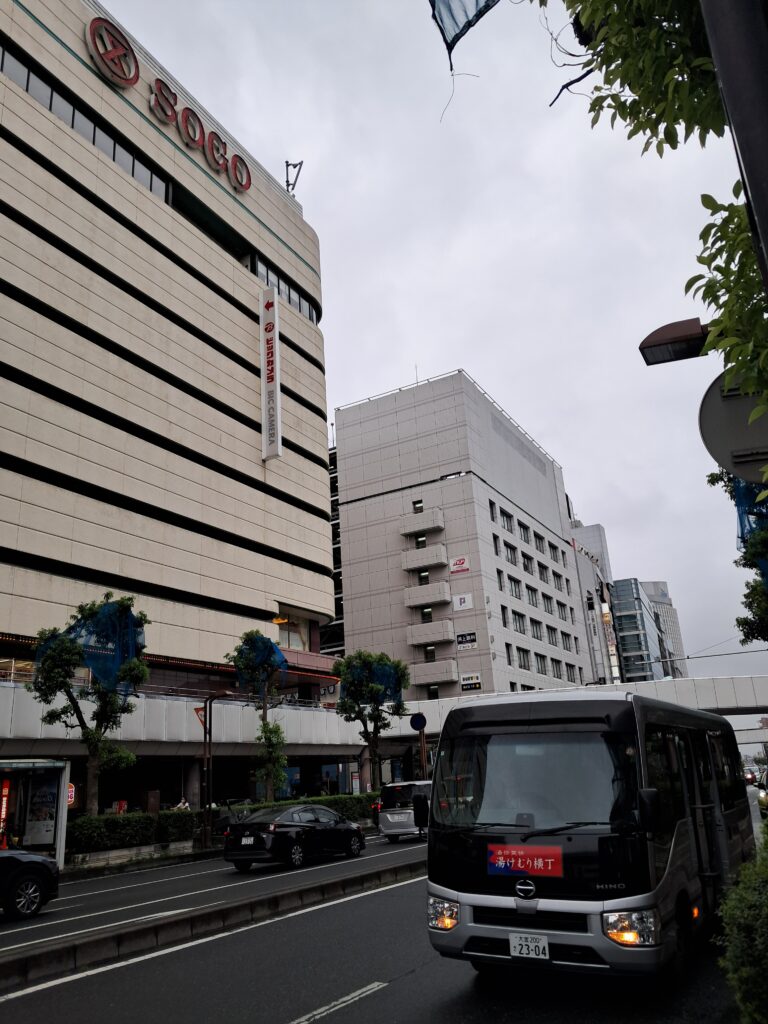
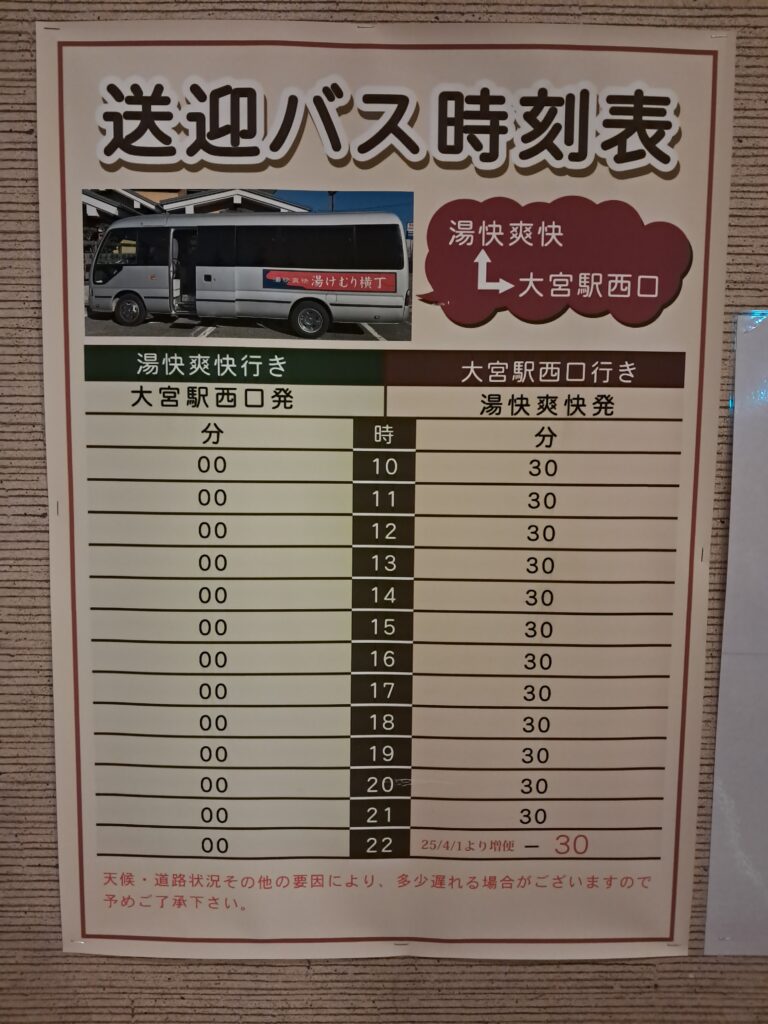
The boarding point on the Omiya Station side for the free shuttle is right across from the Sogo department store at the West Exit of Omiya Station.
As a rough guide, it’s around the Tomods Pharmacy across the main avenue from Sogo, though there are no signs posted. ▼
Starting about 10 minutes before departure time, a minivan-type bus with “Yukemuri Yokocho Omiya” written on the front will park there, so you just need to board it.
The drop-off/pick-up point on the Yukemuri Yokocho side is right in front of the facility’s main entrance.
The return bus waits a bit further back in the parking lot and pulls up right in front of the entrance at exact departure time to pick up passengers.
You can also board the waiting bus in advance and wait inside, so if you’re worried about seats filling up, hop on a little early.
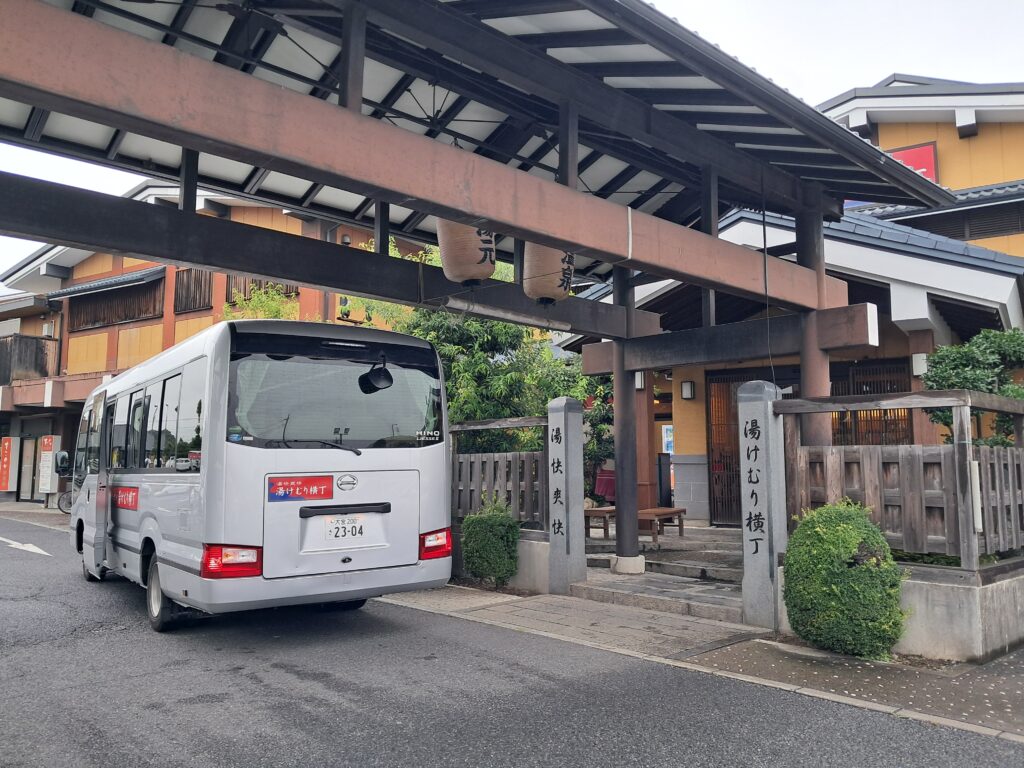
Even if you drive, there are about 180 free parking spaces around the facility, so you’ll have no trouble.
Since it’s located along a spacious main road, traveling by car is also quite convenient.
Sneaking into Yukemuri Yokocho Omiya!
Now that we generally know what kind of place Yukemuri Yokocho Omiya is, let’s head in! To the hot spring…!
I’ll write frankly about my actual bathing impressions and points where I thought, “I wish this were a bit more like this.”
Reception ~ Hall
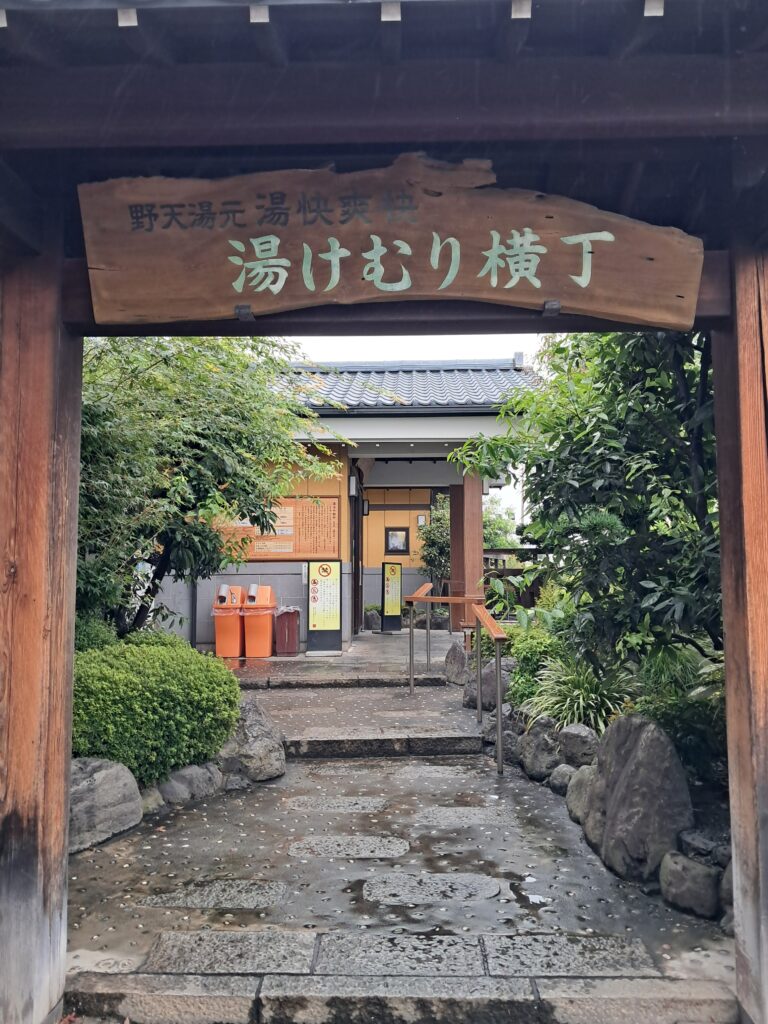
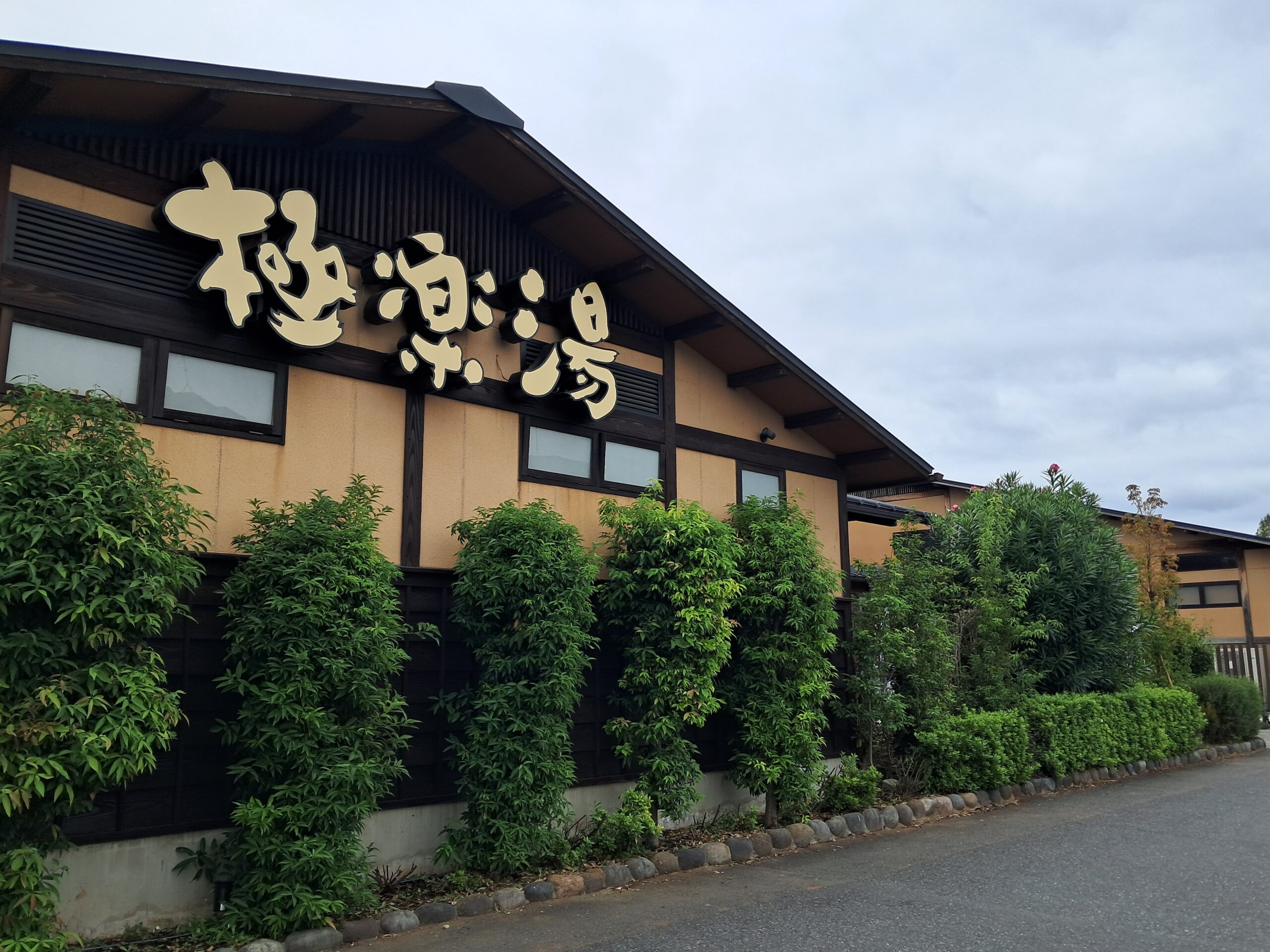
The exterior of Yukemuri Yokocho Omiya resembles a modest hot spring inn.
The wooden pillars and neatly placed patches of greenery give it just the right touch, raising expectations…!
Beyond the tatami-matted entryway lies the reception counter, where you exchange your shoe locker key for a settlement wristband. Payment is post-paid upon leaving.
The reception staff provided very polite customer service and properly explained the facility’s system, leaving a great impression.
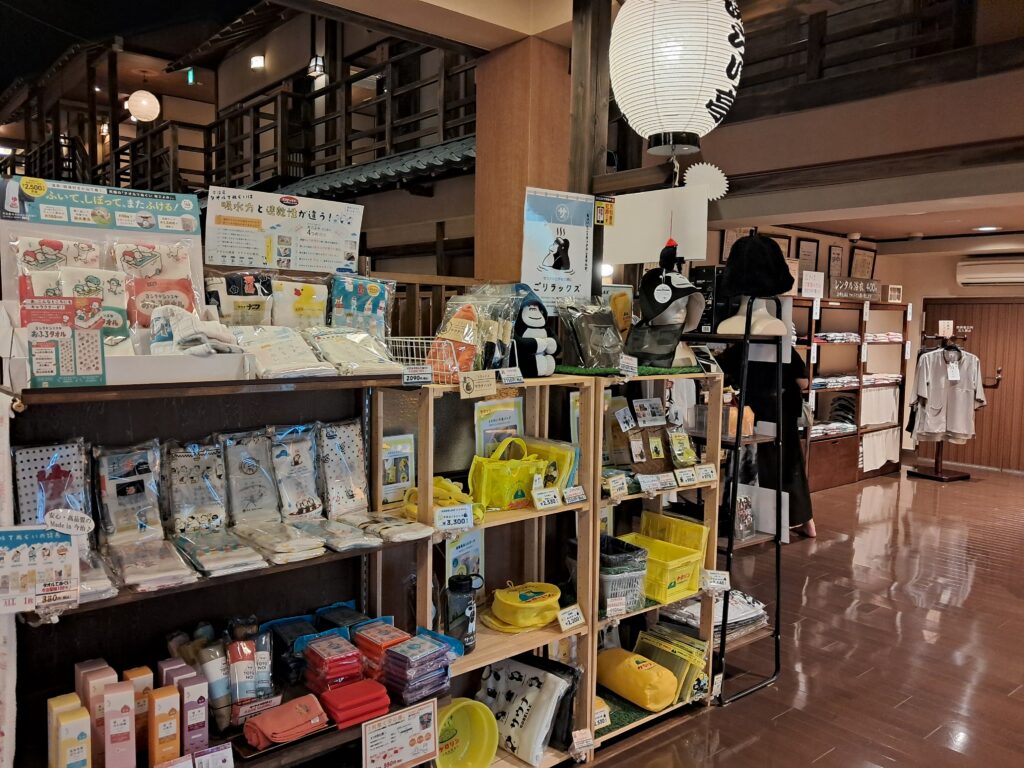
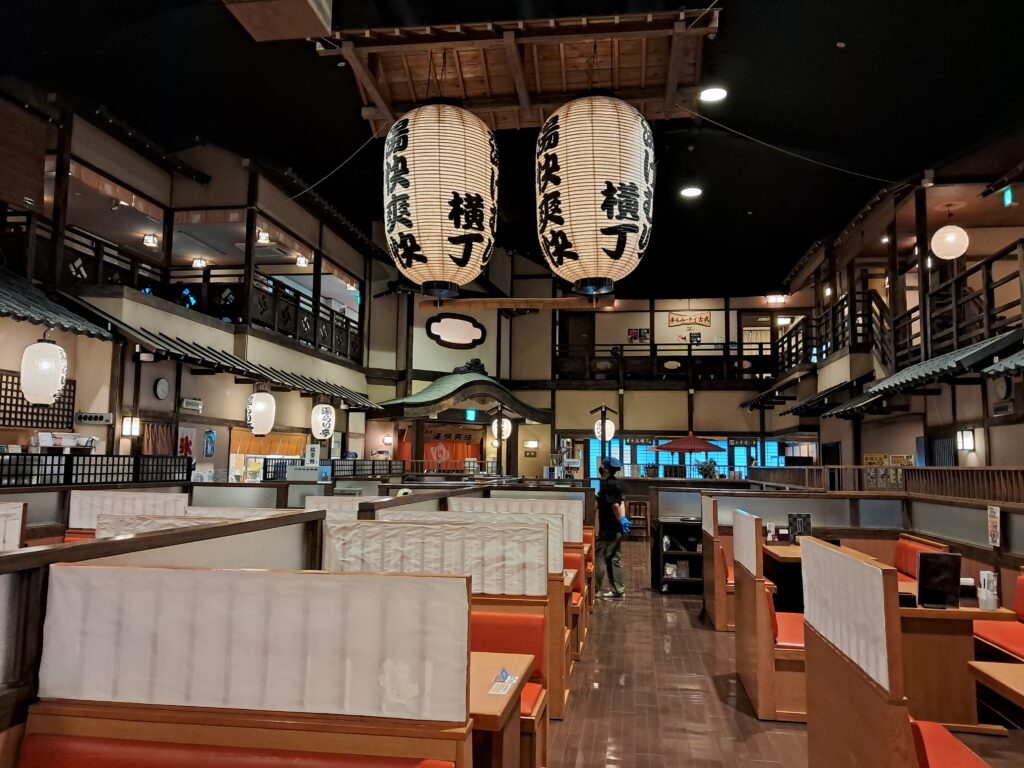
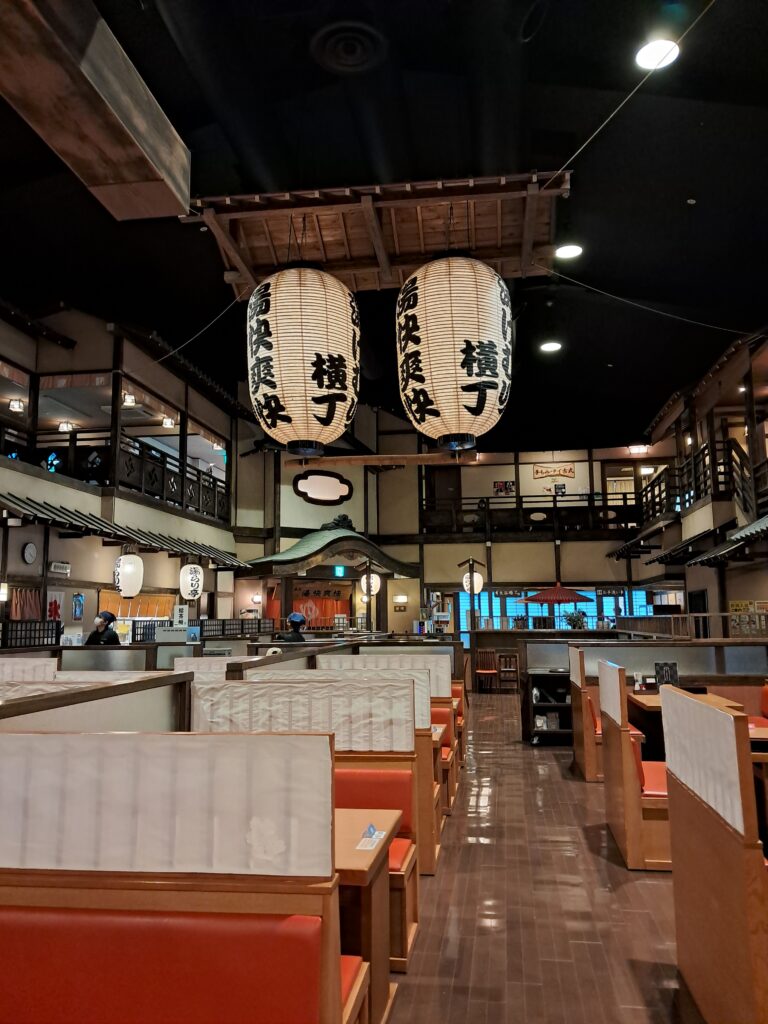
Stepping inside past reception, there’s a compact souvenir corner (though the selection is a bit underwhelming…), and beyond that spreads an alley-themed restaurant featuring an open-ceiling atrium in the middle.
The space with large lanterns hanging from the high ceiling has quite an impact, and the black-toned spatial design evokes a distinct Edo-period aesthetic.
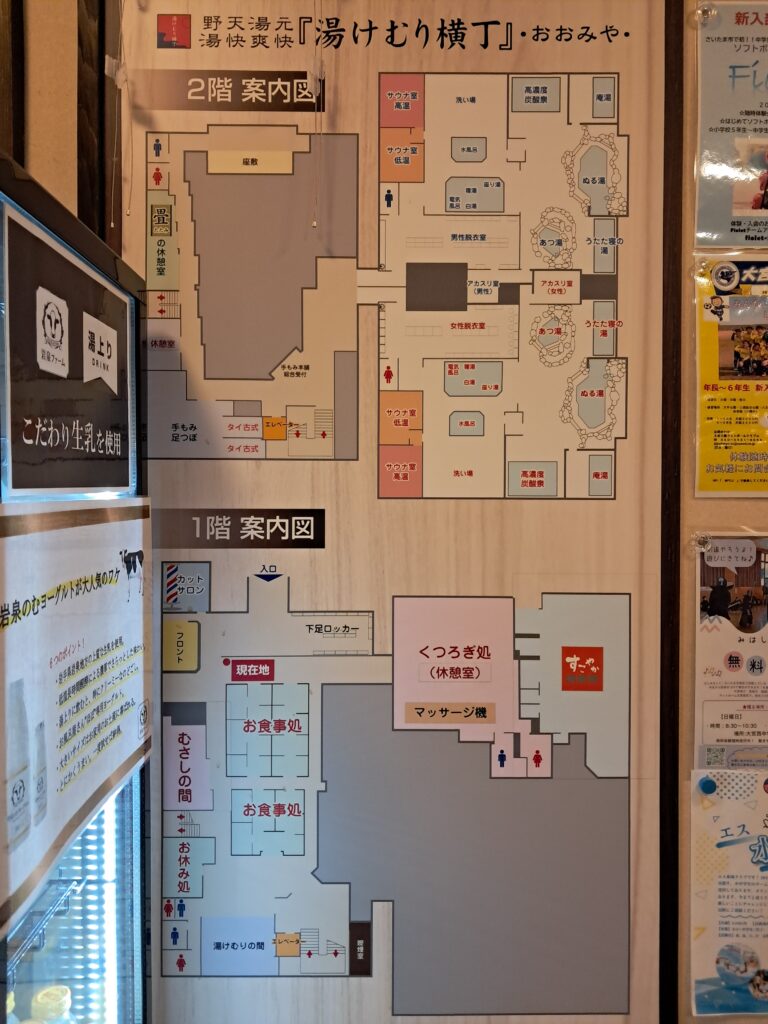
The facility is broadly split into a first floor for restaurants and relaxation spaces, and a second floor for the baths—a rather bold layout.
Climbing the stairs and walking a bit along the corridor running across the second-floor atrium brings you to the grand bath.
Is the Grand Bath Surprisingly Cramped?
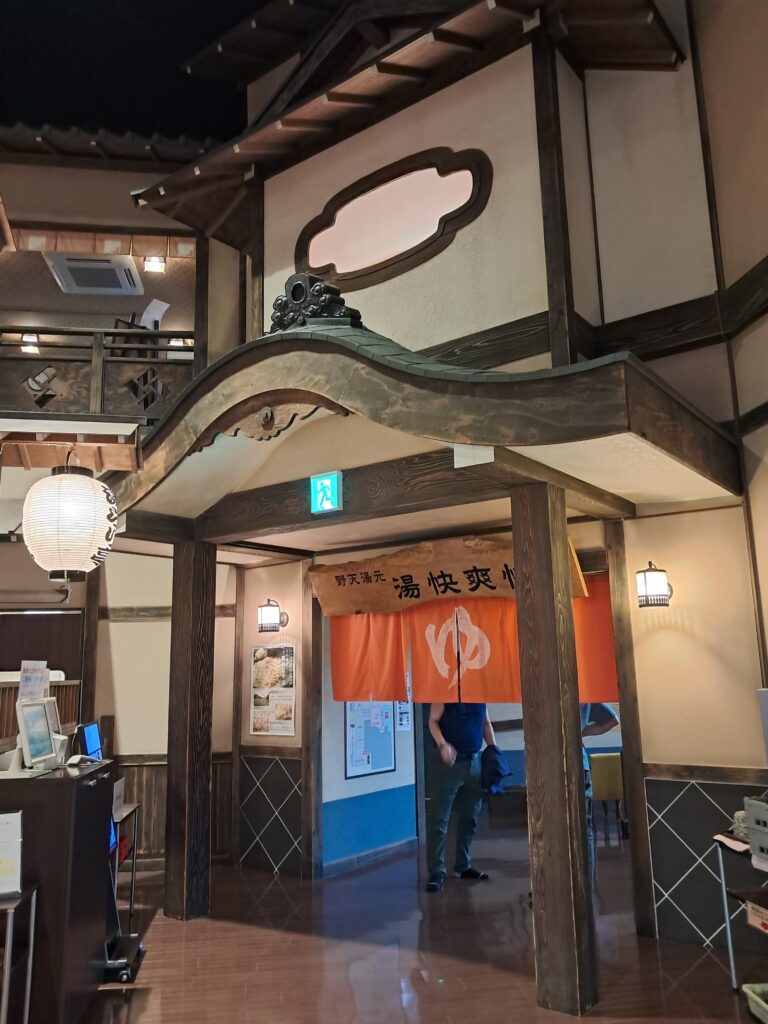
Passing through the Edo-overflowing entrance leads to the long-awaited bathing area.
Past the changing rooms is the indoor bath zone, which connects further out to the outdoor area.
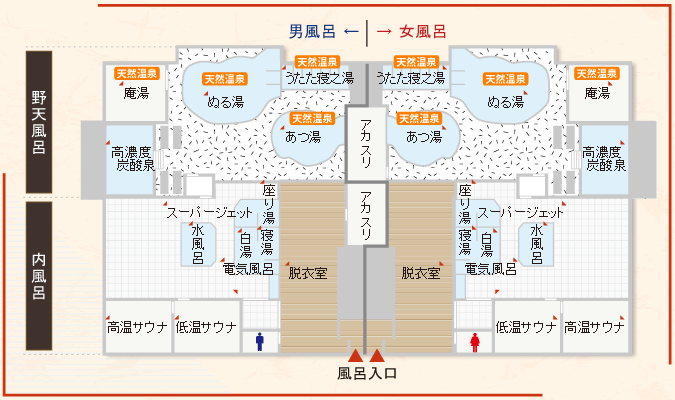
An Outdoor Area Lacking in Openness and Negative Space
The outdoor area (rotenburo) at Yukemuri Yokocho Omiya is a space where bathtubs are packed tightly into a relatively small plot of land.
The outdoor area consists of a semi-outdoor section with a roof and a completely open-air section without a roof, but because the original plot is small and there are many people, it’s unfortunate that you can’t experience much openness… It somehow fails to shake off the feeling of “being inside a building even though it’s outdoors.”
The number of chairs for cooling down is also limited, making it hard to unwind because there are very few places to sit, which was another point of concern.
While it feels like they tried hard to create a Japanese garden aesthetic, perhaps because the building isn’t new or the design is questionable, it ends up giving a somewhat half-baked impression.
What I personally liked was that, unusually for an outdoor bath in a day-trip hot spring facility like this, there was no television set up.
Nobuyo, the type of person who wants to enjoy the atmosphere itself, doesn’t really like those… the sound is too noisy…
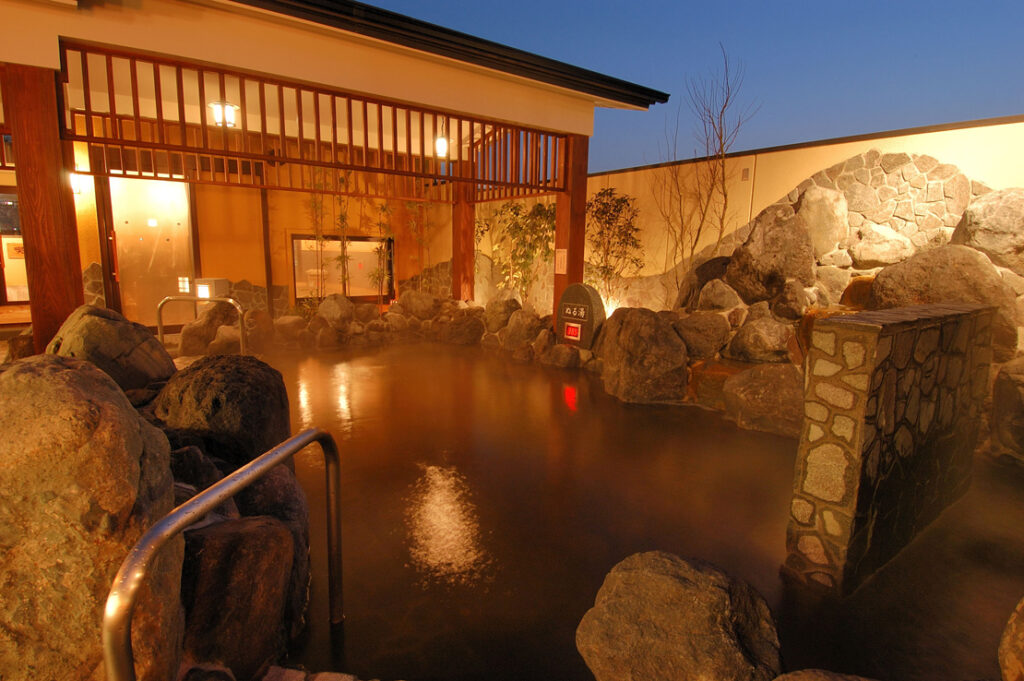
The main tub of the outdoor area and the one boasting the largest surface area is the Free-flowing Source Rock Bath (Lukewarm).
The water temperature is a tepid 37.5℃, which is great because it lets you take a long soak.
The slightly golden-tinged water has almost no saltiness or sliminess, and only a faint hot spring aroma.
It’s an agreeable, unidiomatic water likely to please everyone, but personally, I would have preferred richer water with a stronger hot spring character…
This is the only free-flowing tub at Yukemuri Yokocho Omiya, and a plus was that almost no chlorine smell could be detected.
On the other hand, despite being a rock bath, it directly touches the white walls of the building, making me think they aren’t very skilled at atmosphere-building or spatial design.
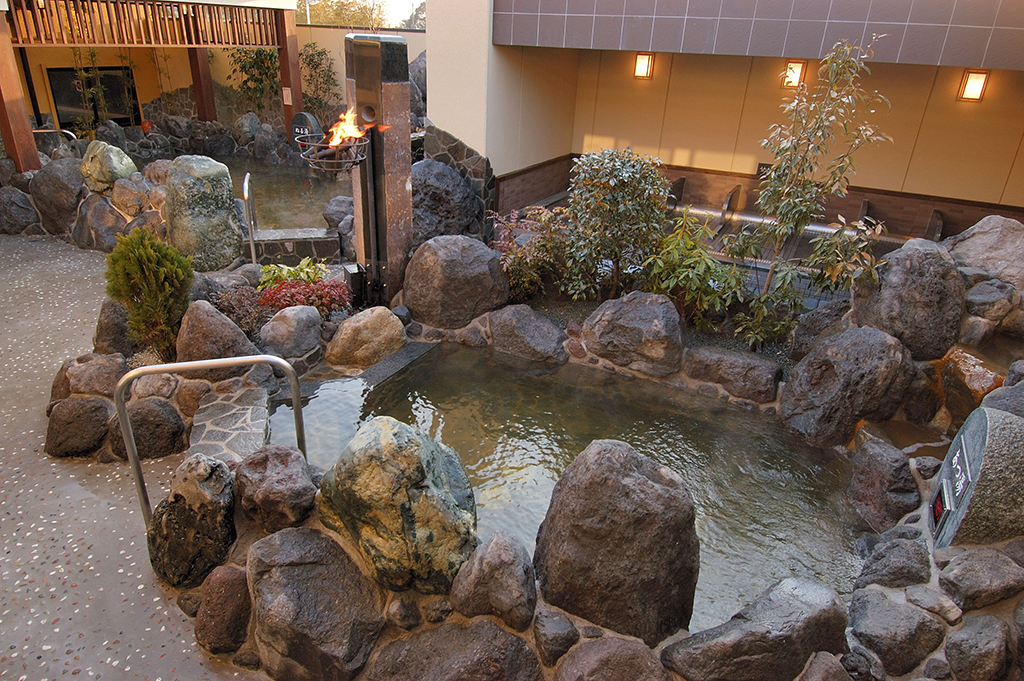
For those who prefer hotter water, the Hot Rock Bath is recommended.
This is the source water heated up to around 41℃, making it the hottest water at Yukemuri Yokocho Omiya.
It’s unfortunate that this isn’t free-flowing but a heated circulation system instead, though there was no chlorine smell.
Although it’s a somewhat cozy, compact tub, its quality as a rock bath is higher than that of the lukewarm bath.
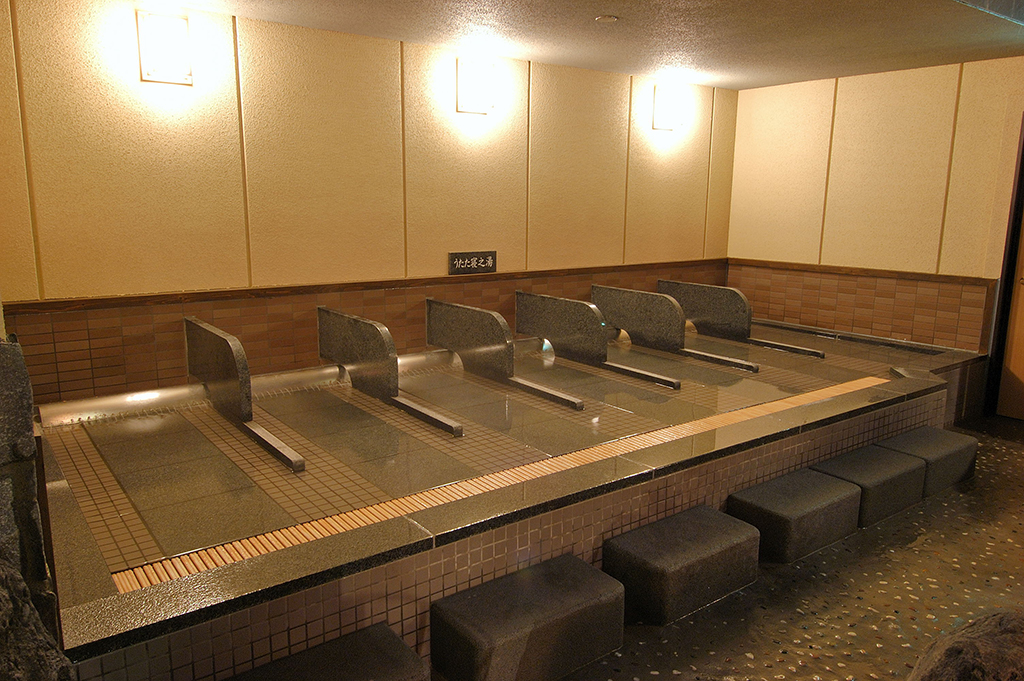
At the very back of the outdoor area, there is a space called “Utatane-no-yu” (Nap Bath) using source water heated to around 40℃ to 41℃.
The style has you lie down with water flowing from the headrest down your back. While it’s a common setup, for some reason it’s strangely crowded all the time.
The depth is just right and the temperature is comfortable, so you can relax quite a bit.
The downside might be that the overhead area is semi-roofed with no sense of openness, and if someone is snoring, it echoes tremendously (I was genuinely annoyed by an old man making monster-like noises).
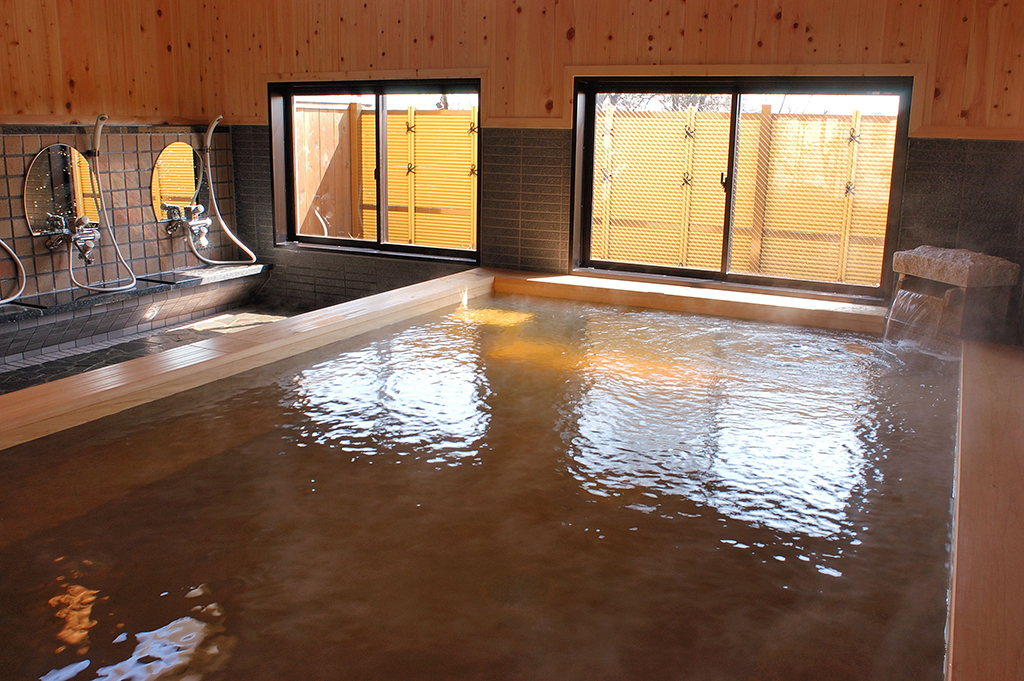
At the edge of the outdoor area sits a mysterious hut, inside of which is the 39.5℃ Anyu (Hermitage Bath).
Wondering “Anyu? What’s that?”, I learned that “An = a space to seclude oneself,” envisioning a “private space inside a small hut.”
The Anyu tub is classy, featuring Japanese cypress (hinoki) along its edges.
The water is not a hot spring, but a rotating weekly herbal medicinal bath. Even though it’s located in the outdoor area, because it’s inside a hut, air gets trapped, making it feel hotter than the actual temperature.
It’s a shame it’s not a hot spring, but the calm atmosphere like a private bath was quite to Nobuyo’s liking.
There are about 4 showers inside the room, and you can also use these instead of the main shower corner (though you might feel like people soaking in the water are staring at you).
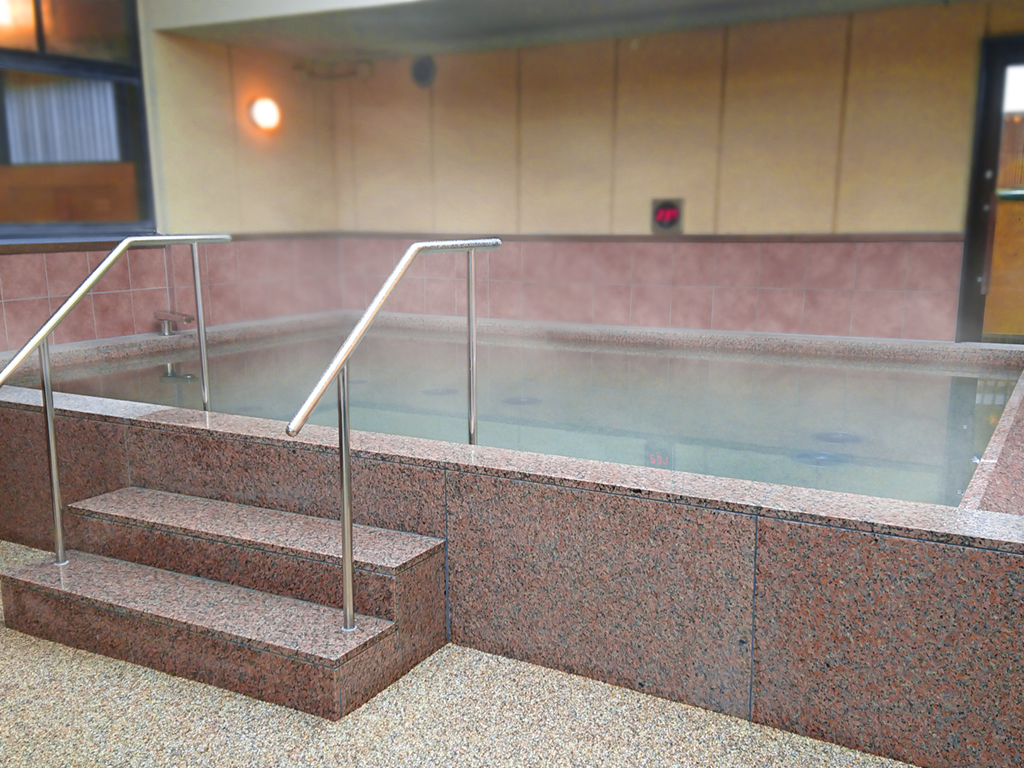
More popular than the hot spring or anything else is the Carbonated Spring at around 37℃ to 38℃.
It’s a heated tap water bath, but the carbonation is insanely concentrated, and the fizzing sensation is off the charts.
The carbonated tub is spacious, and a plus is that despite its popularity, it didn’t give the impression of being overly crowded.
Because it’s positioned to look out over the entire outdoor area, you can feel a decent sense of openness, making it personally my favorite bath in this facility.
An Indoor Bath Area Exuding a Heisei Super Sento Vibe
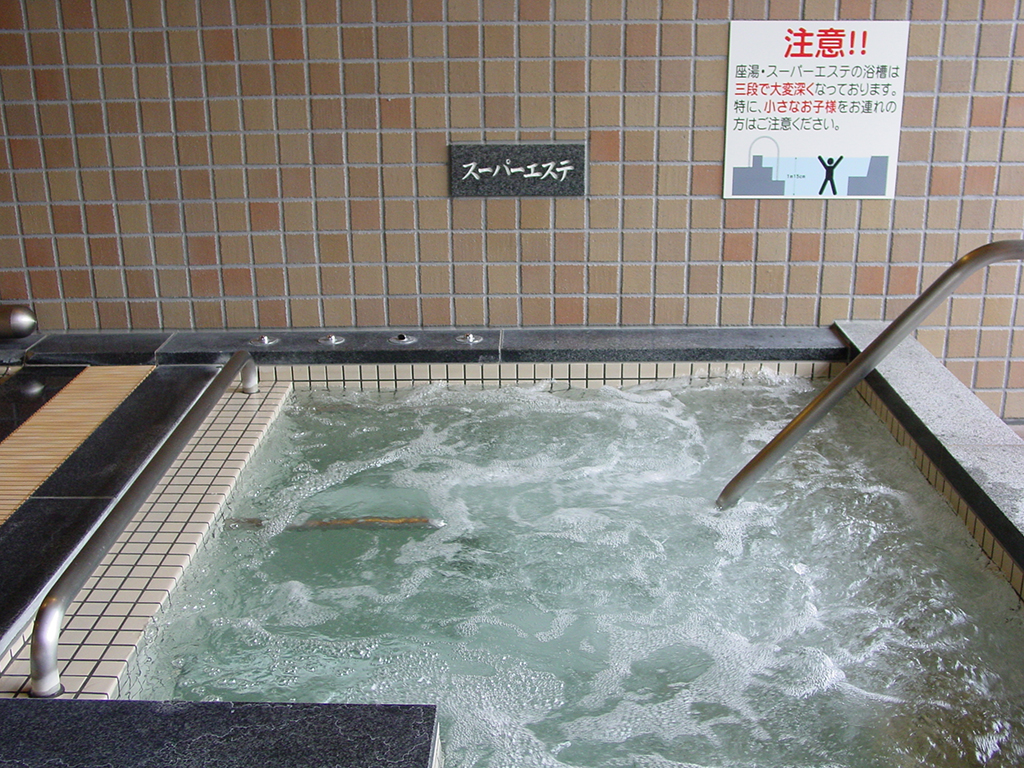
The indoor bath area at Yukemuri Yokocho Omiya contains no tubs using hot spring water.
Half of the indoor area is a shower corner, and the remaining half houses bathtubs and a sauna.
Serving as the main tub of the indoor area is a well-equipped array of attraction baths.
Sitting baths, lying baths, esthetic jet baths… several staple super sento jet tubs are installed.
The force and number of the jets are pretty standard, which didn’t really hit the mark for Nobuyo, who loves super-powerful jet baths…
The tub tiled entirely in square white tiles gives off a vibe reminiscent of a town sento from yesteryear.
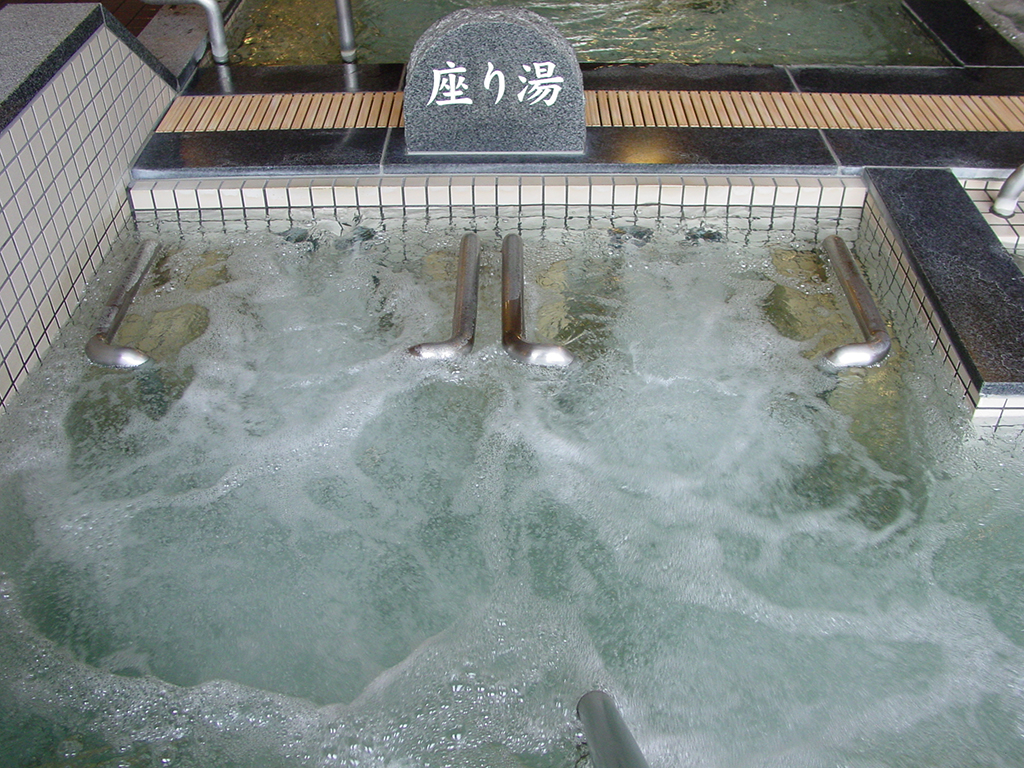
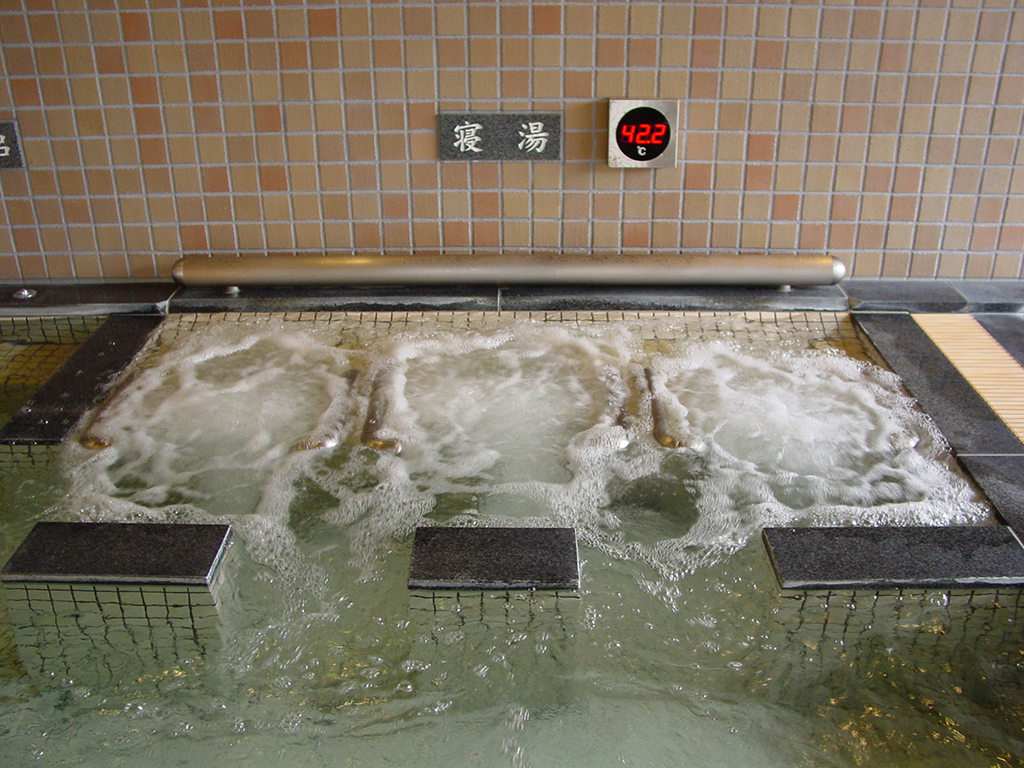
All of these attraction baths connect internally, and right at the very back is an electric shock bath.
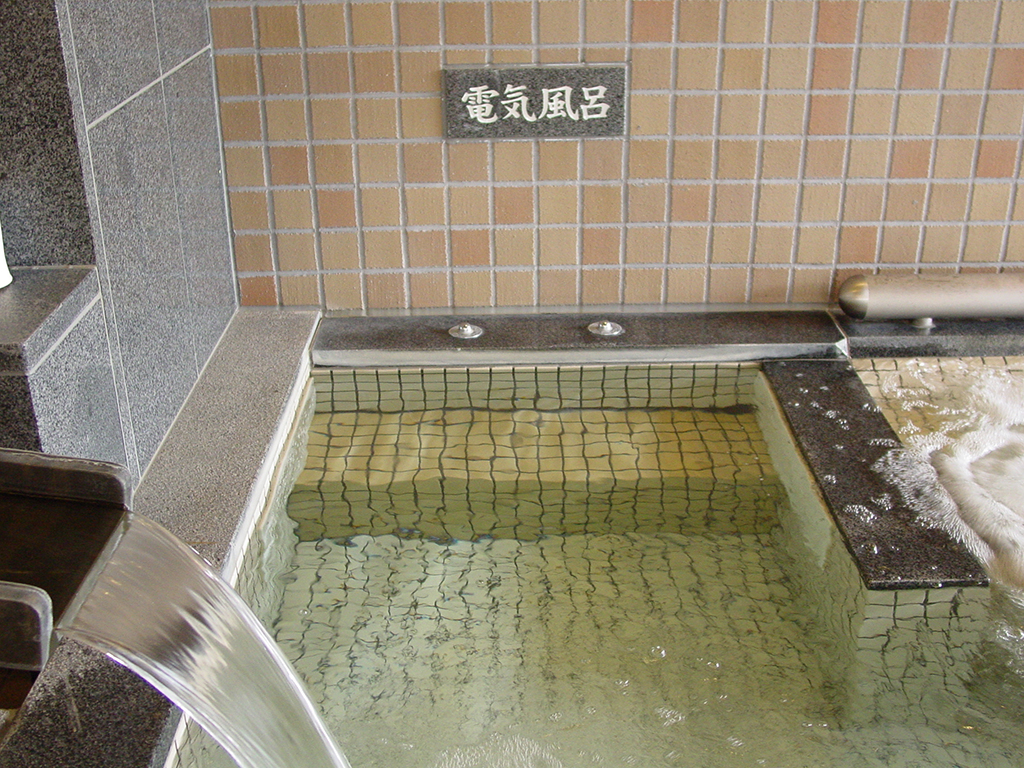
It’s the type of tub you don’t see as often in modern day-trip hot spring facilities, but nobody was using it. Has the popularity of electric baths already run its course…?
The shower corner has around 30 stations, which feels slightly scarce considering the crowd levels.
They are push-button types where water flows for about 10 seconds before stopping automatically, and it was nice that several spots had wall partitions separating them from neighbors.
Two Types of Saunas: High-Temp and Low-Temp
Up to this point, the grand bath at Yukemuri Yokocho Omiya was already quite substantial, but a welcome bonus is its strong sauna setup.
Two saunas—a high-temperature sauna and a low-temperature sauna—are positioned right next to each other, allowing you to sweat it out at a temperature matching your preference.
Neither the high nor low sauna has individual sauna mats; the style is to sit directly on the towels spread across the floor.
A schedule for towel replacements was posted, stating it’s done only three times a day (is that really okay?).
While it feels slightly questionable from a hygiene standpoint, there were no particular odors or stains, so personally, I didn’t mind it all that much…
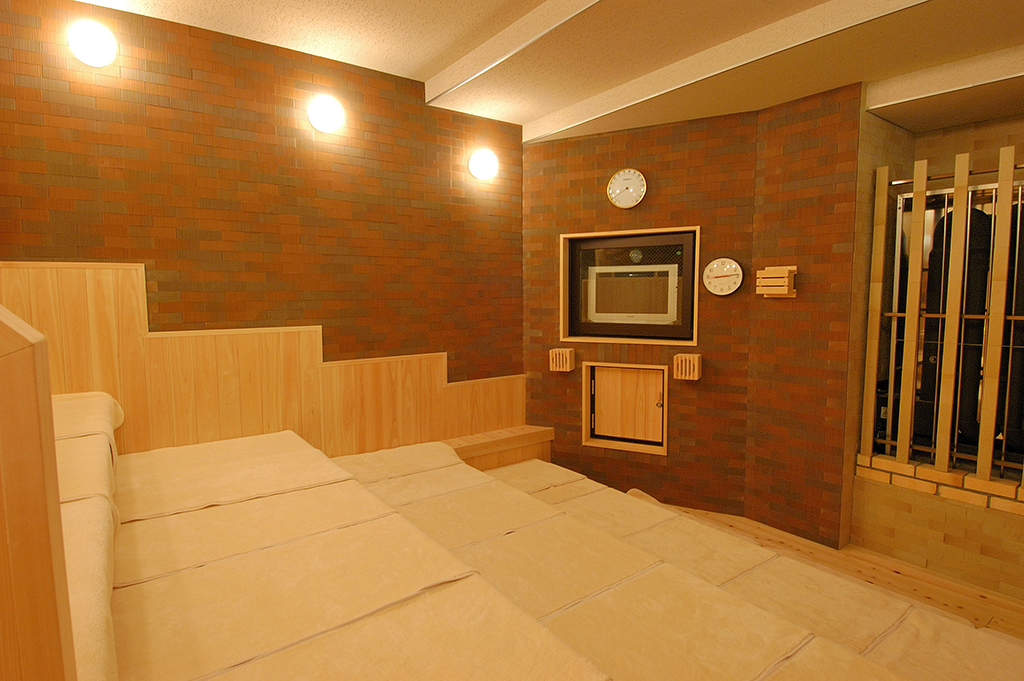
The high-temperature sauna accommodates about 20 people, feeling slightly cramped but within acceptable limits.
The thermometer inside pointed to 90℃, but it felt much lower than that in practice (felt like the 80℃ range).
There is no automatic löyly (automatic sauna steam system), a popular feature in modern saunas. It feels like a simple tower sauna.
The high-temperature sauna was constantly crowded, and the biggest bottleneck was finding personal space. Personally, the temperature felt deceptively low despite being “high-temp,” leaving me slightly underwhelmed.
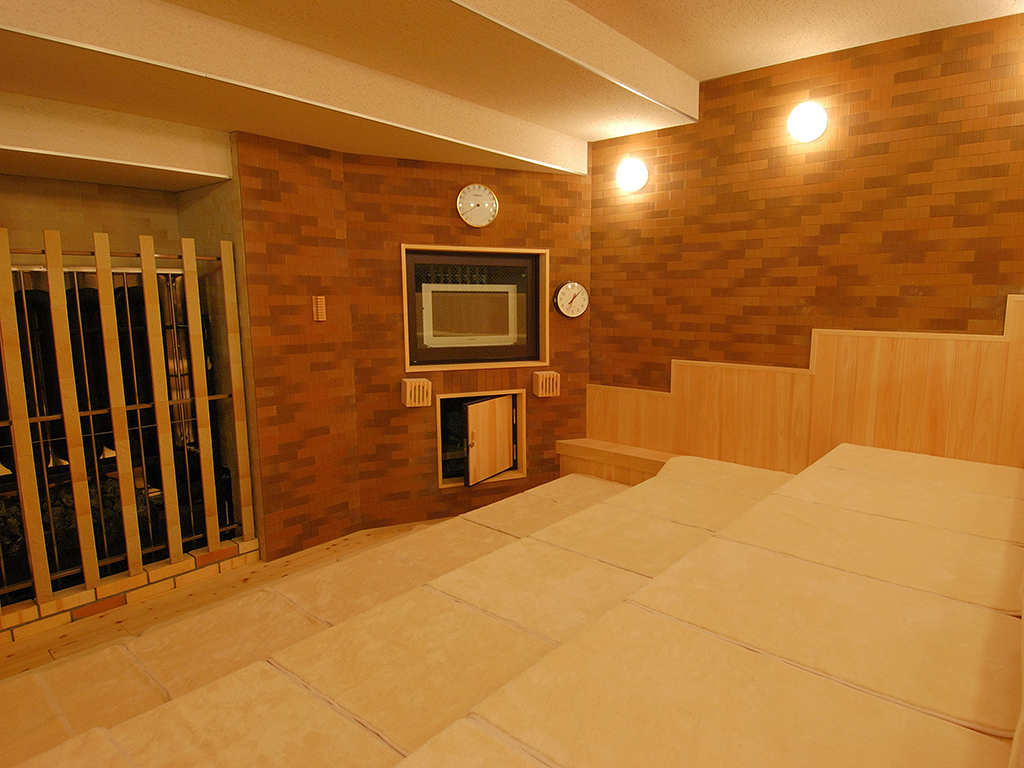
The low-temperature sauna right next door is set to 68℃. Its size and layout are identical to the high-temperature sauna.
This one seems to generate steam at regular intervals, and the feeling of your body warming up gently is nice.
It seemed less popular than the high-temp sauna and was a bit emptier; personally, I preferred the more relaxed feel of this low-temp sauna.
Both saunas are separated from the indoor bath area by a double-door system, meaning indoor temperature fluctuations were minimal—a high rating point.
A water dispenser and cold bath are set up right outside the sauna exit, making the traffic flow flawless.
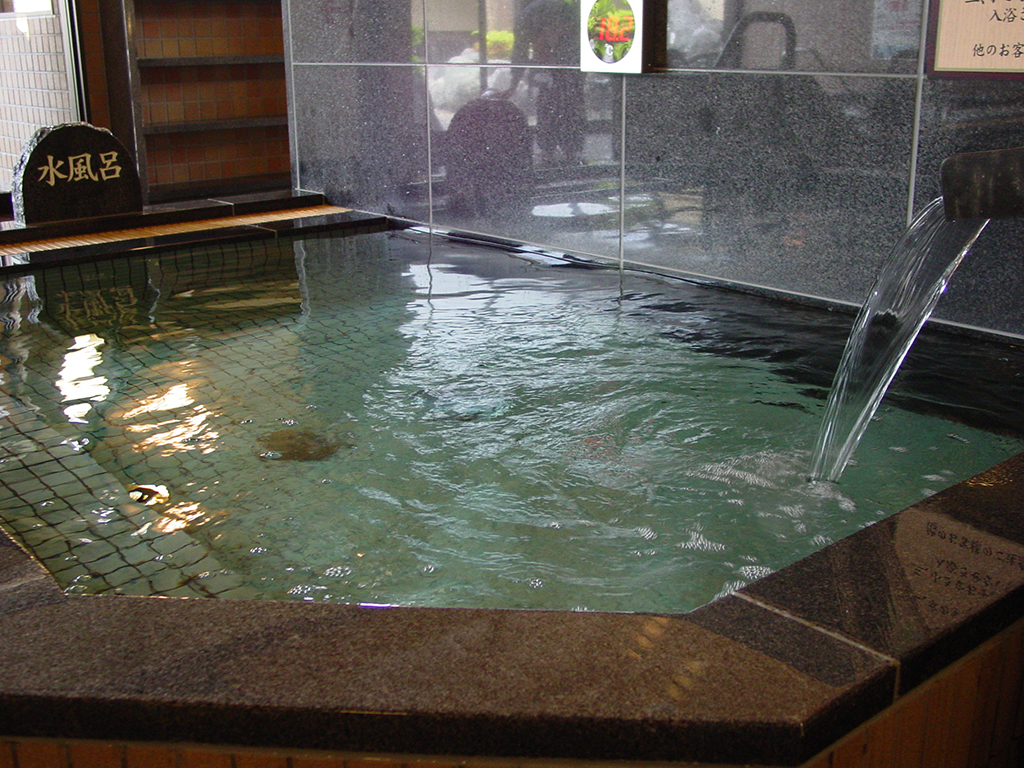
The cold bath is 17℃ with a capacity for about 5 people. It’s cold, but not freezing-cold (“kinkin”).
Somewhat strict rules are posted prohibiting diving or washing faces, but everyone seemed to follow them properly (personally, I don’t really care if someone dives into a cold bath, though).
Other Facilities (Relaxation Space | Dining Area, etc.)
The Relaxation Space Feels More Heisei Retro Than Edo Period
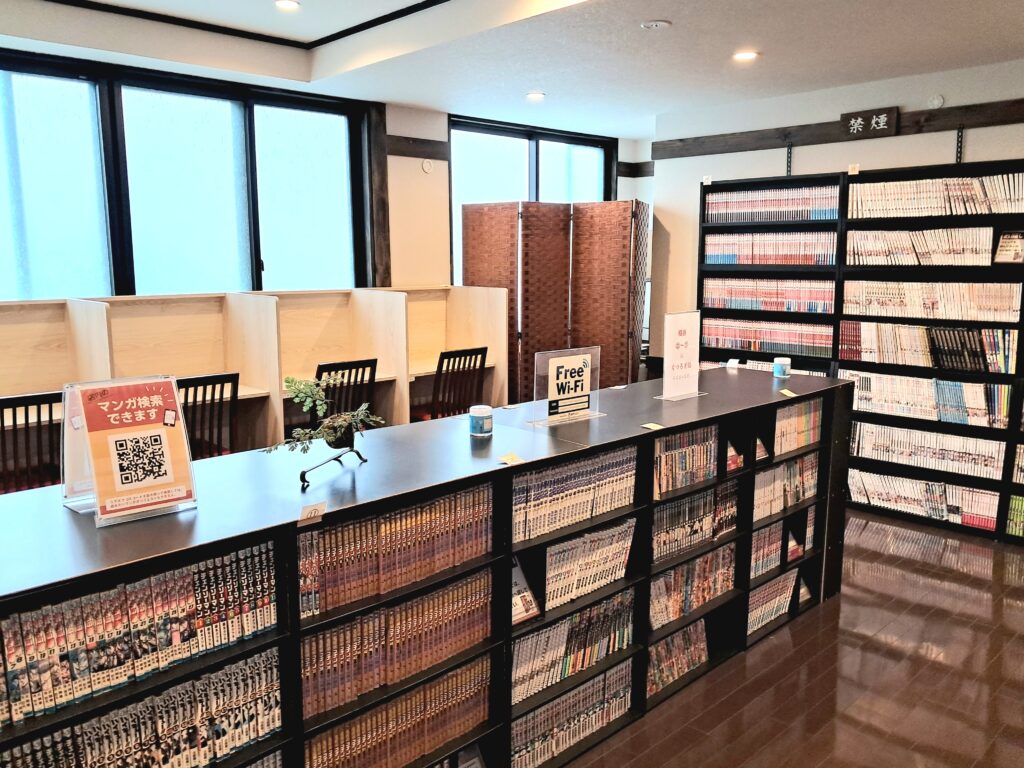
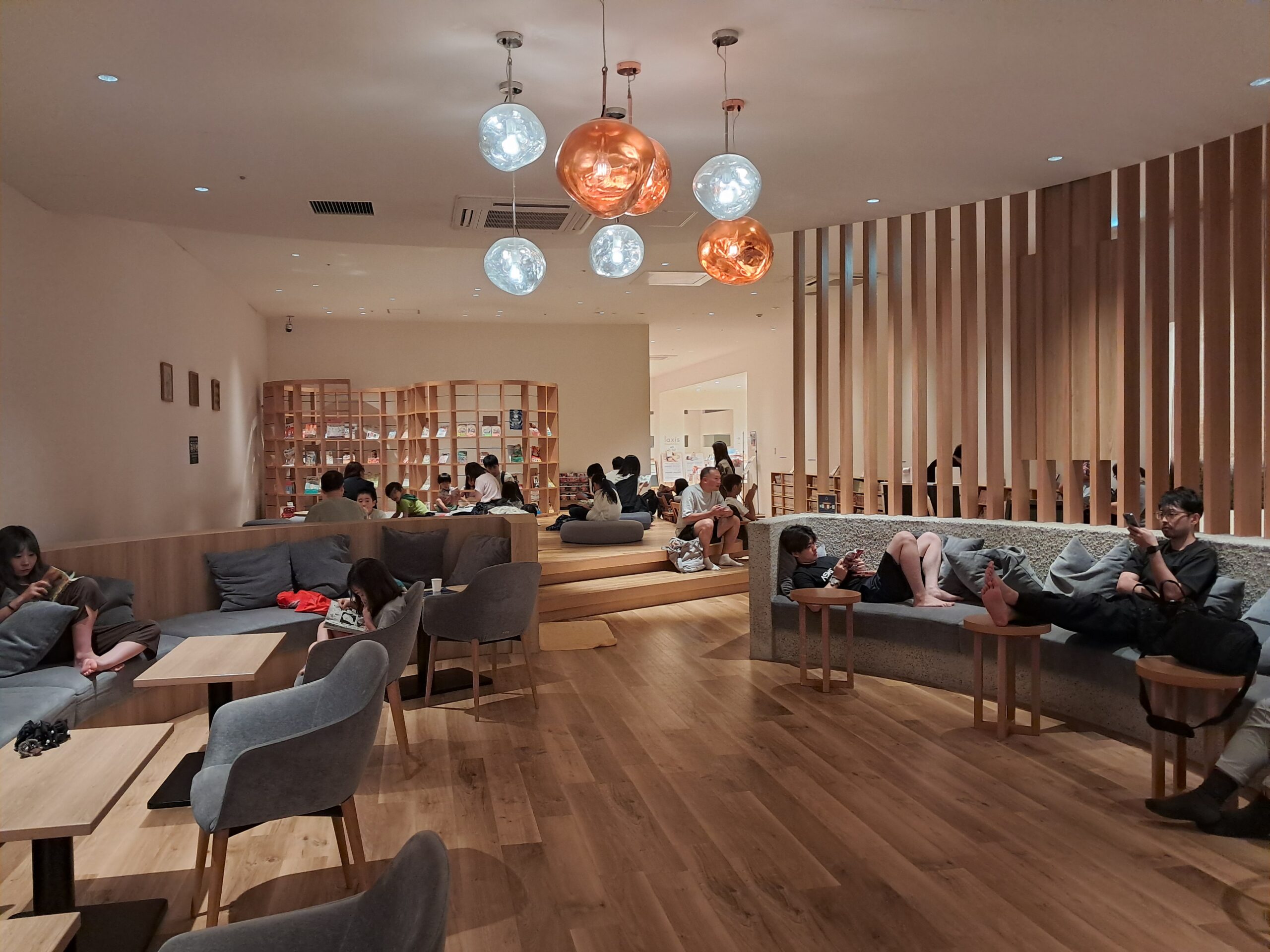
Yukemuri Yokocho Omiya features a total of three relaxation spaces: a small room where you can stretch out on tatami mats, a small room with chairs and tables for work or reading, and a large room lined with reclining chairs.
Manga is placed in the chair-and-table room; while it wouldn’t be fair to call it super fully-stocked, you can enjoy it normally.
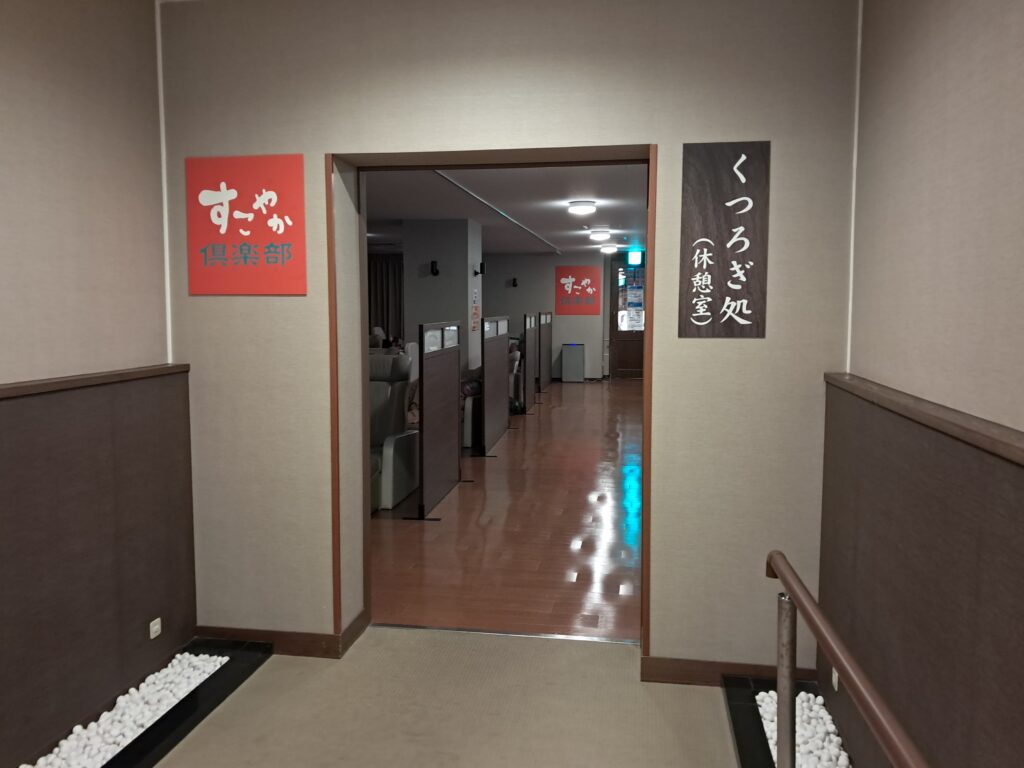
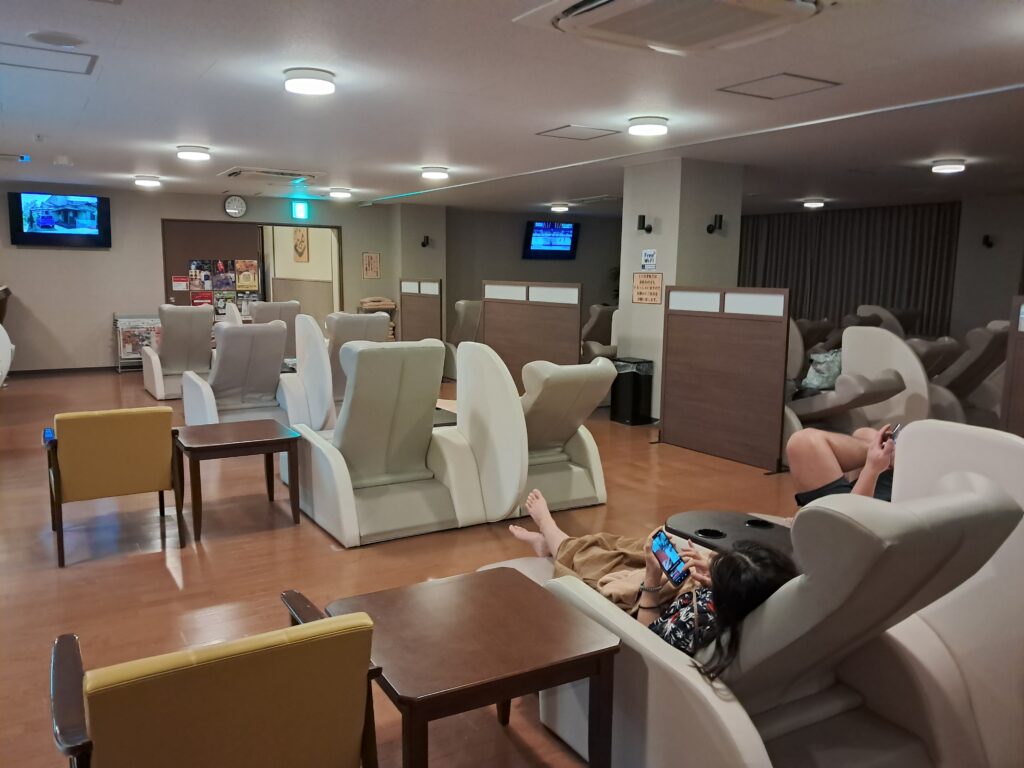
▲ The main relaxation area—the large room with lining recliners—has a pleasant, uncrowded atmosphere where you can kick back and relax.
Up to this point, the facility built a worldview conscious of Edo period charm, but for some reason, only here does the atmosphere completely shift to the Showa–Heisei era, giving off a “super sento from yesteryear” vibe, which is strange.
You might think, “Isn’t the concept falling apart?”, but since it’s comfortable in its own right, personally I was fine with it.
A Delicious and Cost-Effective Restaurant
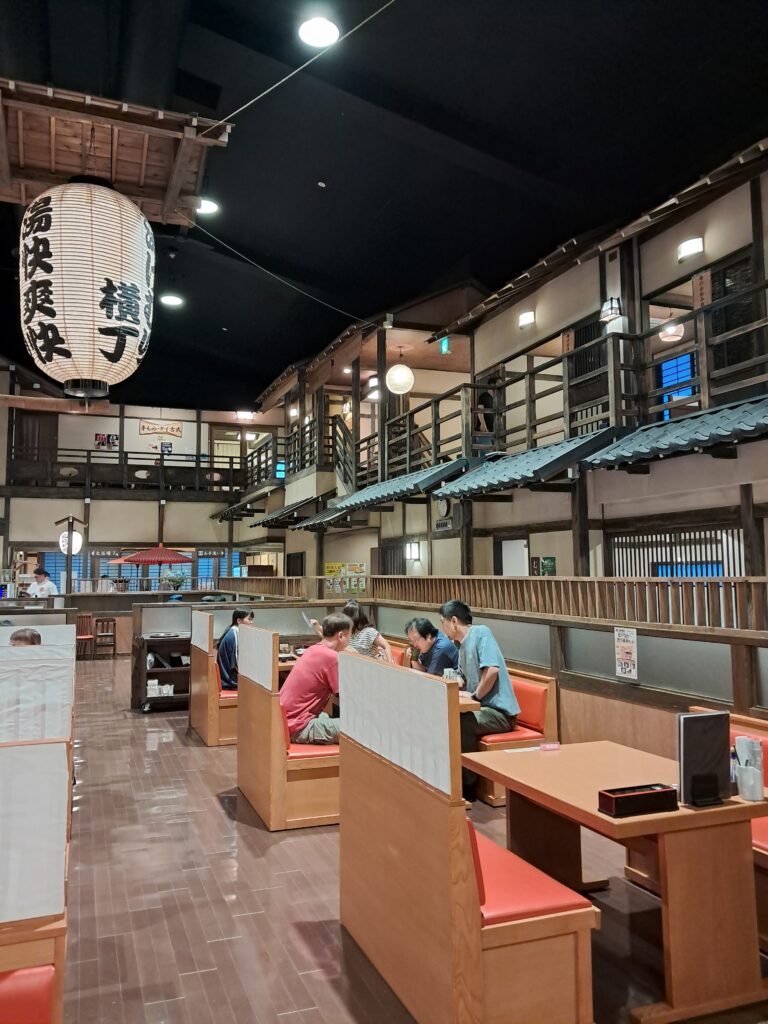
Occupying the largest area at Yukemuri Yokocho Omiya is the restaurant on the first floor of the building.
Unusually for a restaurant inside a hot spring facility like this, it uses a full-service restaurant format rather than self-service, and it’s nice that they have both table seating and solo counter seating available.
The restaurant staff are brisk and efficient, though a bit rushed (though unavoidable given it was the peak Saturday dinner hour).
You look at the menu at your table, place your order verbally with the staff, and they also serve the dishes to you.
The menu feels standard for a day-trip hot spring facility, without exceptionally unique dishes.
It offers a broad lineup of foods that make you want to eat a hearty meal after bathing. ▼
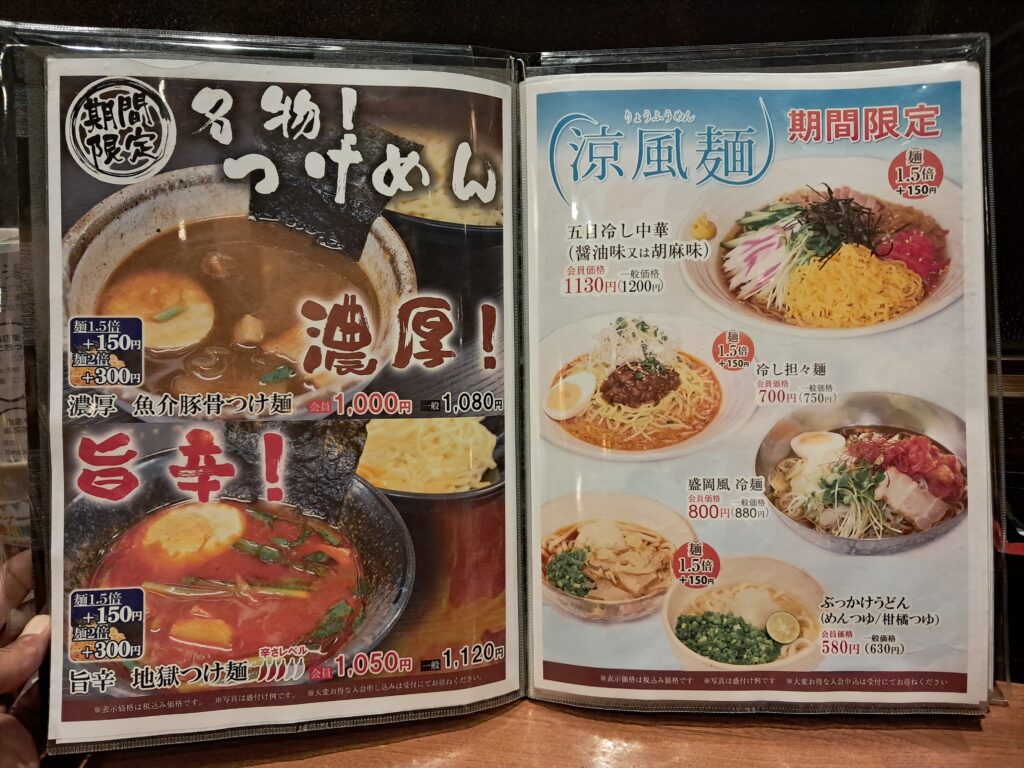
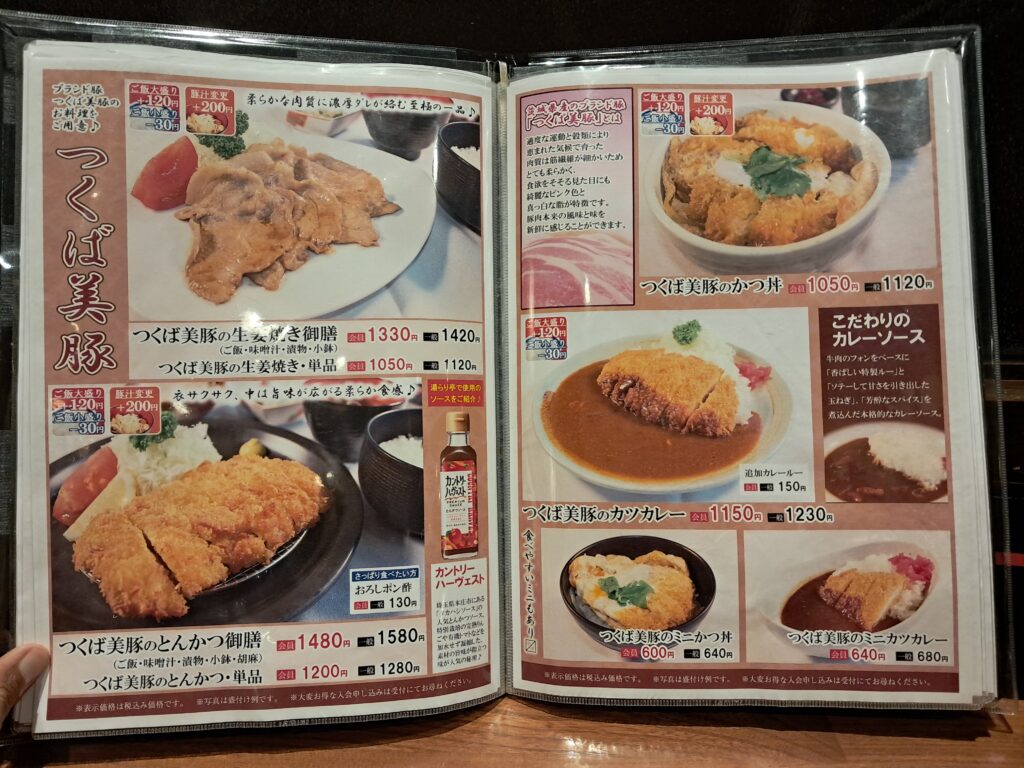
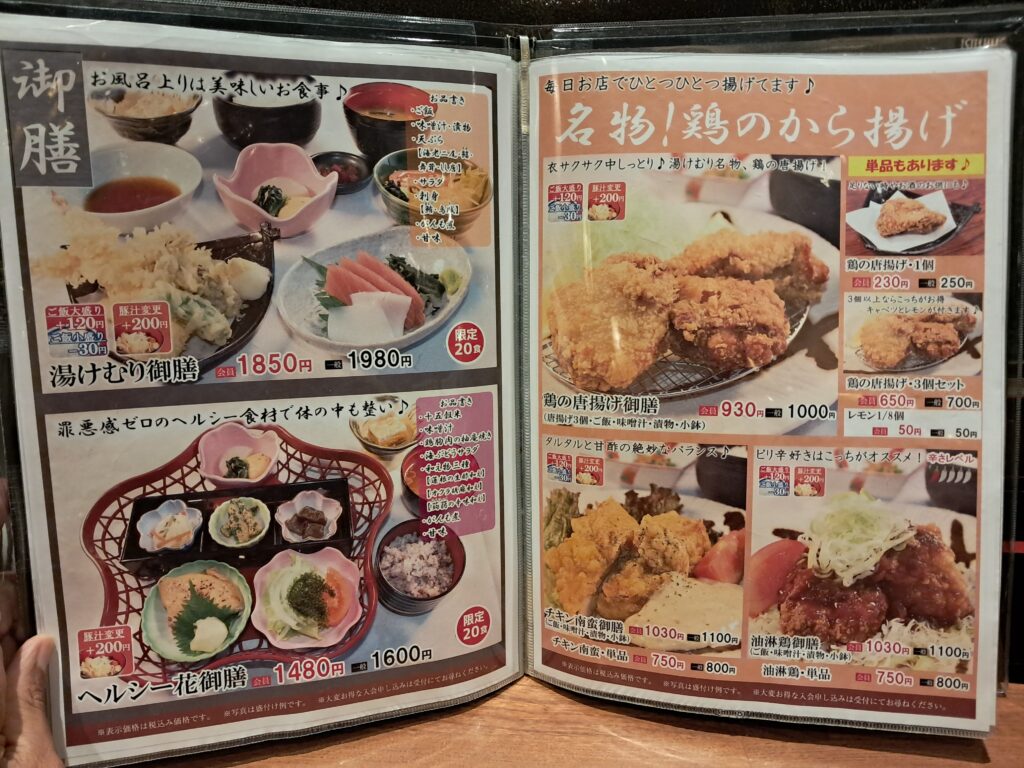
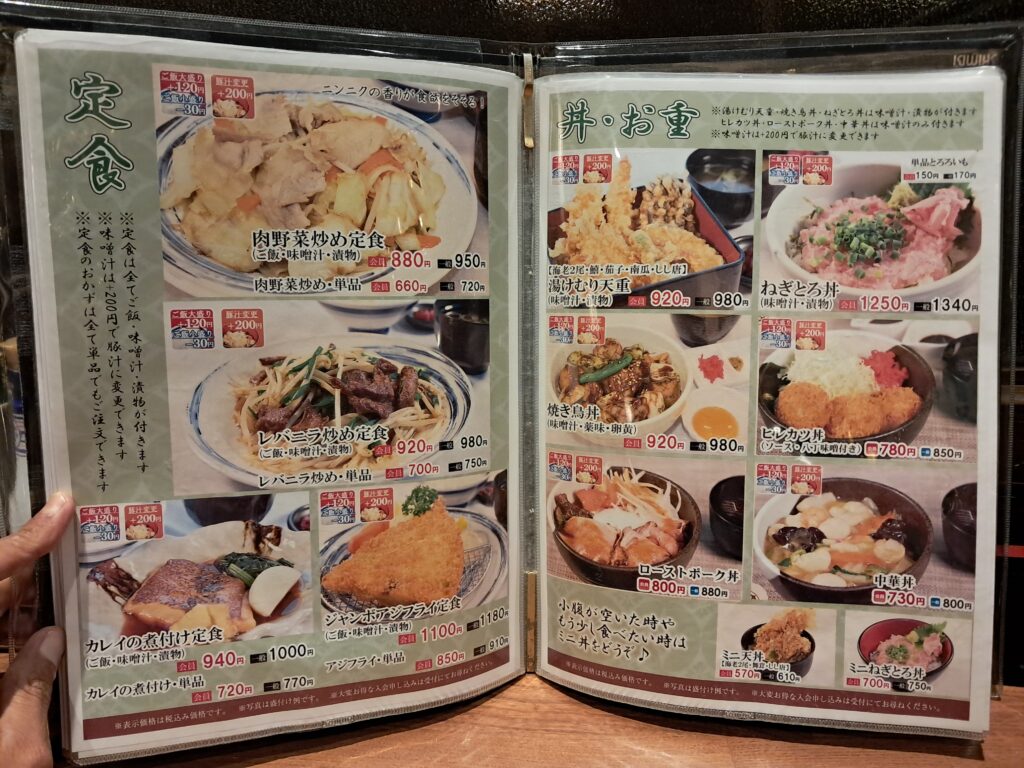
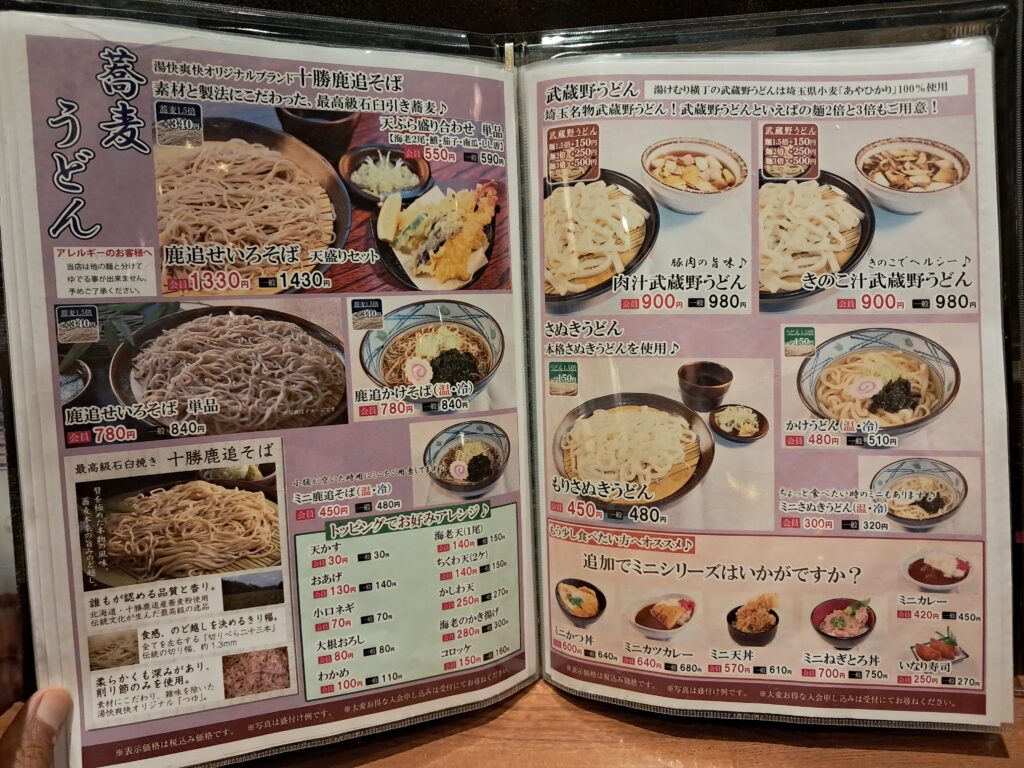
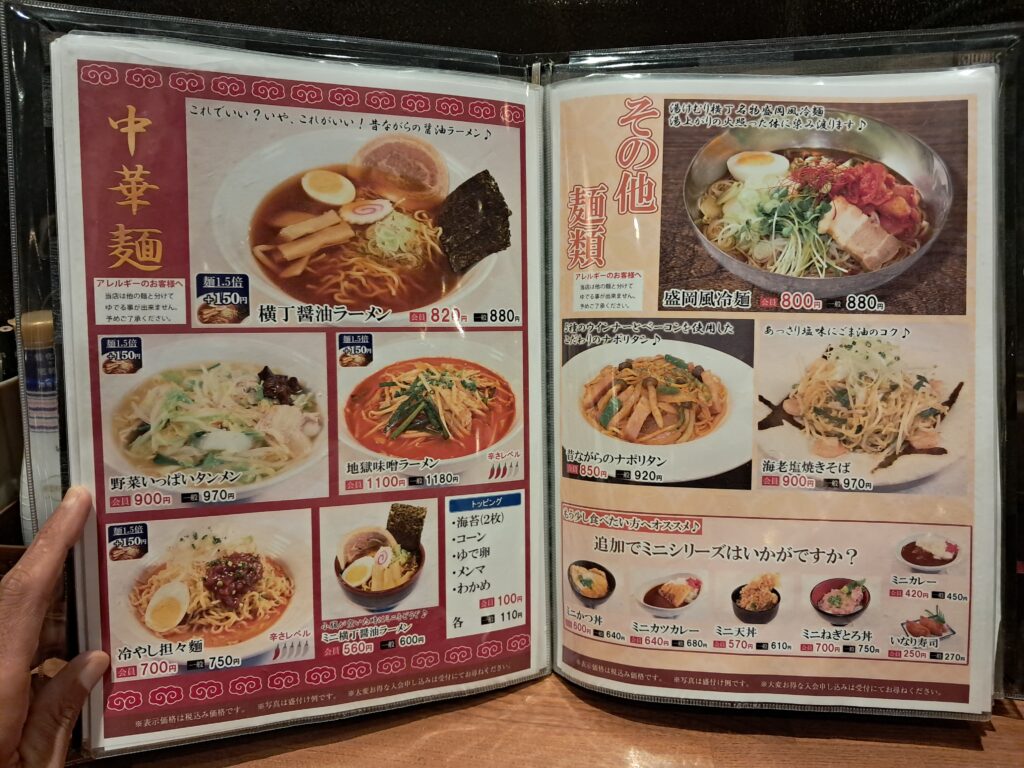
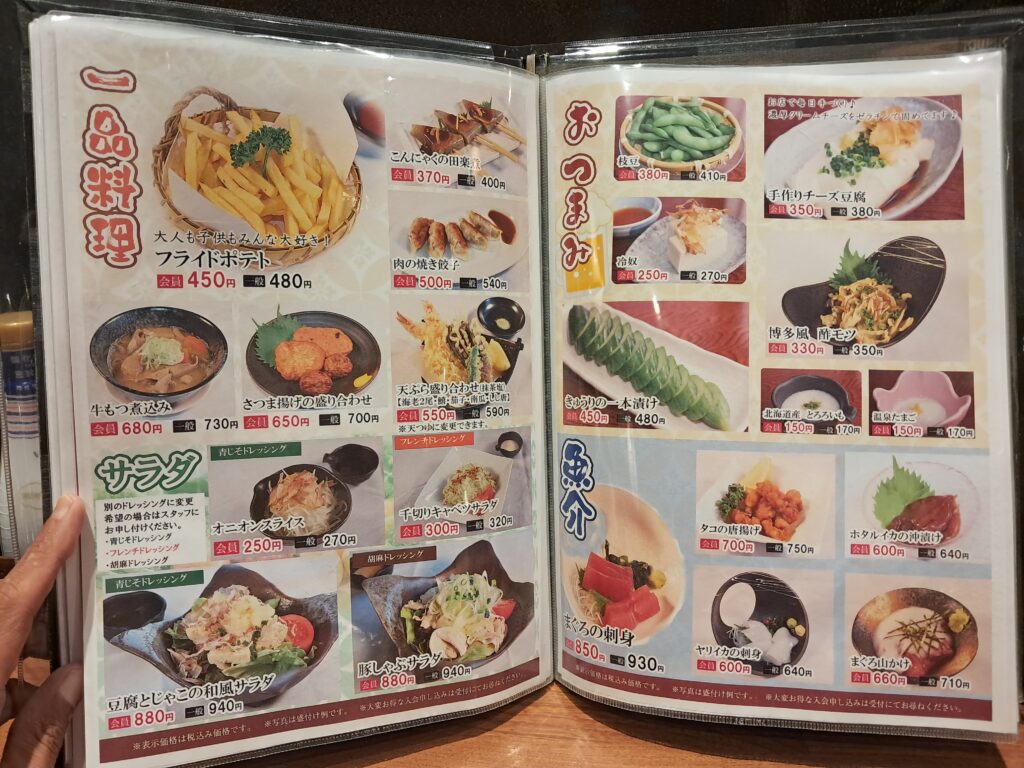
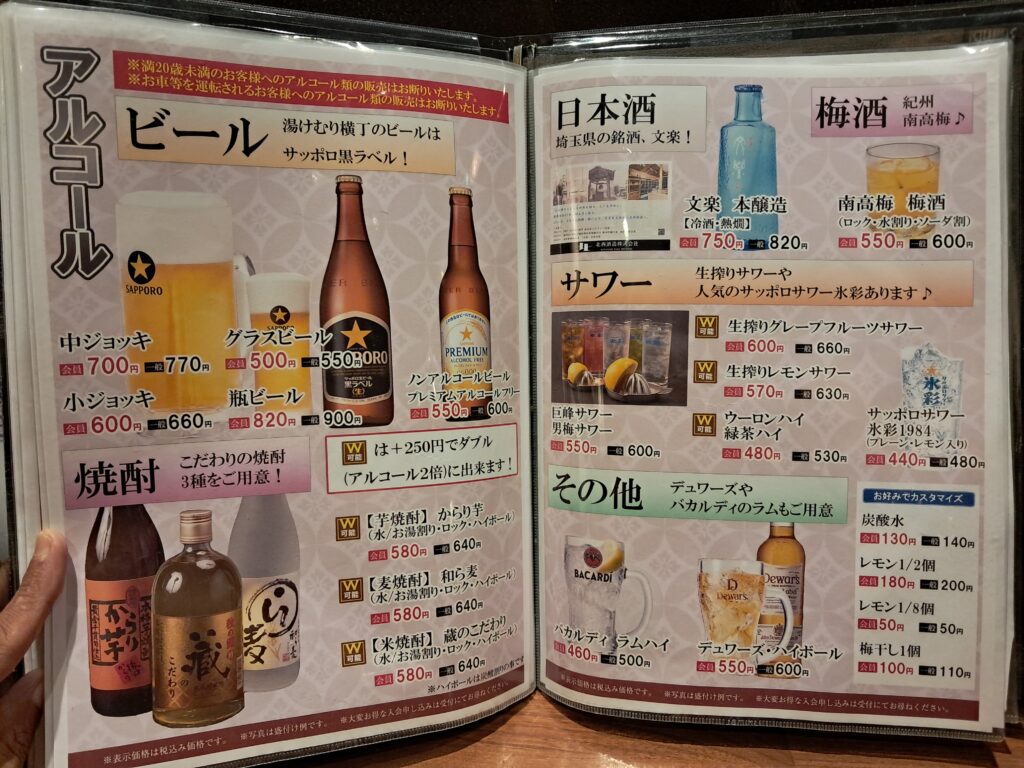
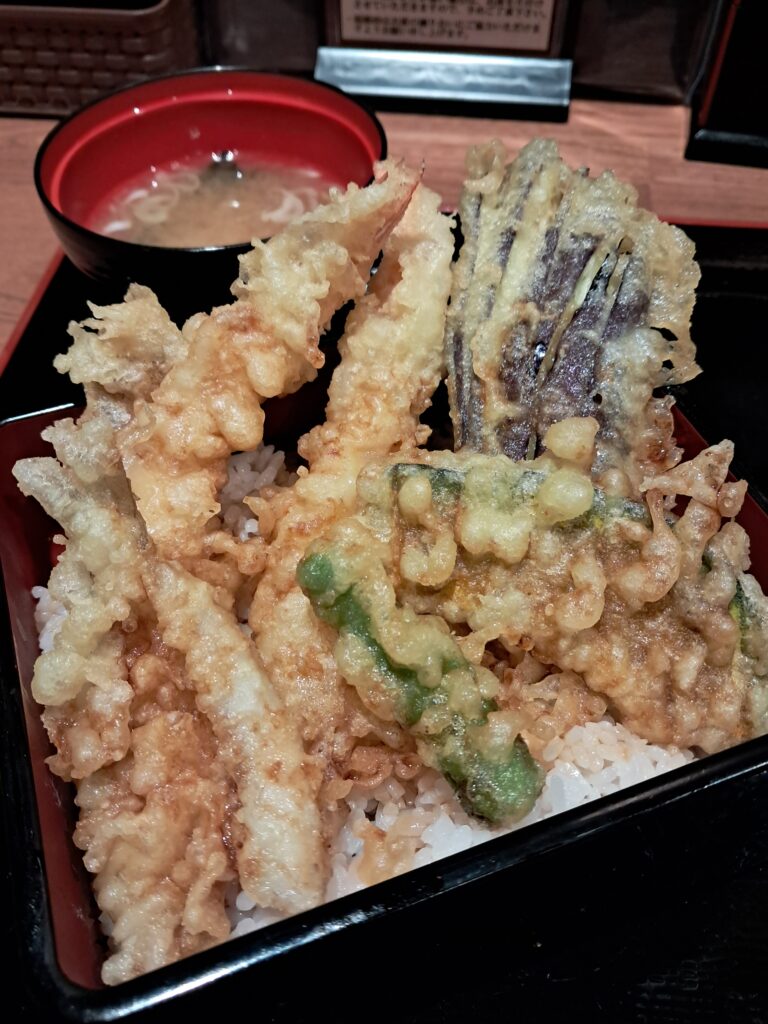
Among the many menu items, what Nobuyo chose was the Tempura Rice Bowl (Tenju).
Since the price was under ¥1,000, I didn’t expect much, but this was extremely delicious…!
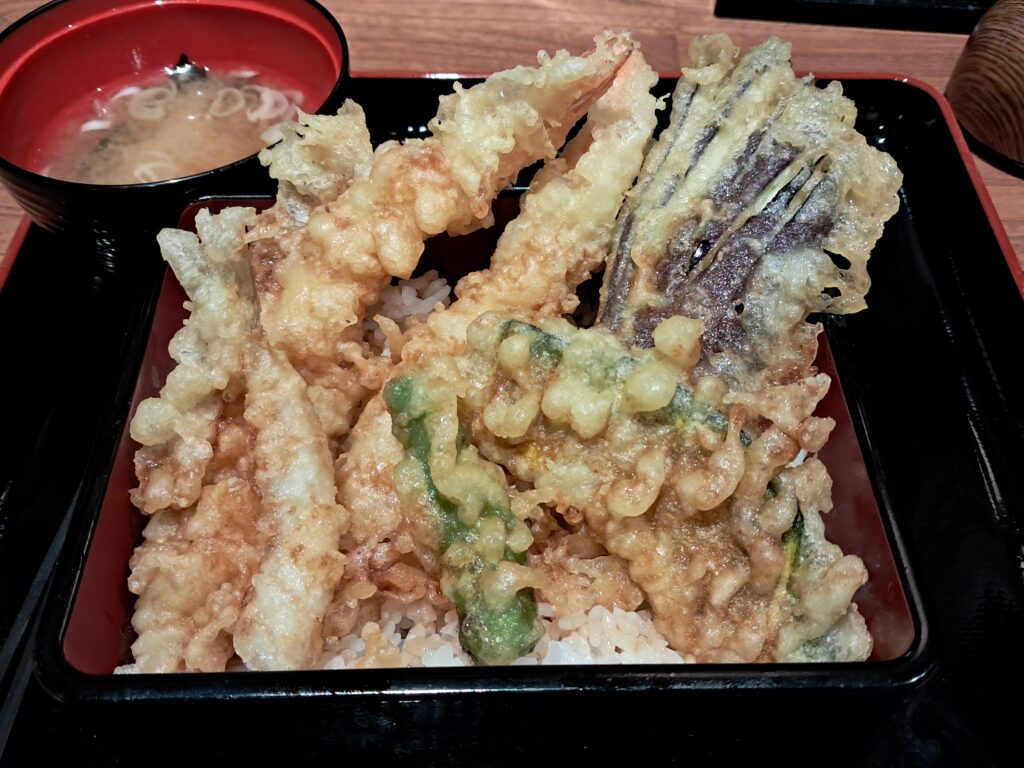
The tempura batter piled on the Tenju was crispy through and through.
The ingredients consisted of 5 types: shrimp, whiting (kisu), pumpkin, eggplant, and shishito pepper, allowing you to clearly taste the natural flavors of each item.
The sauce—the deciding factor for a Tenju—was also not overly sweet/salty and had exquisite seasoning. The only disappointing part was that the rice portion was a bit small.
I don’t know how other dishes taste, but at least the Tenju was top-tier, so anything deep-fried should be a safe bet (since Edo is the theme, are they putting extra effort into tempura, an Edo-associated food?).
The price is also relatively reasonable, making it a great match for nutritional replenishment after a bath!
Conclusion: Overall Rating & Recommended Points
Yukaisoukai Yukemuri Yokocho Omiya Overall Rating
So, I’ve reported in detail on various aspects of Yukemuri Yokocho Omiya.
As a final summary, from hot spring quality to facility completeness, I will score Yukemuri Yokocho Omiya from a purely subjective perspective across all angles!
・Access: 7/10
・Uncrowdedness: 3/10
・Staff: 8/10
・Bath Openness: 4/10
・Cleanliness: 6/10
・Hot Spring Quality: 4/10
・Bath Variety: 9/10
・Sauna: 7/10
・Changing Room Amenities & Supplies: 5/10
・Convenience of the System: 7/10
・Clientele Quality: 7/10
・Atmosphere: 6/10
・Food: 9/10
・Relaxation Space: 6/10
・Cost Performance: 6/10
・Overall: 6.2/10
And so on. It ended up with a somewhat lukewarm score in the 6-point range, but the biggest factors are the sheer volume of people crowding the baths, the lack of openness felt in the otherwise precious outdoor area, and the mediocre quality of the hot spring water itself. It boils down to these.
Looking at the finer details, areas of concern include cleaning being slightly lax, failures to fully mask the age of the building and supplies, and a slightly muddled concept.
That said, it’s not an uncomfortable place to be, and overall it’s a facility that tries pretty hard.
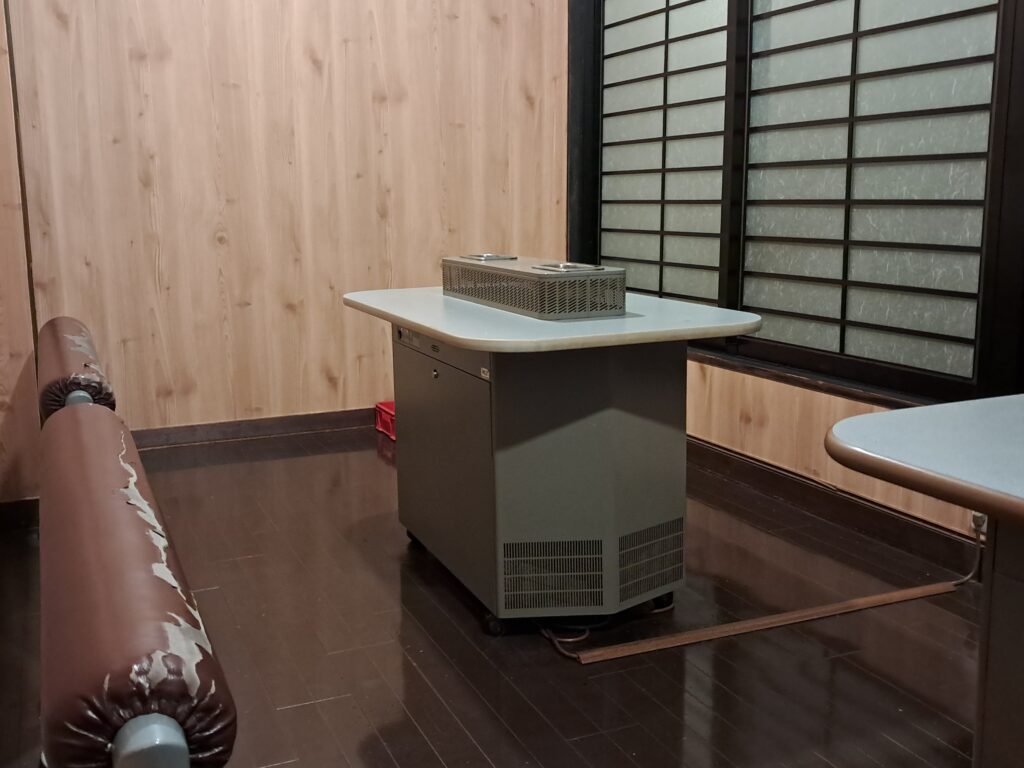
To put it in a single word, it’s “half-baked across the board.”
Since there’s no bedrock bath and the main attraction is clearly the hot spring, I’d want them to put a bit more work into creating atmosphere in the baths even if the spring quality can’t be helped (the baths hardly feel Edo-esque at all, just cramped).
Conversely, for people who prefer mild, light hot spring water, this hot spring might hit the spot.
Non-hot spring tubs like the carbonated spring and Anyu’s herbal baths are of a remarkably high level, so just writing it off and enjoying those is an option.
Since Yukemuri Yokocho Omiya has two types of saunas—high and low temp—it seems good for sauna enthusiasts.
Though personally, I felt the temperatures left a bit to be desired.
Given this content, I feel like this admission fee might be a bit too high… No, wait, are Saitama’s hot spring facilities just of such a high level that Nobuyo is becoming spoiled…?
With a free shuttle bus running from Omiya Station, accessibility without a car is a plus ◎
If you want to slip into a quick hot spring to cap off sightseeing in Omiya, I think it’s a perfectly viable choice.
If You’re Sightseeing Along with Yukemuri Yokocho Omiya…
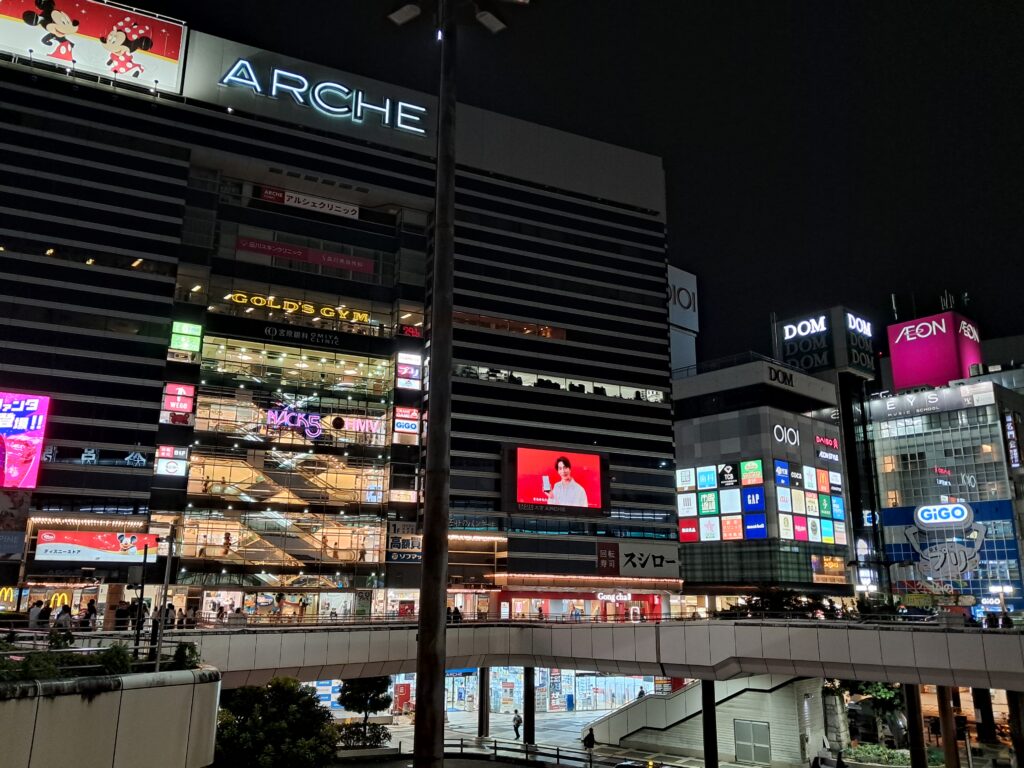
Yukemuri Yokocho Omiya is located in Nishi Ward, Saitama City, Saitama Prefecture.
Saitama City is a town with a vast land area, radiating a diverse array of charms from a major metropolis to historic streetscapes and rustic rural scenery.
The Greatest Metropolis in Saitama: Omiya
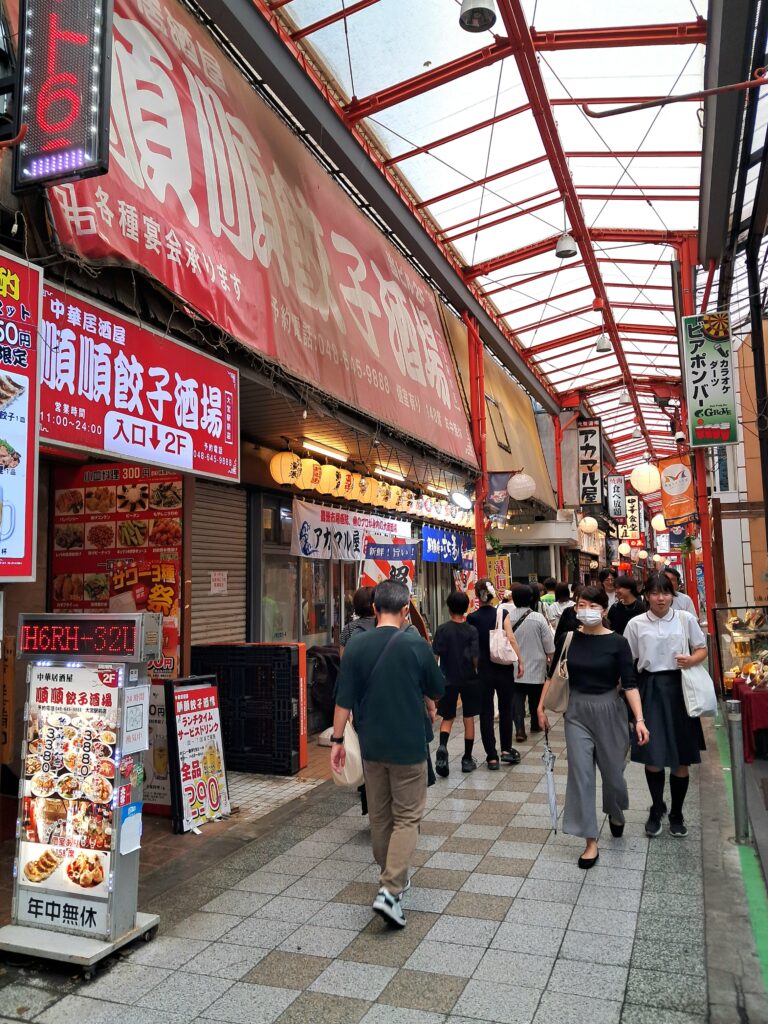
Possessing the commercial district that represents not just Saitama City, but Saitama Prefecture as a whole, is Omiya in Saitama City.
It features a giant terminal station serviced by railway networks connecting to the Tokyo area and Shinkansen bullet trains supporting access from regional parts of the country, making the area in front of the station feel like a metropolis you’d find somewhere in Tokyo.
Omiya, which draws people from all over Saitama Prefecture, is heaven for urban tourism purposes like dining and shopping.
At the same time, historic sights and nature-rich parks are scattered about, making it a wonderful city that reveals new facets every time you visit.
Comments