Hello there!
I’m Nobuyo (@nobuyo5696), currently digging deep into the hidden corners of Saitama Prefecture as always!
Ageo City, located right next door to the prefectural capital of Saitama City, is home to three day-trip hot spring facilities boasting natural thermal waters. Each of these spots offers a completely different vibe and water quality for you to enjoy.
Following my previous visit to Gokurakuyu Ageo, today’s target is also situated in Ageo. Located a bit far from the train station and the downtown area, it’s Hibiki no Yu.
After the absolute chaos that was Gokurakuyu last time, I headed here with the faint hope that “since it’s out in the suburbs, it might be a bit more peaceful…”
To give you the conclusion right out of the gate: overall, this facility is a massive hidden gem!
The quality of the sauna, in particular, completely blew my mind. The water quality, the food, and the atmosphere are all excellent, making it absolutely worth going out of your way to visit.
In my book, Hibiki no Yu fiercely competes with Hanasaki no Yu for the number one spot among Ageo’s three hot springs.
Let’s dive into this ultimate healing space, perfect for kicking back and doing absolutely nothing for a whole day!
Basic Information: Hibiki no Yu
What Kind of Place is Hibiki no Yu?
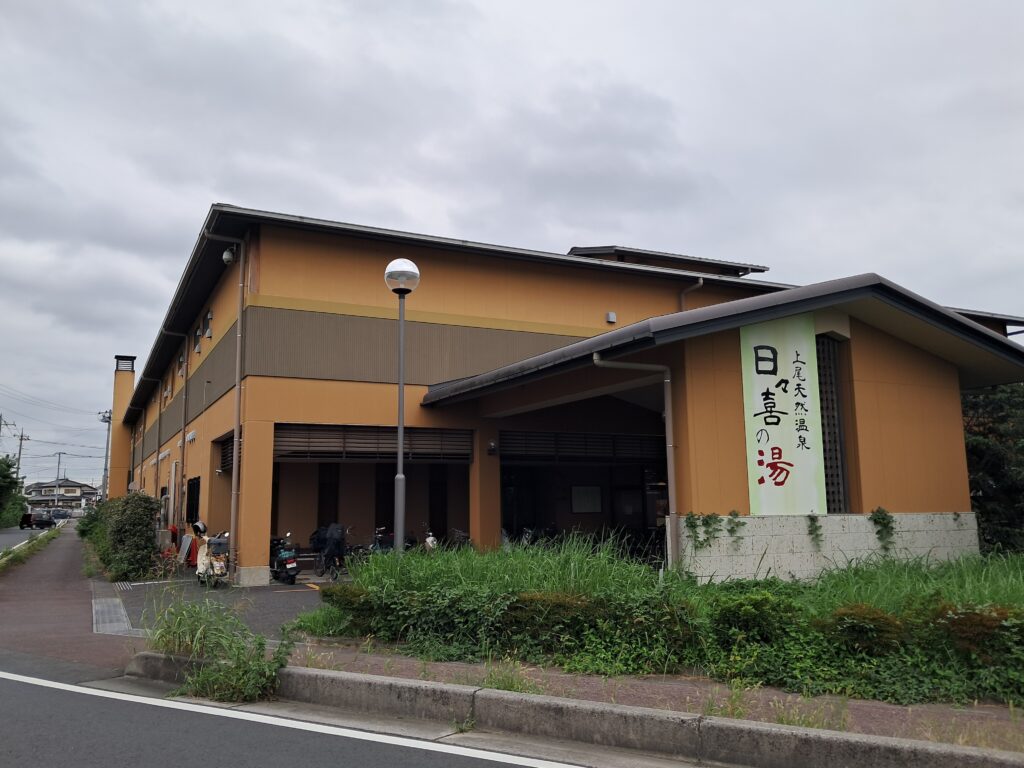
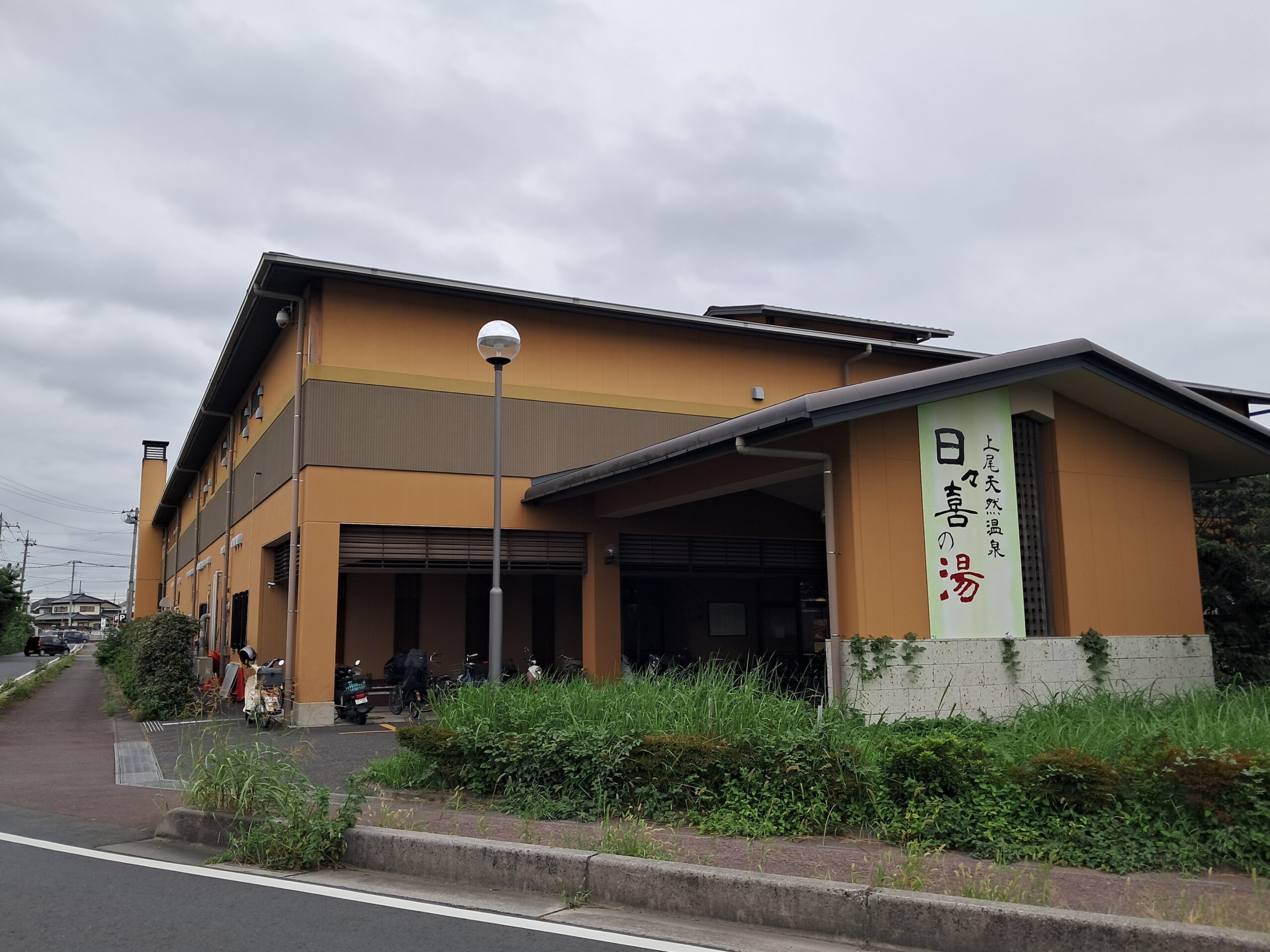
Hibiki no Yu is a two-story bathhouse standing quietly in a somewhat suburban area of Ageo.
While it is surrounded by a residential neighborhood, they clearly had land to spare—it’s a relatively large facility.
If I had to describe the vibe of Hibiki no Yu in one sentence, it would be: a slightly spruced-up retro health center from decades past.
They’ve renovated the inside, but no matter how much you squint, they simply cannot hide the distinct aura of aging.
This aesthetic will divide opinions, but personally, I don’t hate the “Heisei-retro” feel, so the overall look and atmosphere actually score points with me.
Conversely, if you prefer brand-new, modern, and sleek Tokyo-style spas, this place probably won’t be your cup of tea.
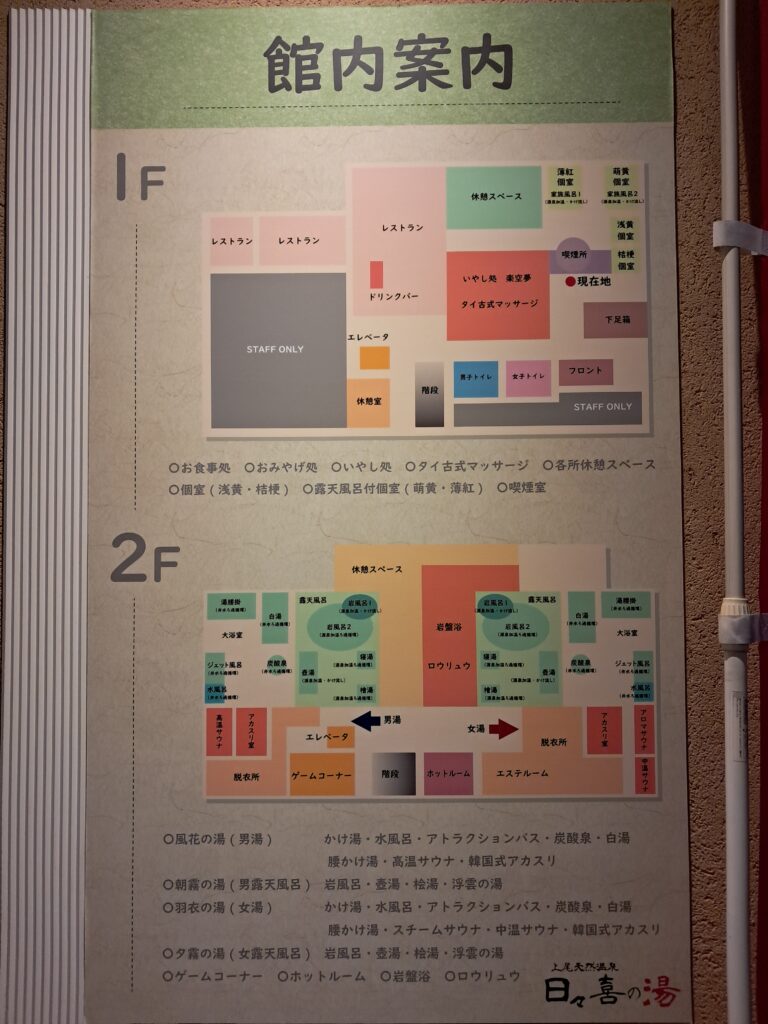
The internal layout of Hibiki no Yu is standard: the first floor houses the restaurant and rest areas, while the second floor is dedicated to the public baths and bedrock baths.
Even though it’s only two stories, it is fully equipped with an elevator, which is a nice touch.
…So, the layout and vibe are decent, but the first thing that genuinely shocked me upon stepping inside was the bizarre dimness of the place.
I don’t know if they are trying to force a “calm Japanese atmosphere,” or if they are just cutting their electricity bills to the absolute limit, but the entire building feels undeniably gloomy.
Combined with the utter lack of energy from the staff (which I will complain about later), there is a heavy, stagnant air flowing through the place that they really need to address.
The concept for Hibiki no Yu is ostensibly “Japanese.”
However, honestly speaking, it screams “Heisei-era super sento” far louder than it does authentic traditional Japanese.
While the exterior and interior design sensibilities are a bit questionable, they surprisingly did a fantastic job designing the wood-themed open-air bath and the rock bath areas.
The building may be old, but it is kept clean. Seeing a Roomba working its little heart out in the dressing room was a funny fusion of old and new.
Hours | Prices | System | Facilities
Here is the basic information for Hibiki no Yu.
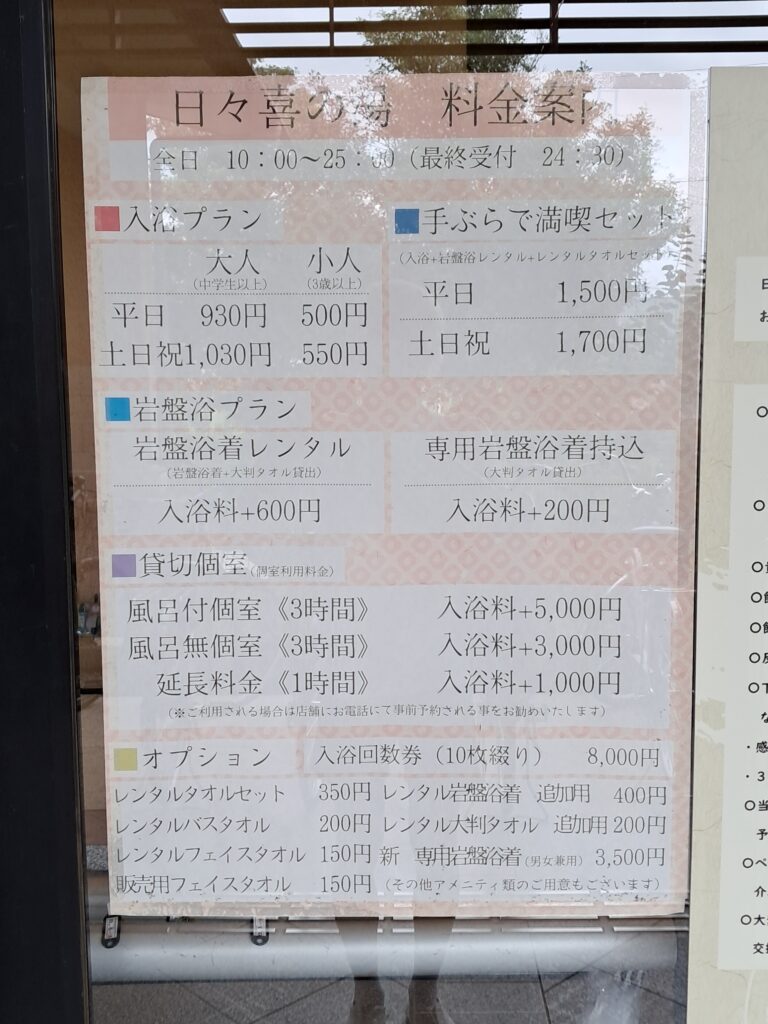
Their pricing system is needlessly complicated, so I am only listing the basic bath-only admission fee here.▼
The entry system at Hibiki no Yu works like this: you hand your shoe locker key to an actual human at the front desk, and in exchange, you receive a wristband used for all in-facility purchases.
It is a post-payment system, meaning you settle your admission fee and any restaurant bills when you leave. Credit cards are accepted.
You manage your own dressing room locker key, and you are free to pick whichever locker you want.
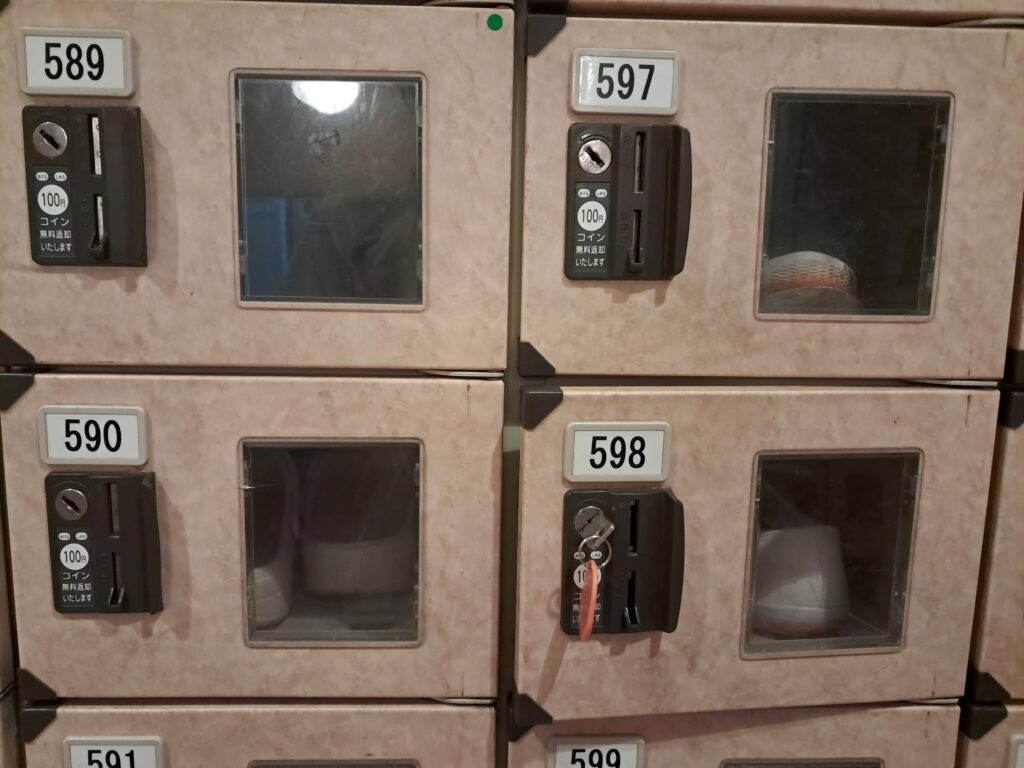
However, you need a 100-yen coin to lock your shoe locker. This is aggressively retro and incredibly annoying.
Yes, there is a change machine nearby, but forcing people to fish out physical coins in this cashless era is a bafflingly outdated system.
Also disappointing: there was no toner or skin lotion in the men’s bath.
Given that the customer base is mostly deeply wrinkled seniors, perhaps they figured there just isn’t any demand for skincare here…
Where Hibiki no Yu does put serious effort is the bedrock bath (ganban-yoku) area located on the second floor.▼
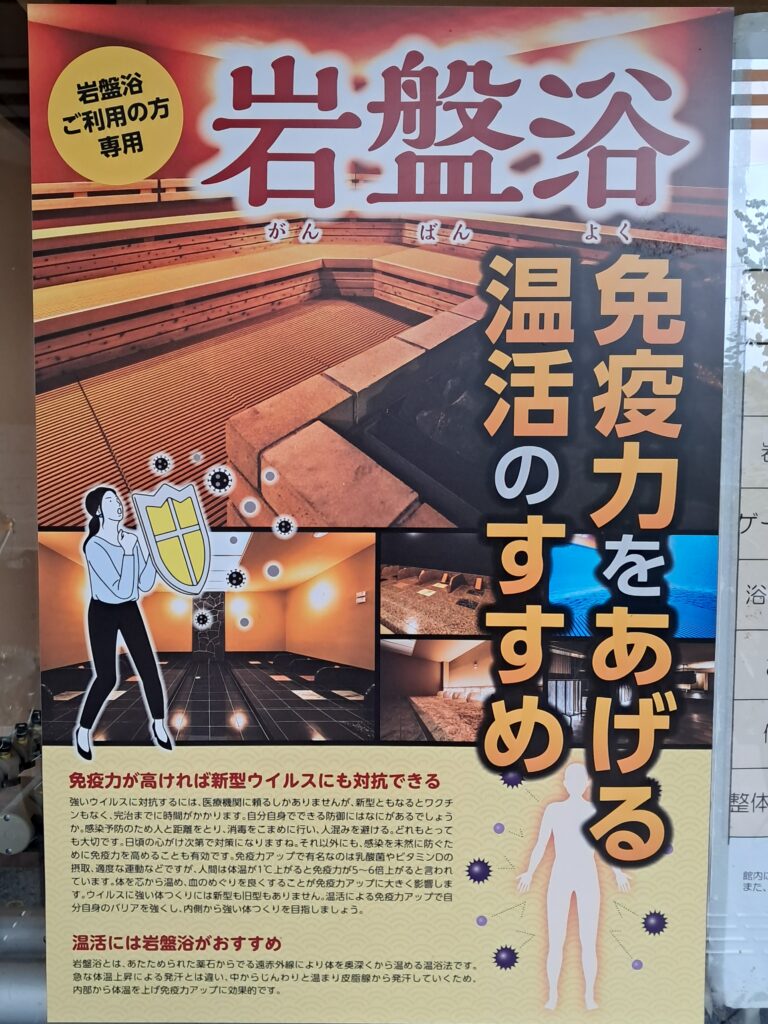
The sheer scale of the bedrock bath area is unexpectedly robust.
There are six different rooms (Scorching, Rock Salt, Warm, Bedrock, a women-only hot room, and a cold air cool-down room), alongside a dedicated rest area specifically for bedrock bath users.
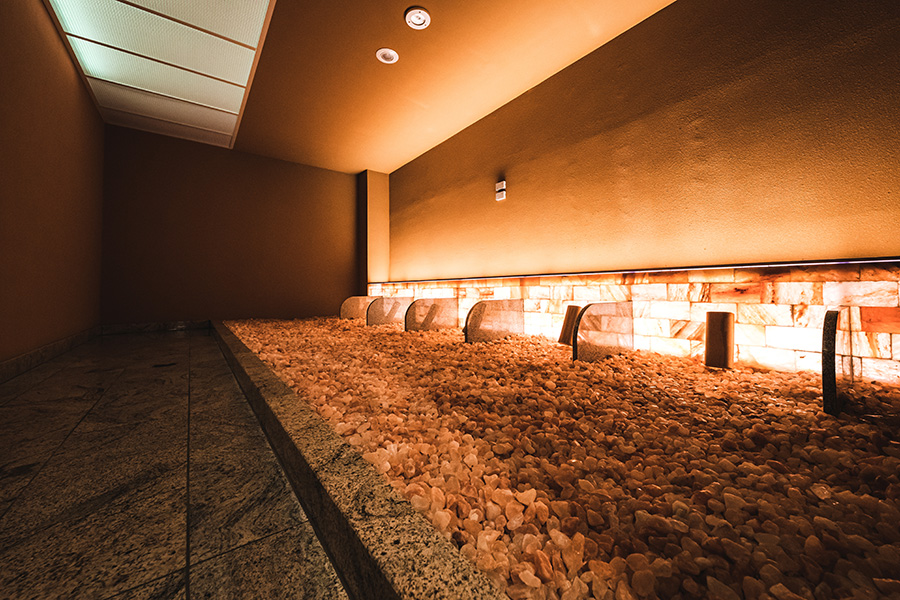
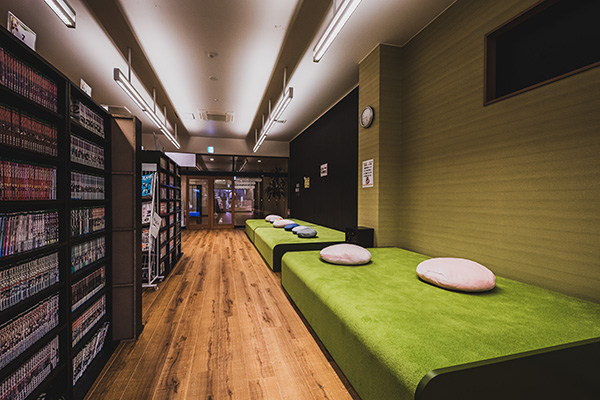
The best part is how reasonably priced this high-quality bedrock bath area is.
A set plan covering both regular admission and the bedrock baths (including the special clothes and a large towel) is ¥1,500 on weekdays and ¥1,700 on weekends—an extremely fair price.
They also offer other complex plans: if you bring your own bedrock bath clothes, it’s just admission + ¥200. Or, if you buy their official clothes, you can pay a ¥700 monthly subscription fee. It’s intimidating for first-timers, but if I lived in the neighborhood, I’d probably basically live here.
The bedrock area boasts its own dedicated lounge, comic corner, and a free drink bar. It is absolute paradise for anyone looking to laze around all day.
I didn’t have time to use the bedrock baths today, but I swore to myself I’d get the set plan next time and do absolutely nothing all day.
Water Quality | Heating System
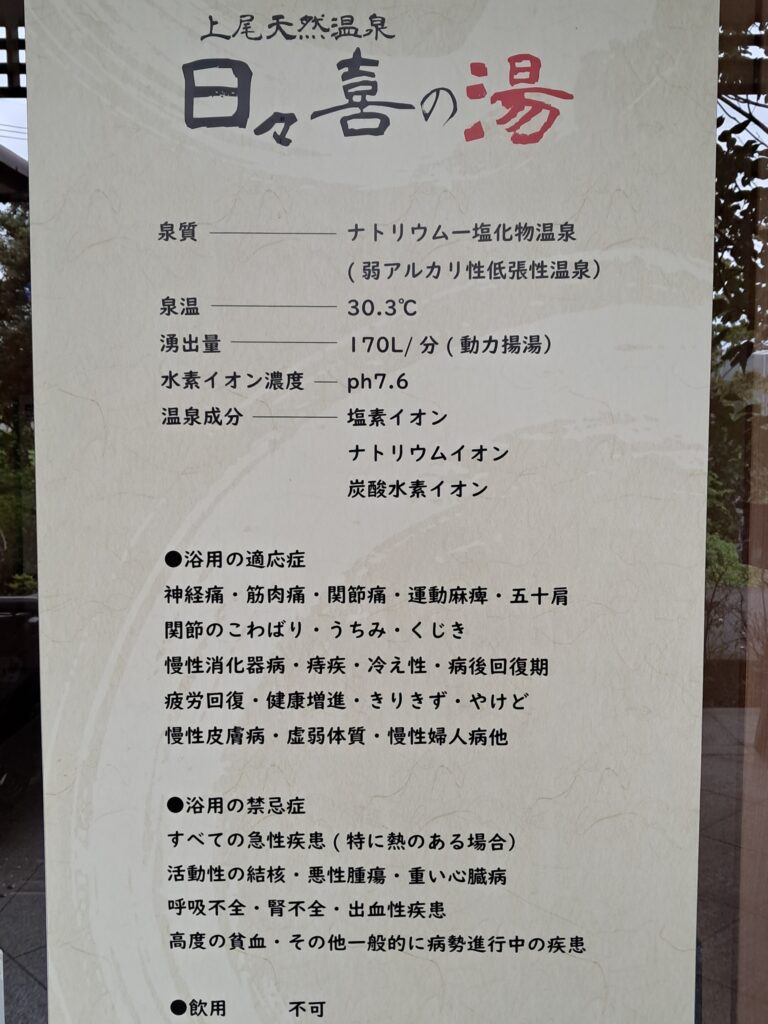
The water drawn into Hibiki no Yu is a Sodium-Chloride hot spring (hypotonic, weakly alkaline).
The source temperature is a chilly 30.3℃, so heating is mandatory, but the faintly yellow, transparent water carries a slight salty taste and a distinct, authentic hot spring aroma.
The quality is excellent. It’s the type of water that gently sinks into your skin.
Soak in this, and you’ll step out with skin so moisturized you won’t even need lotion (maybe that’s why they don’t provide any!).
While the baseline potential of the water is impressively high, it is slightly disappointing that the main tubs rely on a heated circulation system.
However, the open-air ‘Small Rock Bath’ is 100% free-flowing from the source (heated, of course). If you are a hot spring enthusiast, make this tub your main base without hesitation!
Crowds | Demographics | Best Times to Visit
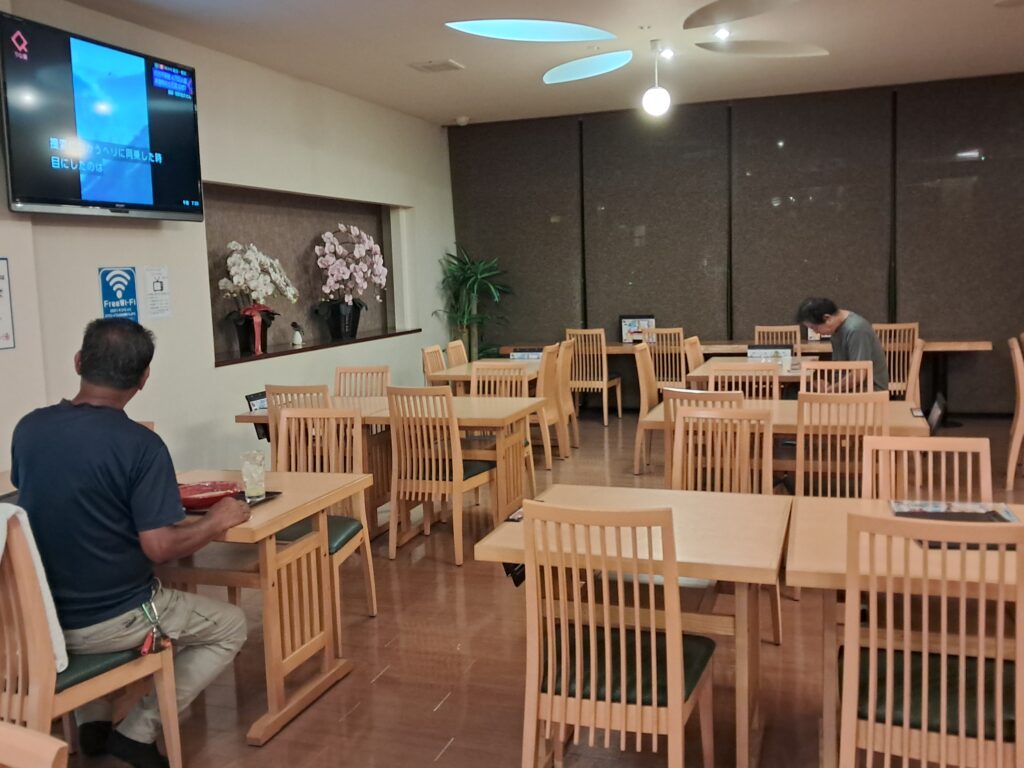
Perhaps thanks to its slightly inconvenient suburban location, the stress of dealing with massive crowds is non-existent here.
On a weekday afternoon, it is practically empty. The clientele is almost entirely elderly, making me wonder, “Wait, did I accidentally walk into a nursing home?” But after 5 PM, the office workers trickle in, and the average age drops slightly.
Even during the typical 7 PM peak time for super sentos, it didn’t feel crowded at all. It seems the bedrock baths successfully disperse the crowd.
After 7 PM, the salarymen head home, and it becomes a ghost town again… Post-7 PM is the absolute best time to stretch out and relax.
The main demographic consists of solo men in their 60s and older, followed by solo guys in their 40s and 50s.
There are very few noisy student groups or families, and surprisingly few couples for a facility that offers bedrock baths (though this likely changes on weekends).
The lack of screaming children means zero stress, which is wonderful. On the flip side, the manners of some patrons are… highly questionable.
Grandpas spitting directly onto the bathhouse floor, senile old men muttering to themselves non-stop in the corner… it really makes you worry about the future of Ageo City.
But ignoring the eccentric seniors, it’s not a noisy place, so if you just mentally block them out, you can relax perfectly.
The crowd that remains after the elderly vanish post-7 PM is well-mannered, allowing you to enjoy a quiet, mature atmosphere.
Access to Hibiki no Yu
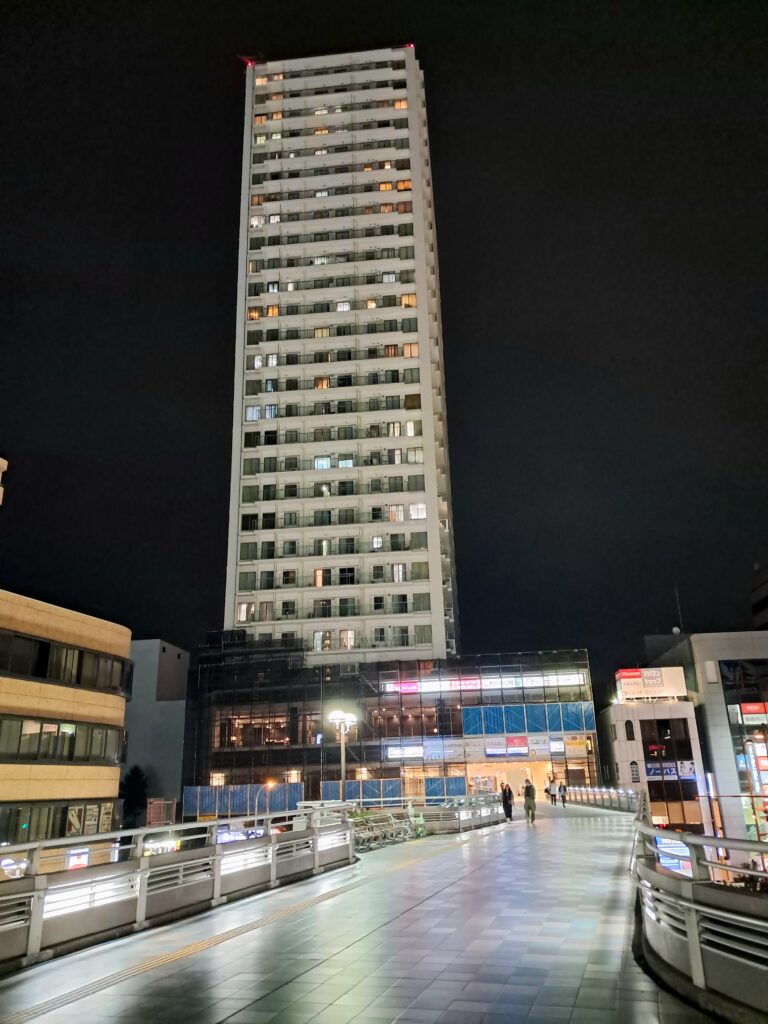
The nearest station to Hibiki no Yu is the JR Takasaki Line’s Ageo Station.
However, at about 4km away, walking there is completely out of the question.
You can take a local bus from the station, but departures are sparse, and they don’t offer a free shuttle bus, which is their fatal flaw.
Access is essentially limited to driving. (Seriously, if they just ran a shuttle bus, they would definitely get way more customers…)
▶ Tokyo Station to Ageo Station: Approx. 45-55 mins via JR Takasaki Line (Ueno-Tokyo Line) | ¥720
▶ Shinjuku Station to Ageo Station: Approx. 40-50 mins via JR Shonan-Shinjuku Line | ¥720
▶ Omiya Station to Ageo Station: Approx. 10 mins via JR Takasaki Line | ¥210
*From Ageo Station West Exit, take the City Circular Bus “Hirakata-Maruyama Park Line” and get off at “Nakabun 2-chome”, or take the “Oishi-Ryoke-Kita-Ageo Line” and get off at “Nakabun”, then walk 3 mins. | Adults ¥200 / Elementary Students ¥100 | Timetable and route map here (Ageo City Official Site)
If you drive, you’ll be glad to know the massive parking lot right in front of the facility is completely free.
Realistically, relying on a car is basically your only real option to get here.
Infiltrating Hibiki no Yu!
Now that you know what kind of place it is, let’s hit the baths!
From here on, I’ll be sharing my unfiltered thoughts on the actual experience, complete with brutal honesty about what they need to fix.
Reception & Lobby
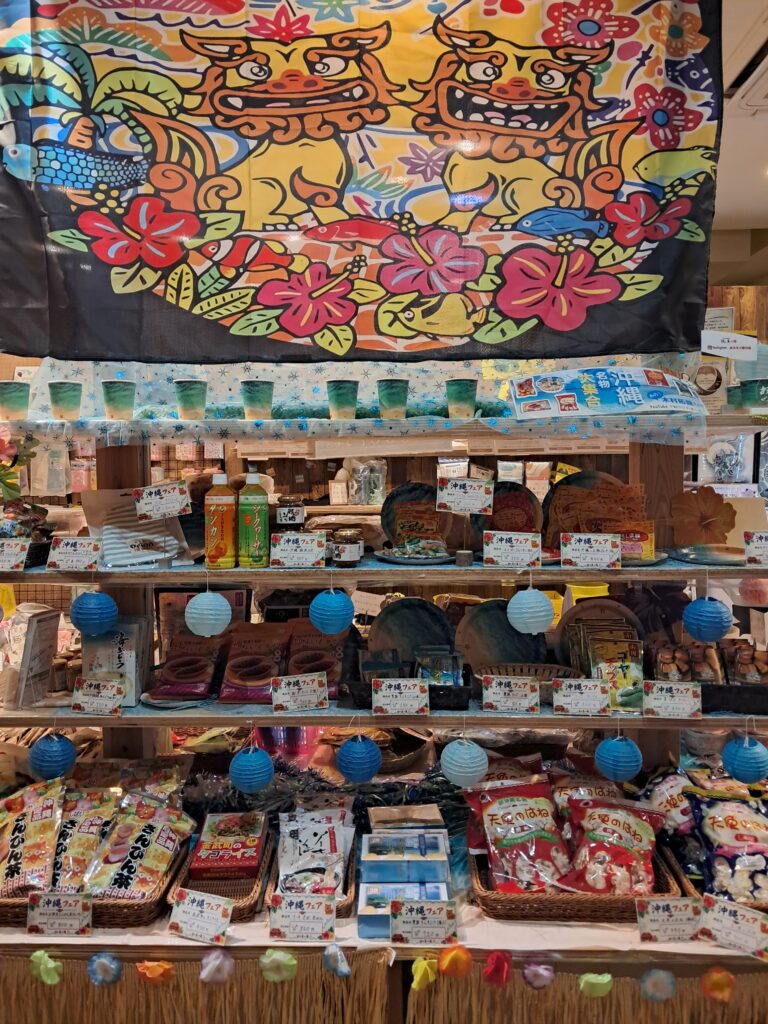
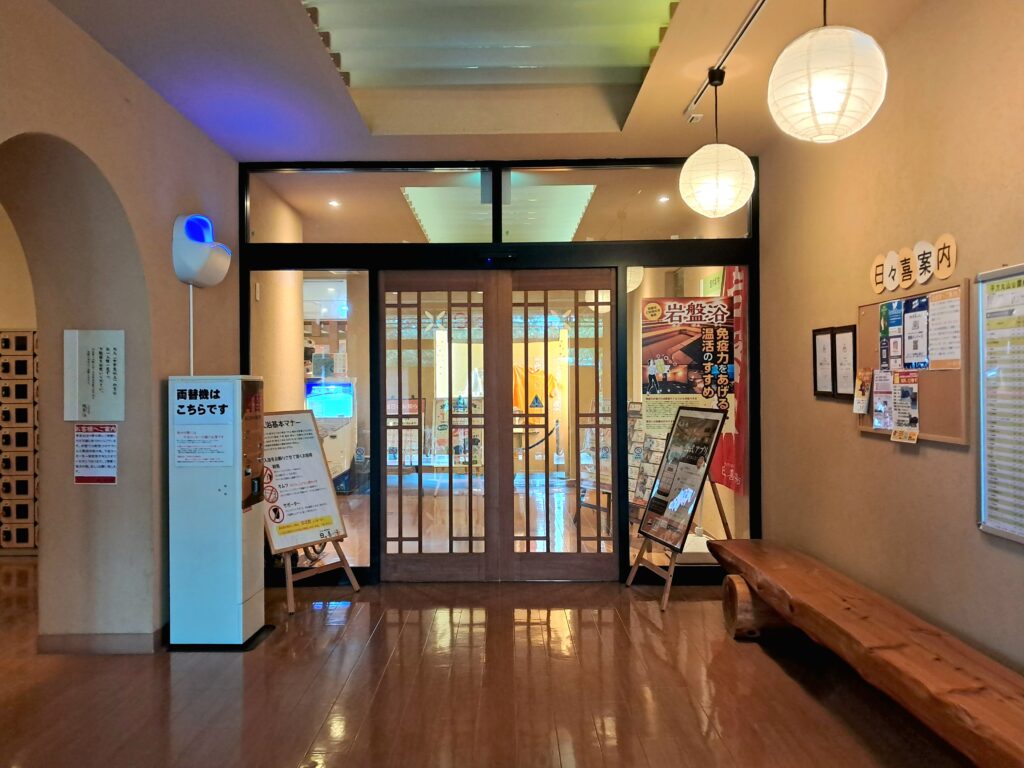
Stepping into this aggressively Heisei-era building, the inside certainly doesn’t disappoint. Or wait… is this Showa?
At the reception desk right by the entrance, you trade your shoe locker key for a wristband, and you’re good to go.
The reception staff gave me what I can only describe as a masterclass in apathetic, salty customer service.
When they slid my receipt over to me with one hand on my way out, my inner angry-old-man yelled, “Use both hands, you heathen!”
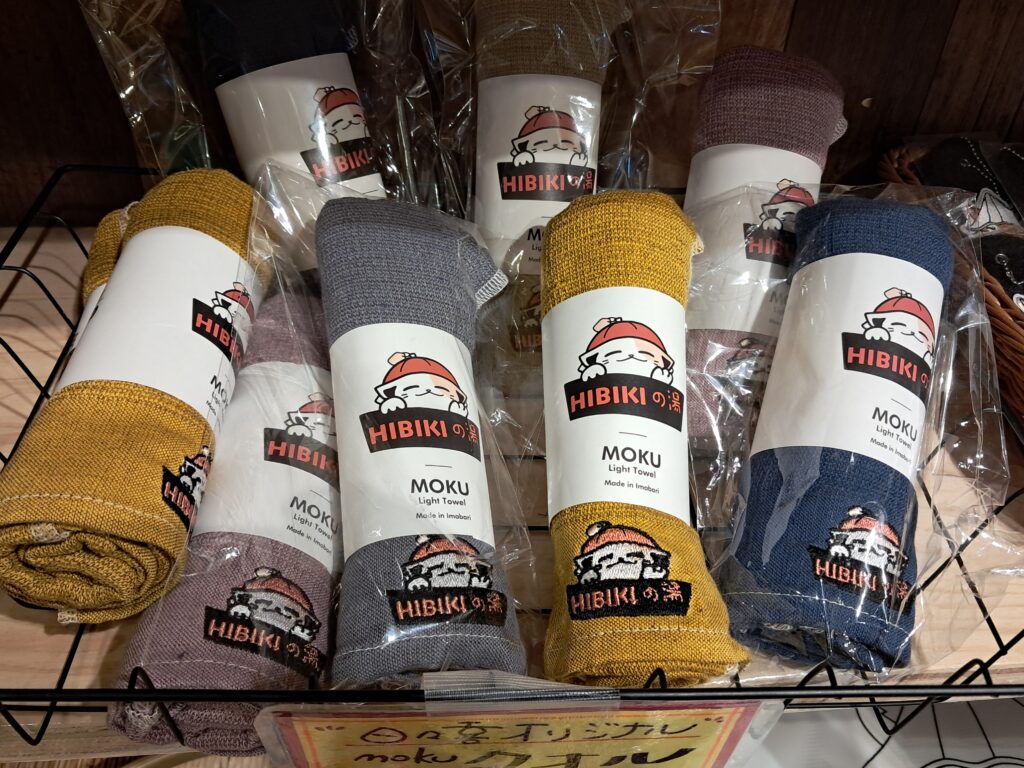
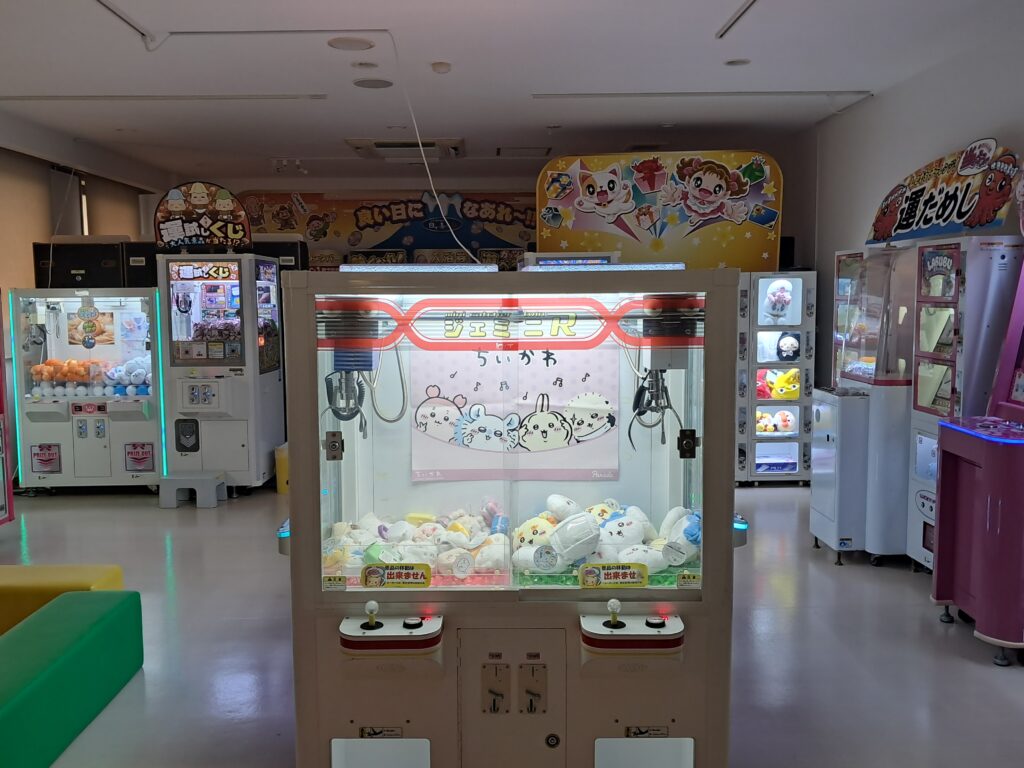
Just past the reception is the souvenir area (hosting that random Okinawa fair), followed by the restaurant and lounge space. Head up the stairs to the second floor for the baths and bedrock baths.
I can’t shake the feeling… there is a truly depressing aura permeating this building.
The gloomy lighting plays a part, sure, but the fatal lack of smiles or energy from the staff is undoubtedly a major contributor.
Hardware like water quality and stylish aesthetics are important, but software—like the attitude of the staff—is crucial for hot spring facilities.
If they just showed a little life, the entire impression of the place would transform dramatically. What a waste.
Surprisingly Clever Spatial Design in the Baths
A Strange Sense of Openness! The Open-Air Area
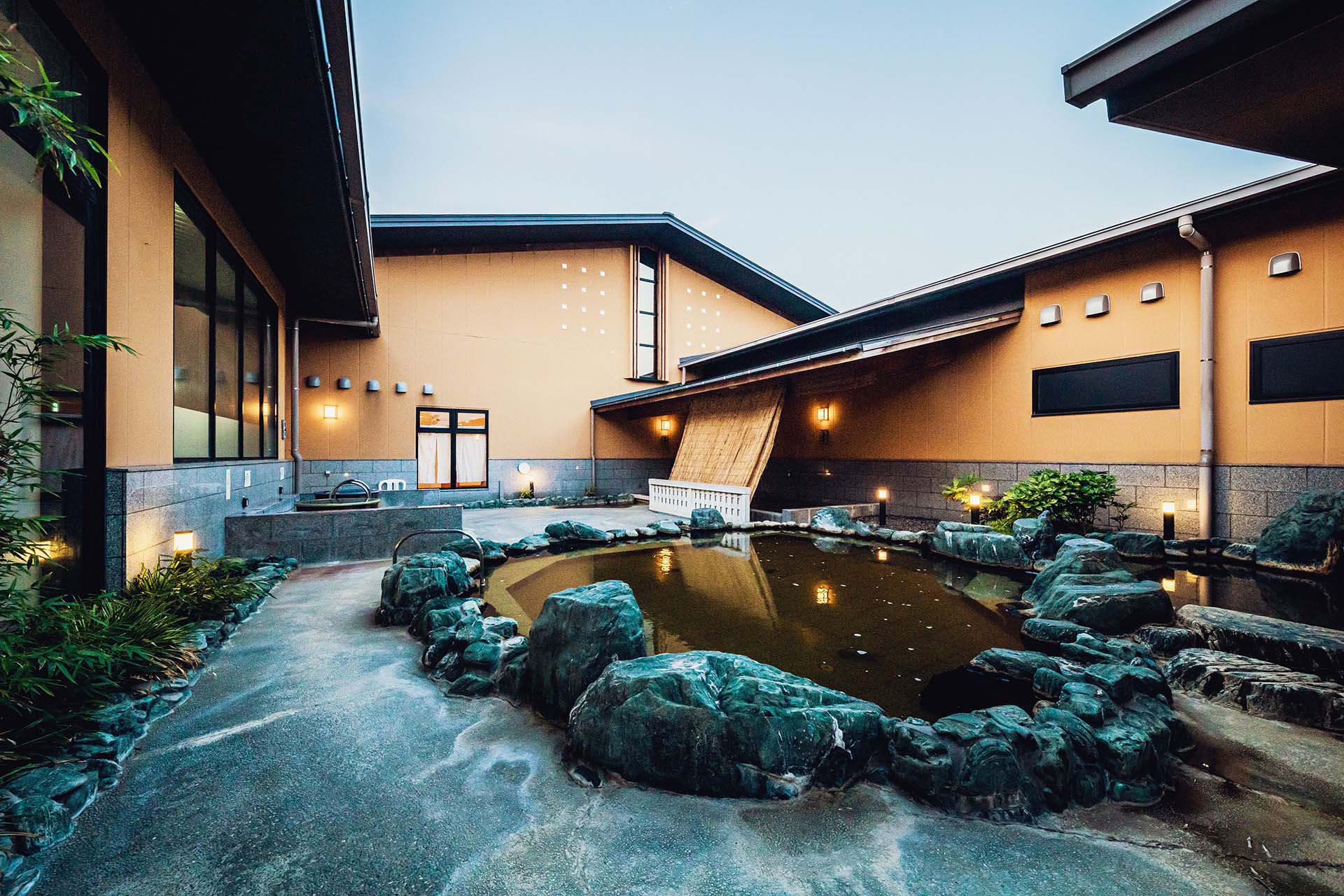
The layout of the bath area at Hibiki no Yu is a bit unusual. From the dressing room, you enter a strange hallway-like space separating the indoor bath on the left from the open-air bath on the right, keeping them completely distinct.
The main open-air area isn’t huge, with a roof covering about half of it.
However, because they utilized the space so well, it doesn’t feel cluttered at all. Instead, it offers a bizarre but welcome sense of openness.
Unusually for a facility dominated by the elderly, there are no TVs installed outside.
Personally, the absence of blaring noise is perfect. Soaking quietly while gazing up at the sky was an elite experience.
The centerpiece of the outdoor area is the large rock bath dominating the space.
There are only five cool-down chairs and two deck chairs—which feels a bit insufficient considering the epic scale of the sauna here.
Compared to other day-trip springs in Saitama, the variety of tubs is somewhat limited and simple.
But because the quality of each tub is so high and the concepts are unique, you won’t feel shortchanged.
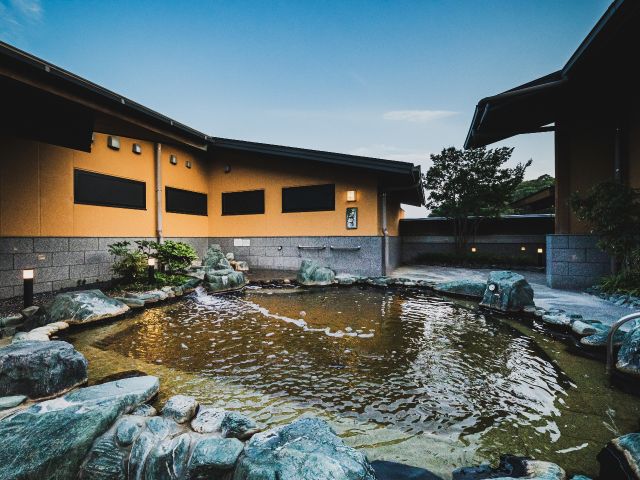
The larger of the two rock baths is the 41℃ Large Hot Spring Rock Bath.
It’s spacious and uncrowded, allowing you to stretch out your arms and legs and properly relax.
The water is slightly hot but manageable, showing a faint yellow transparency.
It boasts a subtle salty taste, an iron-like smell, and a distinct slimy texture that defines it.
Because it’s weakly alkaline, the water gently clings to your skin, making you feel like you’re soaking in a vat of skin toner.
You’ll step out with incredibly moisturized skin, proving the hot spring is doing its job.
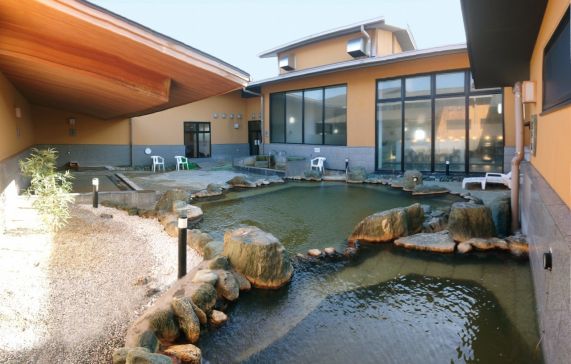
▲ Connected to the large bath is the 39℃ Small Hot Spring Rock Bath.
It’s tucked away in the back, making it easy to miss, but you absolutely must get in here to experience the true quality of the spring.
The water drawn into this small tub is heated, but unlike the others, it is 100% free-flowing source water without circulation.
Compared to the large bath next to it, the minerals feel significantly denser, and the aroma and saltiness hit harder.
Above all, the lukewarm temperature means you can soak here practically forever.
Personally, this was one of my favorite spots in the entire facility, rivaled only by the cypress bath.
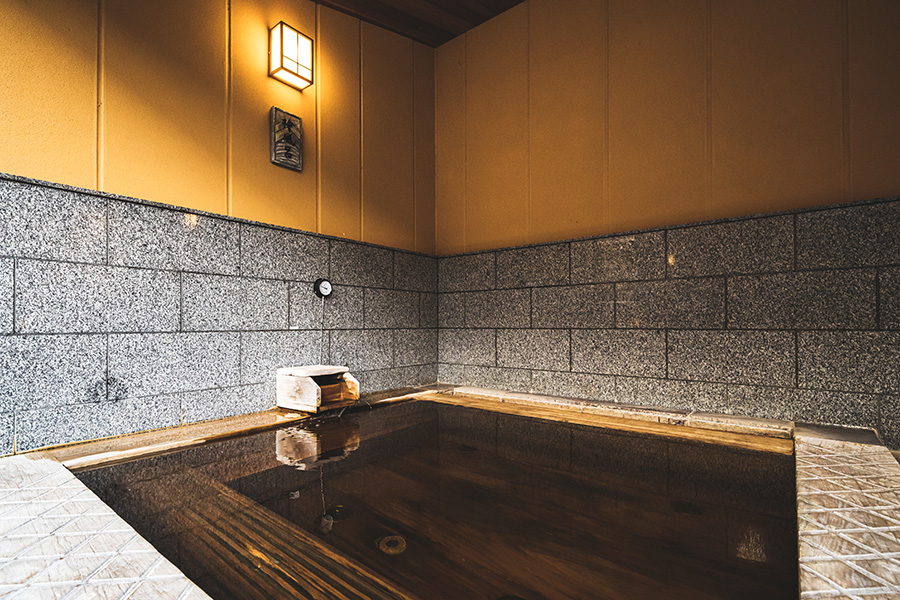
That Hot Spring Hinoki (Cypress) Bath runs a bit hot at 41℃.
Located in the corner of the open-air area next to the sleeping bath, it’s partitioned off by wooden walls.
With a tub made entirely of cypress and a wooden roof overhead, the atmosphere is stellar.
It looks especially fantastic when it gets dark, and the secluded privacy it offers is sublime.
The tub is cozy, fitting only 4 or 5 people, but the traditional Japanese vibe and the faint, relaxing scent of cypress are irresistible.
Actually, finding a tub made entirely of cypress that also uses real hot spring water is incredibly rare for a day-trip facility.
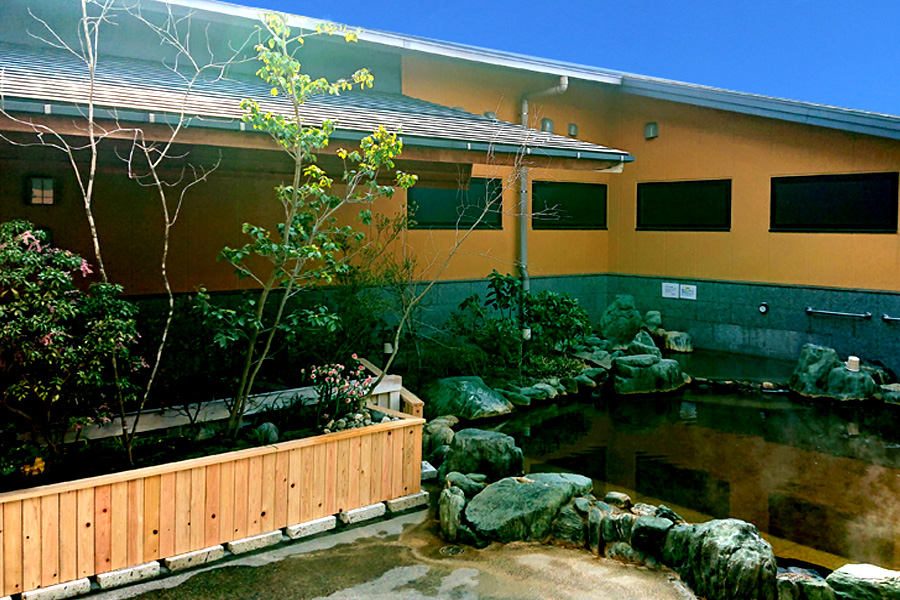
Hidden at the edge of the area near the cypress bath is the Hot Spring Sleeping Bath.
Heated to 41℃, the water is filled to a depth of about 10cm, allowing you to lie down with half your body submerged.
There are no partitions, but it looks like it could fit around 6 people.
It retains a nice sense of privacy, but the stone surface against your back is a bit painful, and because the water is shallow, it might be too cold during the winter months.
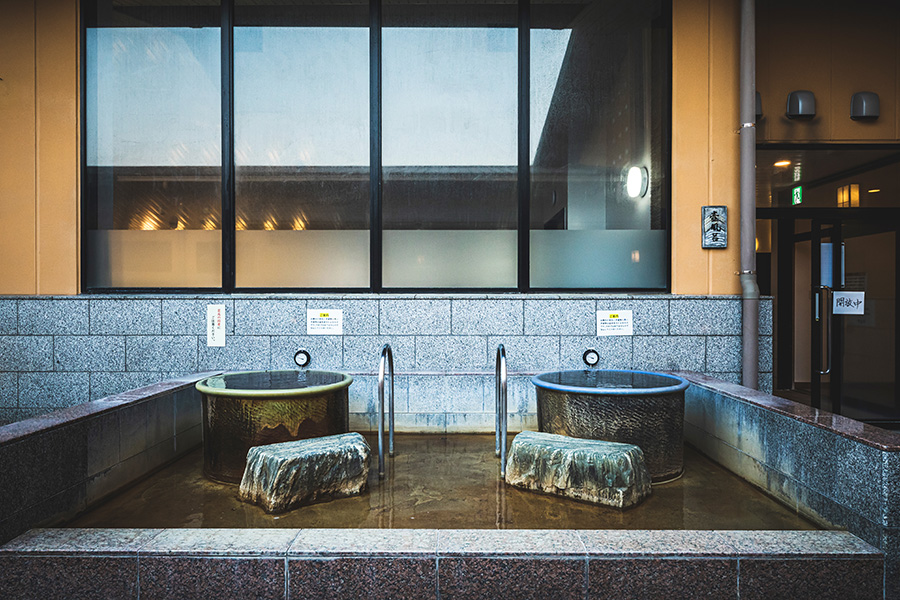
And the most unique tub in the entire outdoor area is the Pot Water Bath (Tsubo Mizuburo).
You’ll see pot baths at many hot springs, but instead of hot water, these are filled with cold water (apparently they used to be normal hot pots before being recently renovated).
The water temperature sits at around 16℃—a perfectly exquisite chill that isn’t freezing.
It’s the ideal temperature not just after a sauna session, but also for cooling down your body after soaking in the hot spring.
The best part is the gimmick: pull the rope next to the tub, and a suspended bucket dumps a massive payload of cold water right onto your head.
Yes, exactly like those slapstick Showa-era TV shows. Even this screams Showa…
Diving is strictly prohibited in the indoor water baths, so this bucket mechanism is the only legal (or forced?) way to douse your head. I absolutely loved it.
The only downside is how far it is from the indoor sauna.
The Indoor Area is Bright and Open!
Hibiki no Yu’s indoor bath area maintains a clean vibe unified by stark white walls.
Because the ceiling is set high, the space feels bright and expansive despite its obvious age.
Half of the indoor area is dedicated to a shower corner with about 20 stations.
The other half houses the various tubs, the high-temperature sauna, and the indoor water bath.
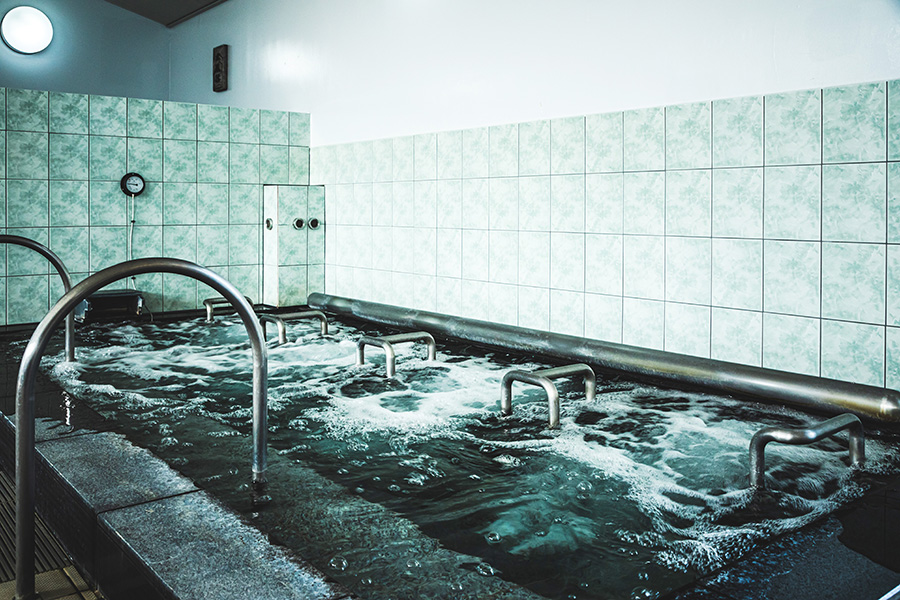
The staple Jet Bath only has 4 seats, but since the place is rarely crowded, it’s not an issue.
There are multiple jet nozzles, and while the pressure is modest, they hit all the right spots. Getting blasted on the soles of your feet is an underrated bonus!
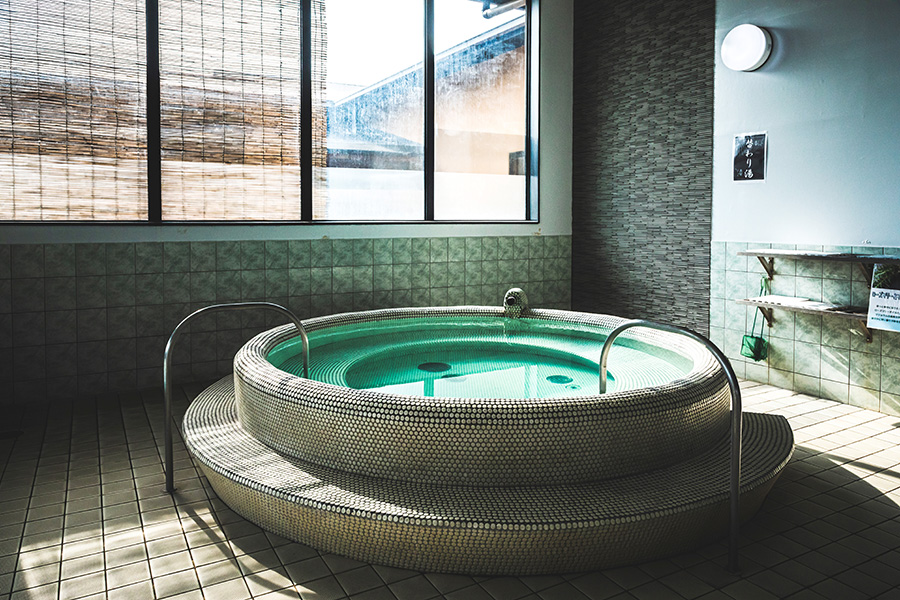
The strangely circular tub holds the 40℃ Specialty Bath (Kawari-yu).
The bath salts used here rotate periodically.
During my visit, it was a “Ramune (Soda) Bath,” but the water wasn’t fizzy at all, nor did it smell like Ramune… I muttered to myself, “Where is the Ramune…?”
Honestly, I’ve never understood the point of putting artificial bath salts in a facility that pumps actual natural hot spring water…
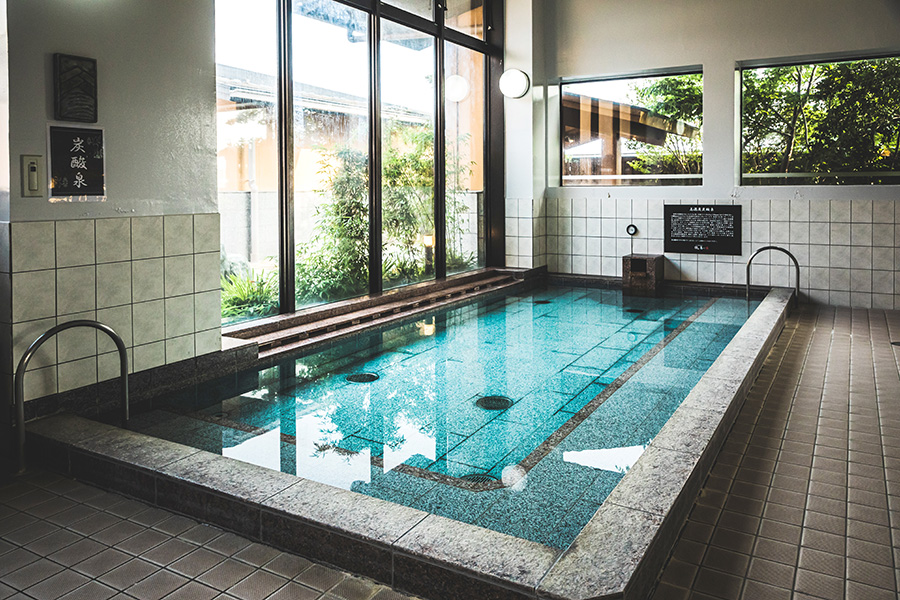
The largest tub indoors is the Carbonated Bath, sitting at a standard, lukewarm 37-38℃.
It is vastly larger than carbonated baths at other facilities, and the carbonation is flawlessly dense. The quality here is top-tier.
Usually, carbonated baths devolve into a crowded, potato-washing nightmare, but here it is always empty and relaxing, scoring massive points with me.
Overall, I highly recommend this place to carbonated bath lovers.
There are only about 20 shower stations, but given the lack of crowds, it’s more than enough.
The fact that several of them are separated by walls is a nice, considerate touch.
But what brought me the most joy was that the showers use levers instead of push-buttons.
Being able to use as much hot water as you want without it shutting off is quietly amazing (I worry for their water bill, but that’s none of my business).
A Shocking 110℃ Sauna… Saitama’s Strongest
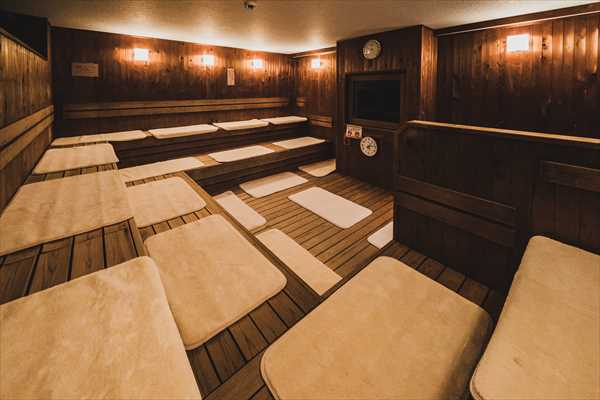
The baths alone would have made for a highly satisfying visit. But that’s not the craziest part…
The high-temperature sauna installed in the indoor area is completely, utterly broken—in a good way.
It’s a two-tier setup in a sprawling space that can easily fit 30 people.
And the temperature is set to a mind-blowing 110℃…! (I honestly respect the sheer madness of cranking it this high for a customer base consisting mostly of frail seniors.)
Aside from the unrivaled heat, the cleanliness is impeccable.
You sit on individual sauna mats provided for you, and the room feels highly sanitary with no weird smells or grime.
There’s a pile of heated rocks in the corner, rigged with an auto-loyly system that blasts them with water at set intervals to generate steam. When the loyly triggers, the room devolves into a scorching hellscape.
It is an obscenely high-level sauna. I turned into a complete weirdo, muttering, “It’s so hot… but so damn good…” to myself the entire time.
And despite having such an insane sauna, it was practically empty.
Part of that is just the low total customer count, but never feeling packed in like sardines is a blessing.
Looking closely at the details, the sauna has double doors to trap the heat, and a freezing water bath placed right outside for perfect flow. Any serious sauna-goer will be deeply satisfied here.
It’s worth making the trip just for the sauna alone.
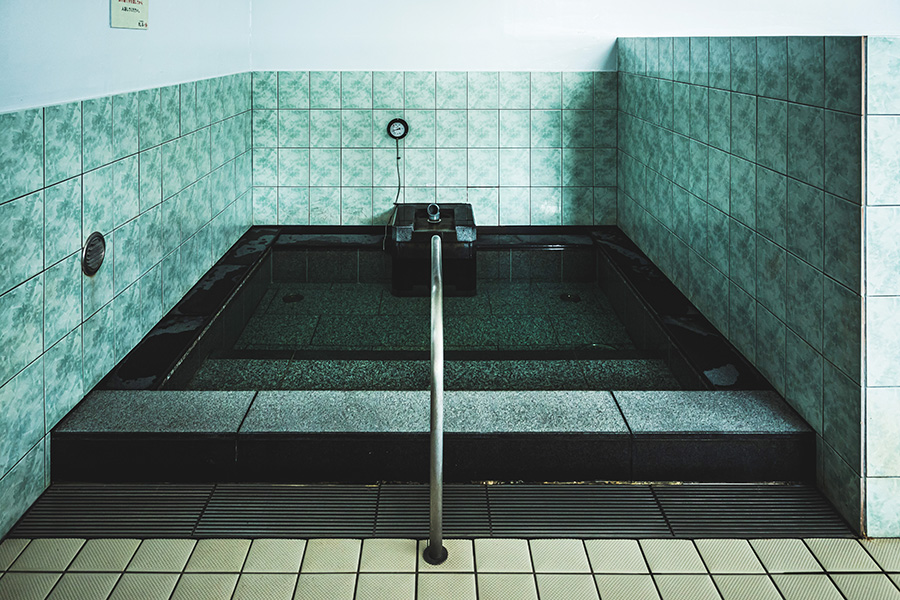
To contrast the scorching sauna, the Water Bath sits at a shockingly cold 12℃. This lethal temperature gap is intoxicating.
The bath is annoyingly narrow, fitting only 2 people max, but because it’s right outside the sauna door, you can jump straight in.
Besides, it’s so cold that nobody can stay in for long anyway, so it’s always empty.
The rules here are strict: no diving and no washing your face in the tub.
The cramped size and shallow depth are its only real flaws.
Other Facilities (Rest Areas | Dining)
The Harsh Reality of Class Disparity in the Rest Area
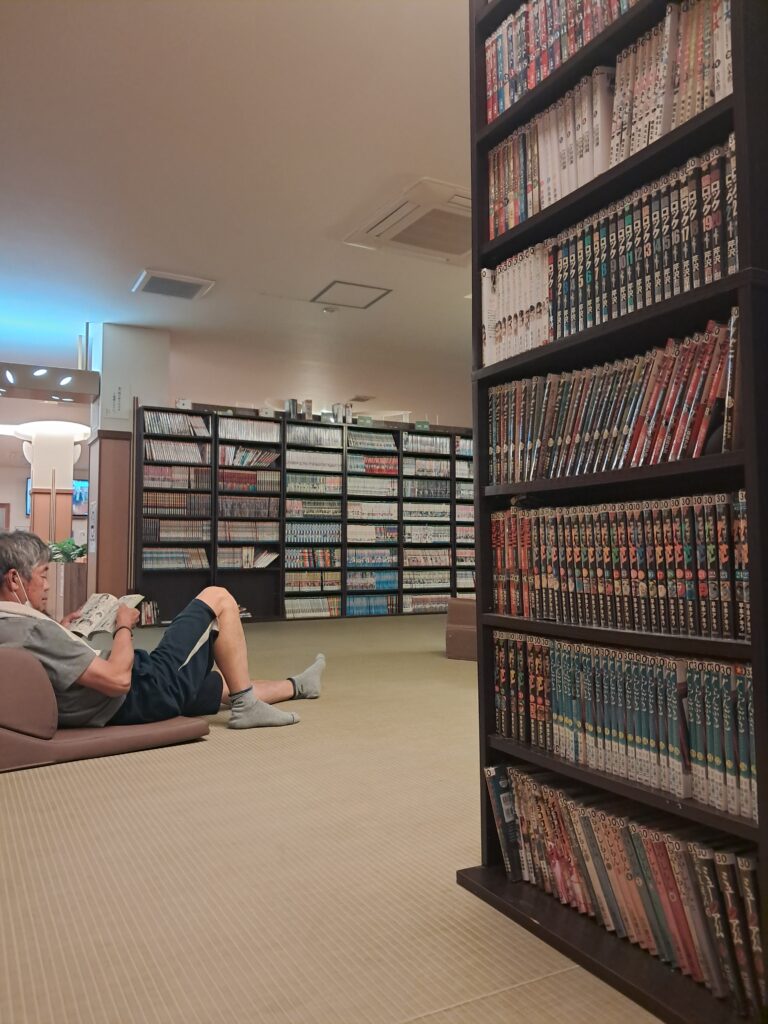
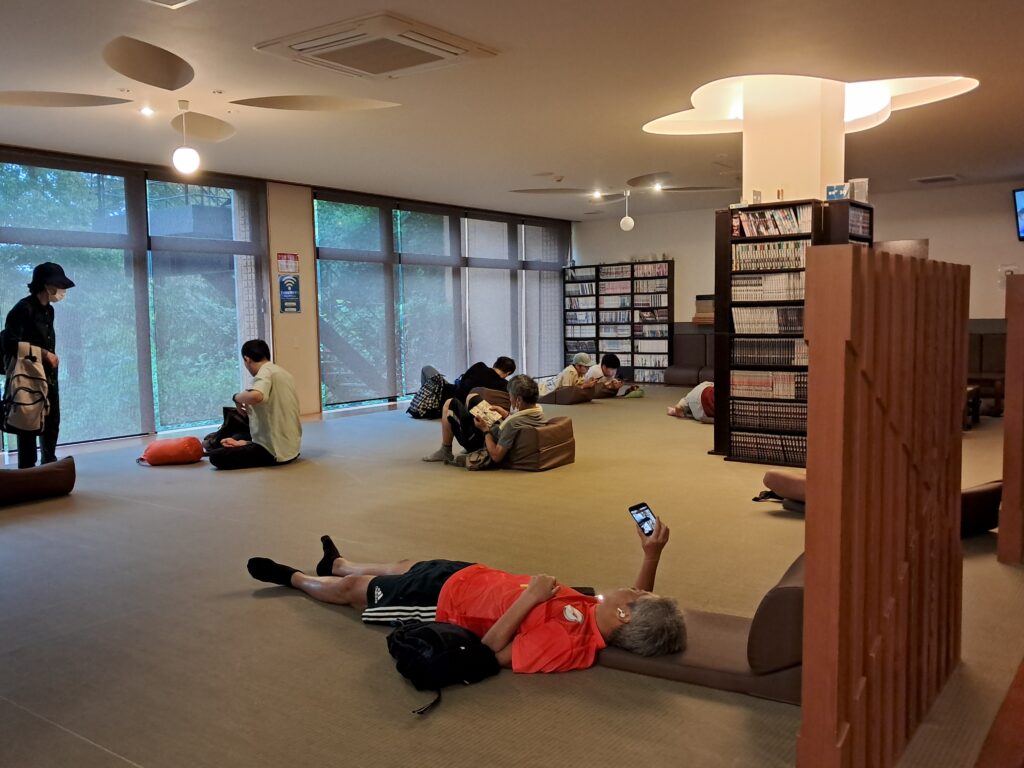
Next to the first-floor restaurant, Hibiki no Yu offers a large tatami-mat rest area where you can sprawl out.
There are a few comics to read while you kill time, and about 10 reclining chairs right next to the tatami zone, letting you rest however you prefer.
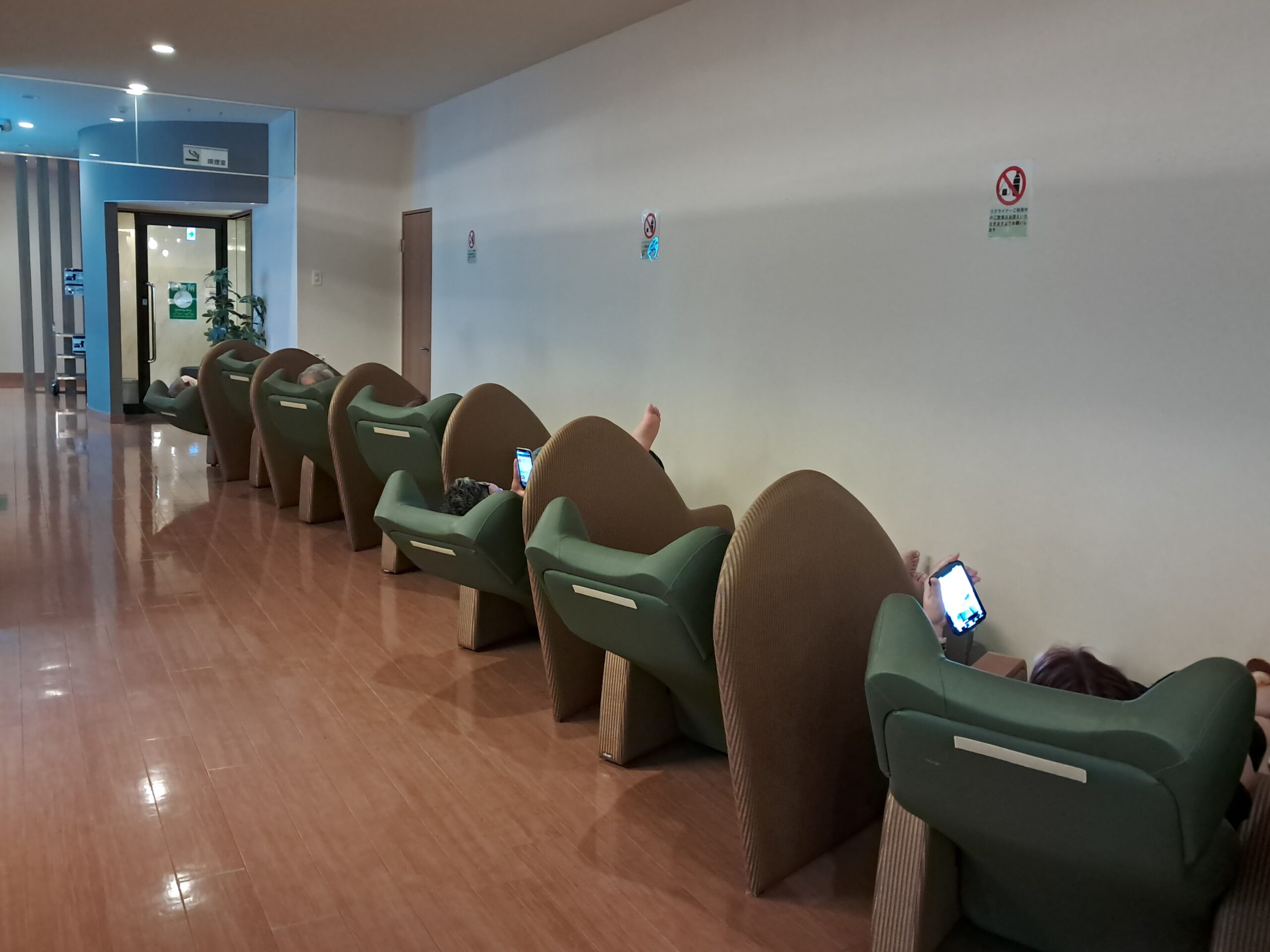
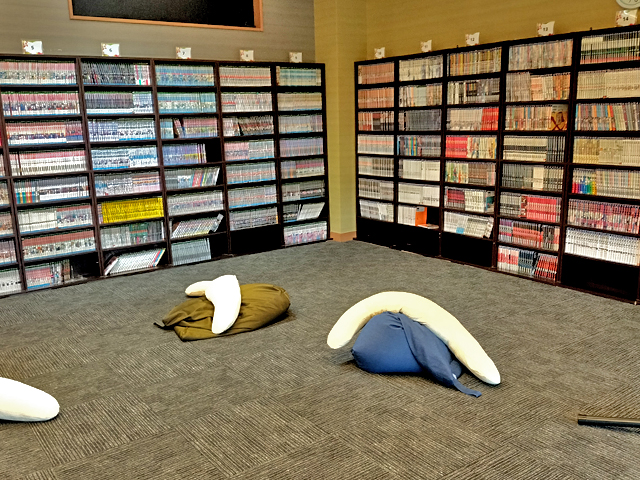
▲ The first-floor rest area is open to everyone, but the main comic corner, drink bar, and vastly superior lounge area are locked away on the second floor.
Yes, as you might have guessed, that area is exclusive to paying bedrock bath users.
They boast a collection of 10,000 comic books(!), but the vast majority are hoarded away in the premium bedrock lounge.
It’s an incredibly blatant display of class disparity.
Sure, the solution is just to pay for the bedrock bath, but for someone with zero interest in bedrock baths, paying an extra fee just to read manga feels like a scam.
To have the harsh reality of a class-based society shoved in your face at a suburban hot spring in Ageo… it’s a harsh world out there.
Delicious, Cheap, Massive! The God-Tier Restaurant
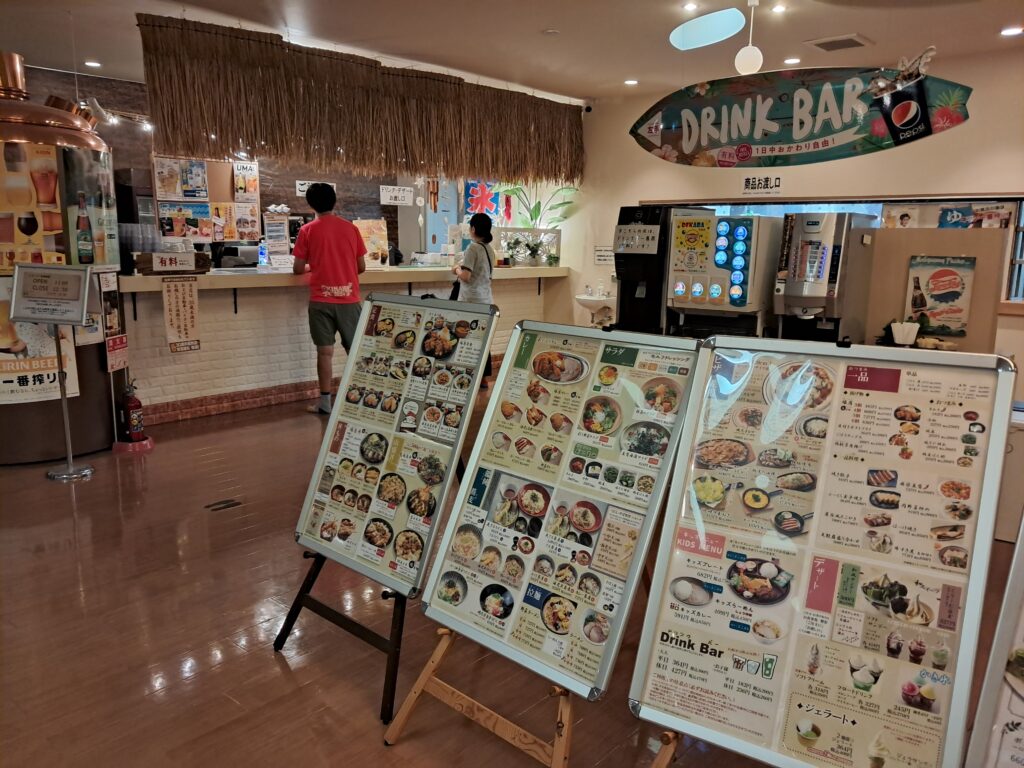
Hibiki no Yu has a restaurant on the first floor operating on a fully self-service system for ordering and pick-up.
The seating area is spacious, with tables, tatami seating, and several solo counter seats—perfect for filling your stomach after the baths.
It’s always empty even during peak meal times, which honestly made me worry about their business…
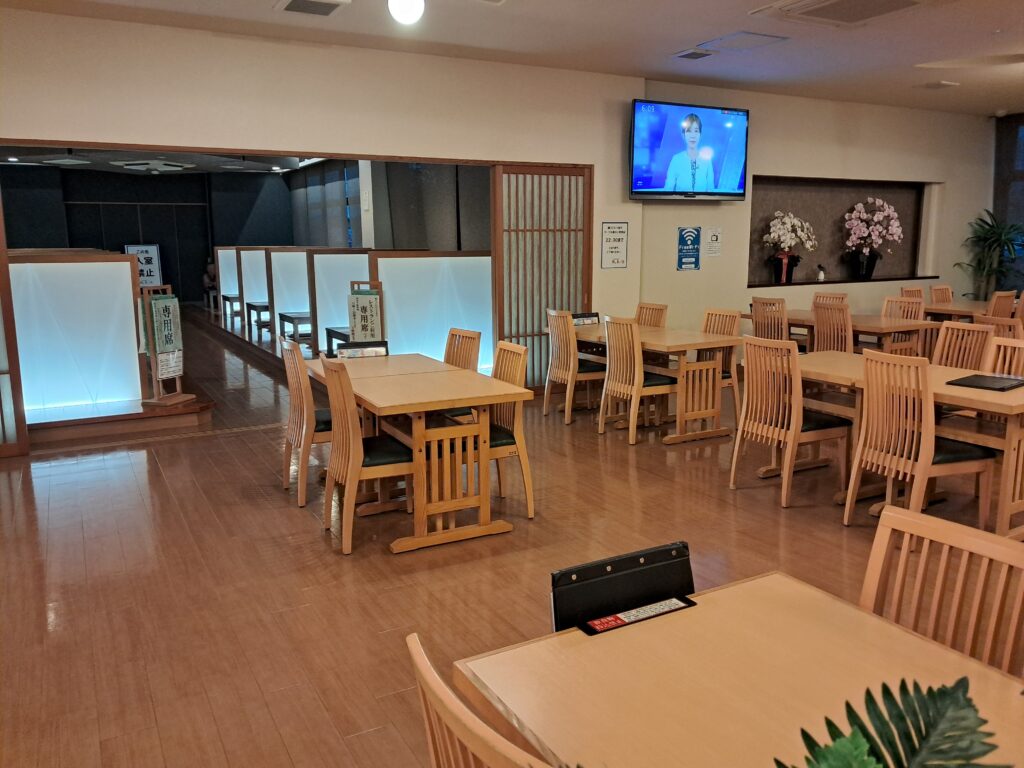
Unsurprisingly, the restaurant staff are just as apathetic and lifeless as the front desk.
There isn’t even background music playing. It is so eerily silent that you’ll wonder, “Wait, is this a wake?”
The atmosphere screams “run-down diner,” but the menu is packed with unique dishes that give it the vibe of a local izakaya.
The fact that prices are generally very low is a huge blessing for the wallet.▼
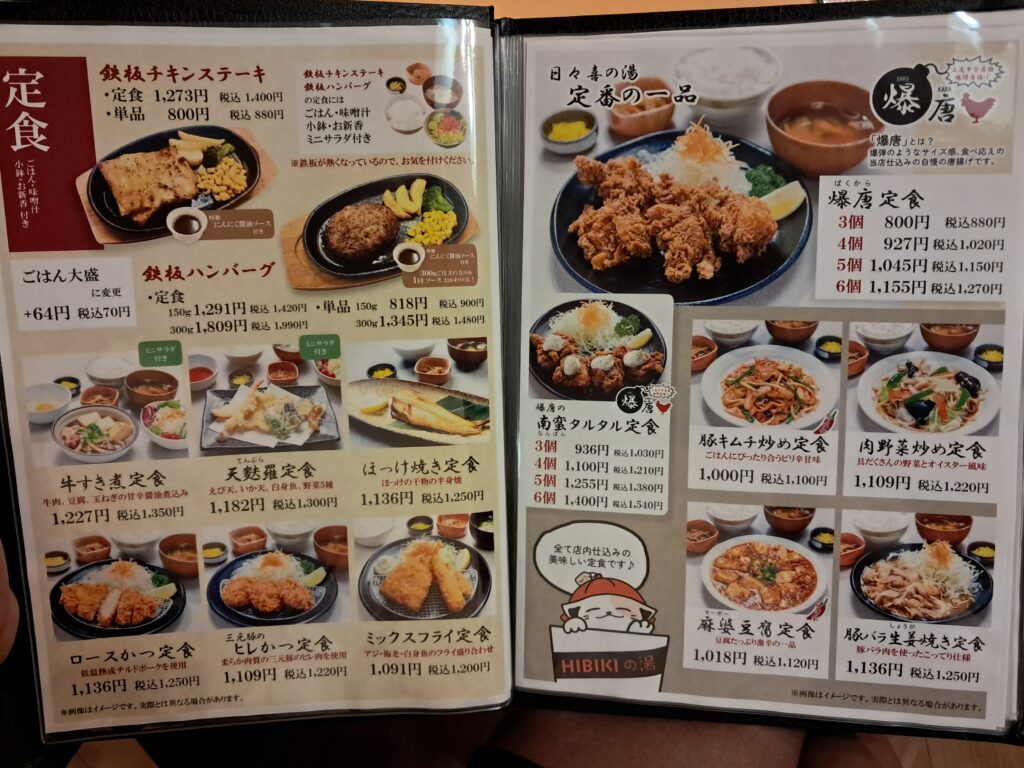
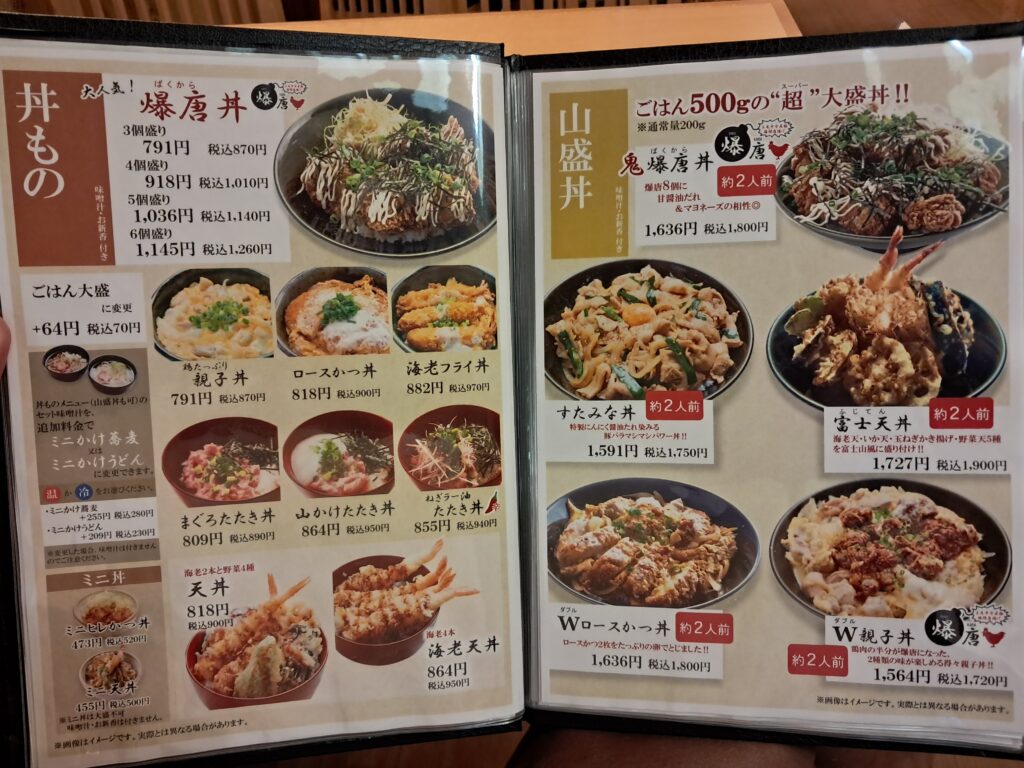
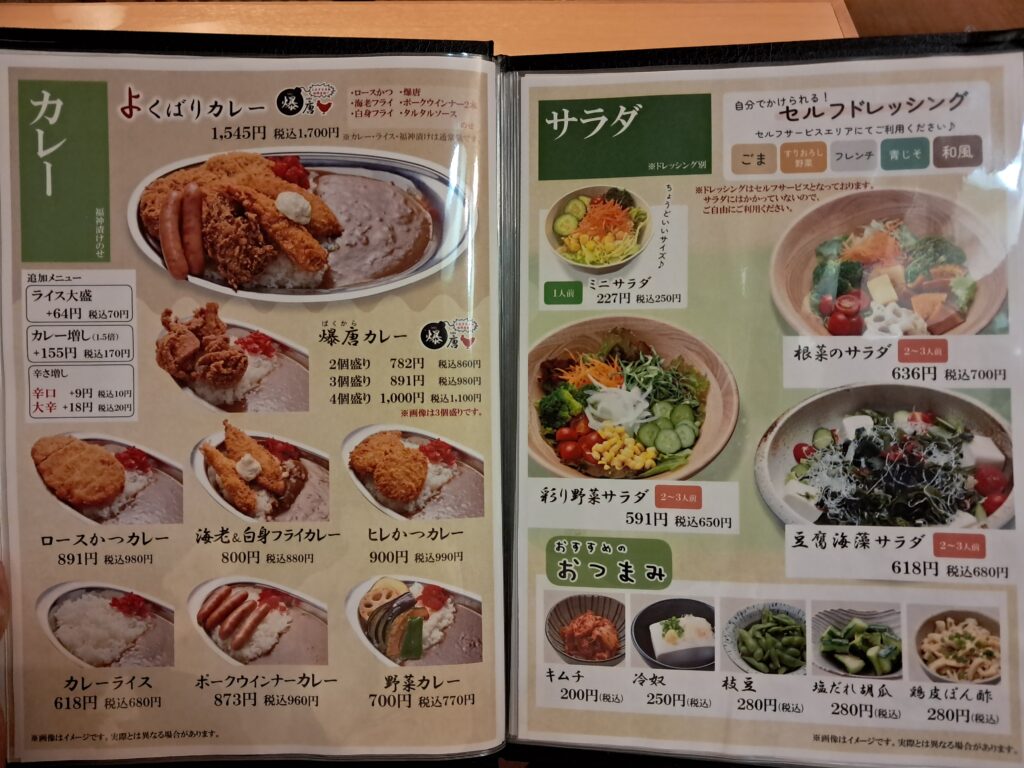
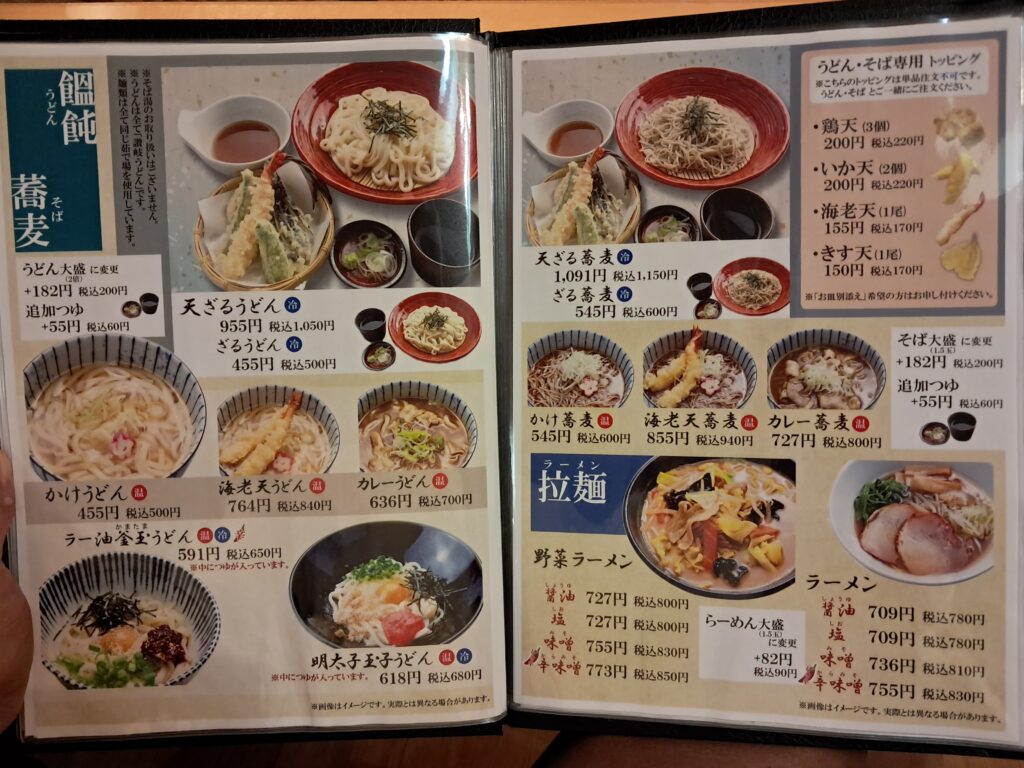
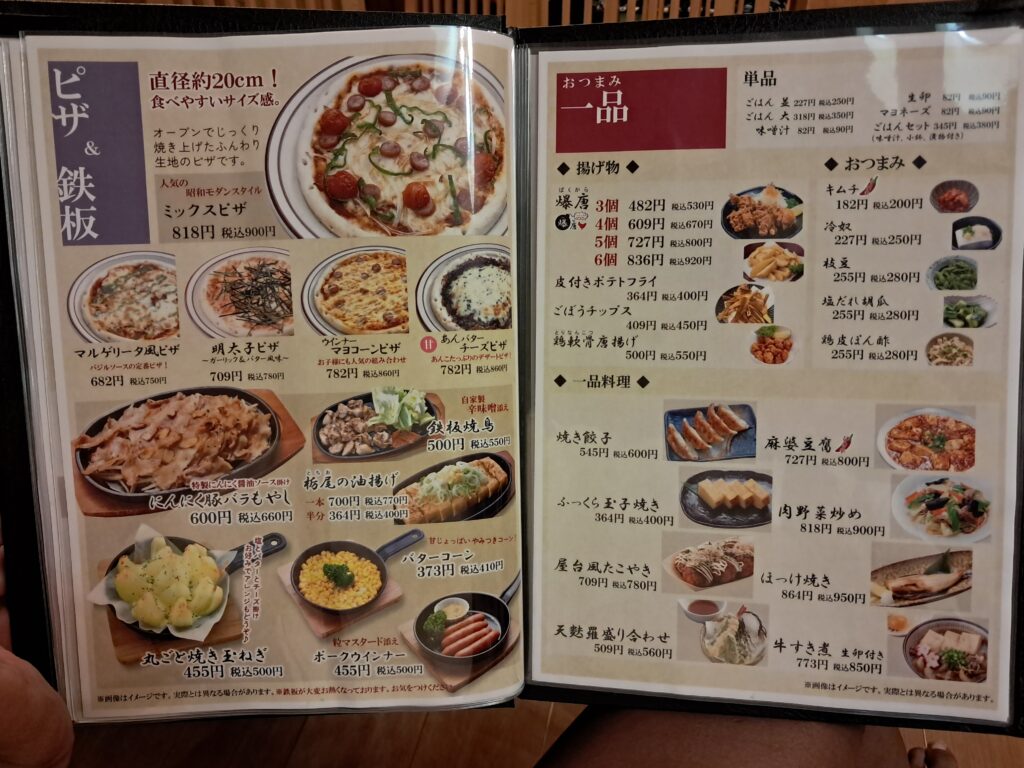
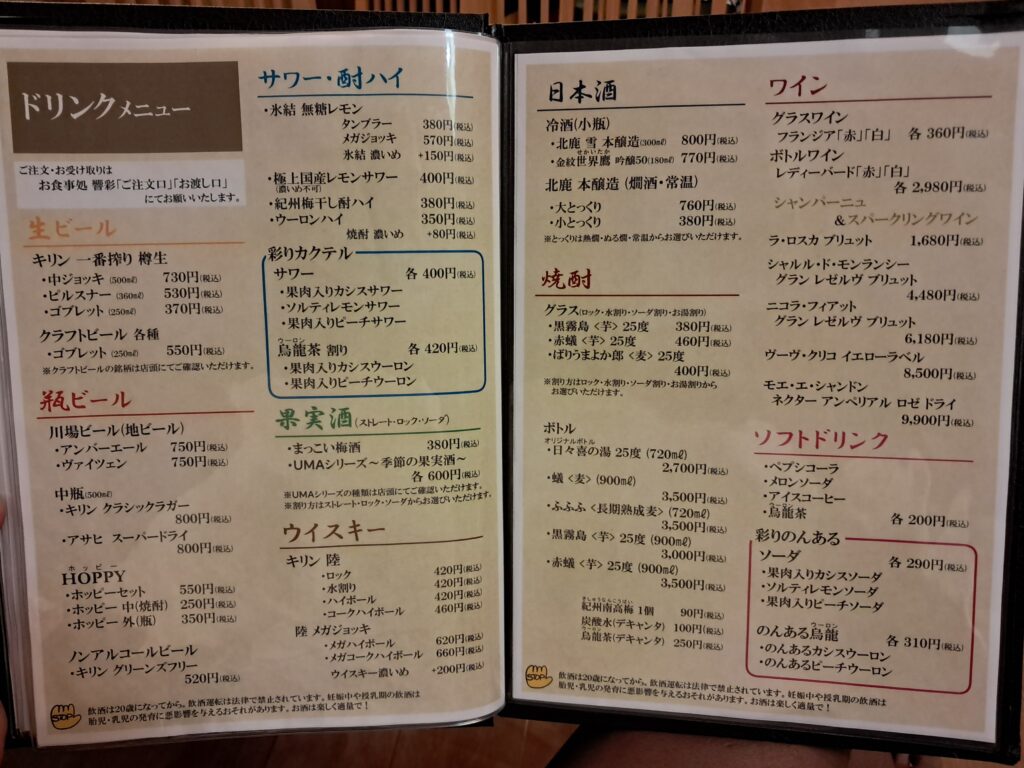
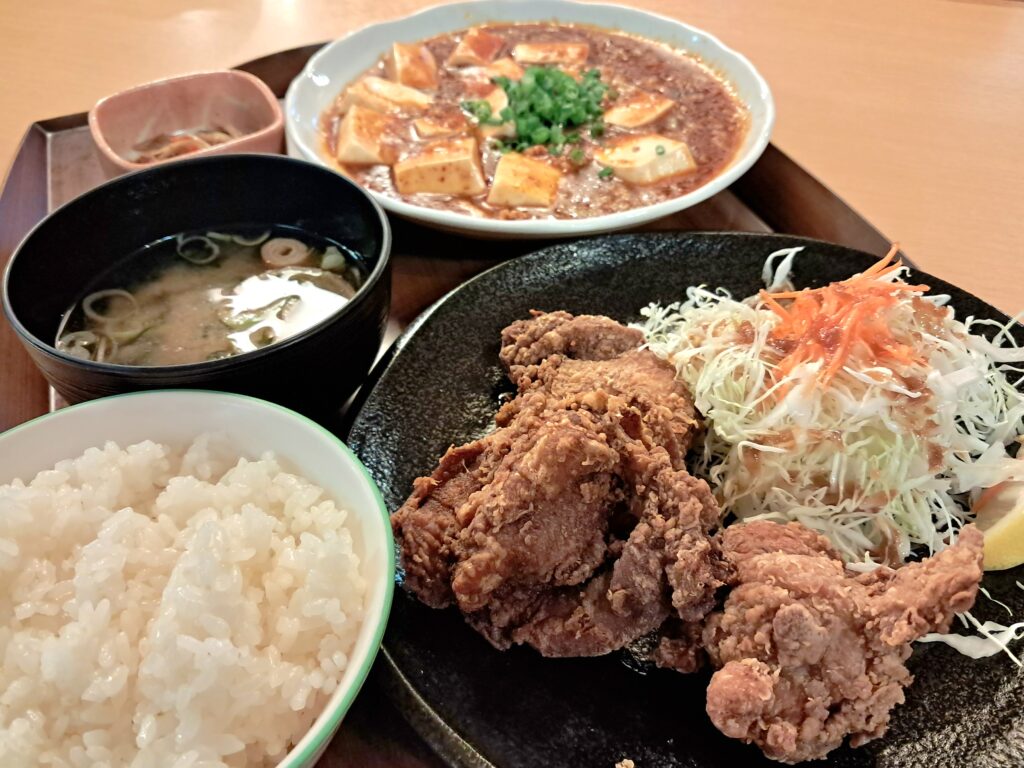
Their undisputed signature dish is slapped right onto page one of the menu: the Baku-Kara.
It probably stands for “Bakudan (Bomb) Karaage,” but you’ll understand why when you see it.▼
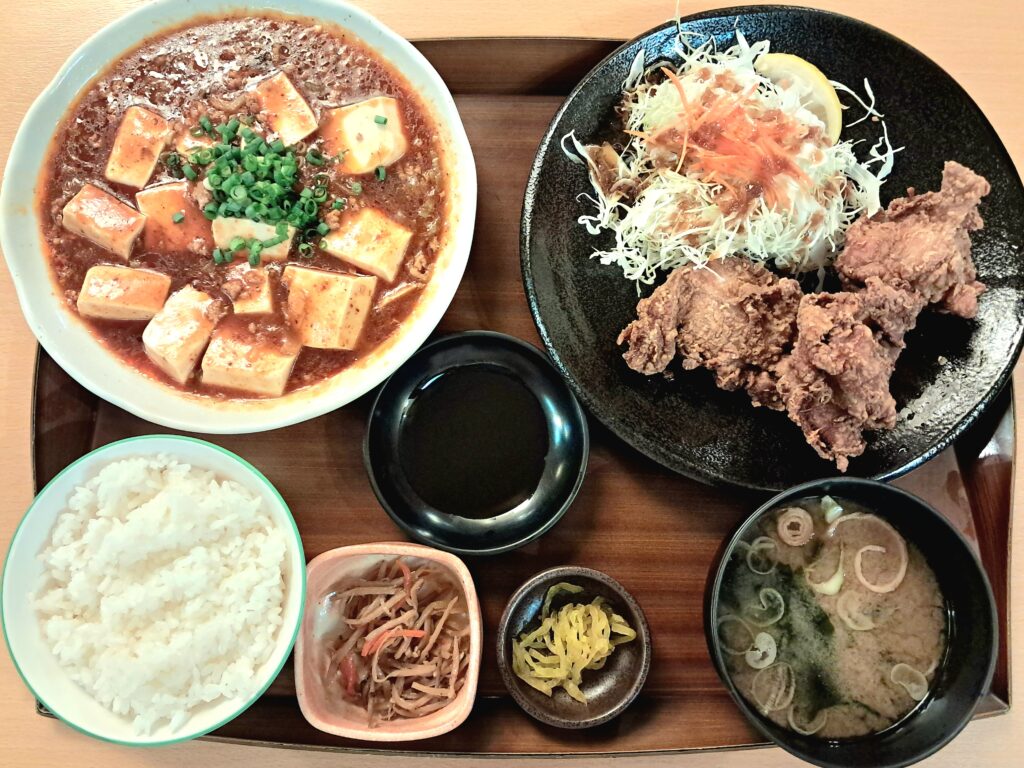
…I don’t know how well the picture conveys it, but the Baku-Kara is absurdly massive.
It easily exceeds the size of a child’s hand, leaving you paralyzed as you try to figure out how to even take a bite of this behemoth.
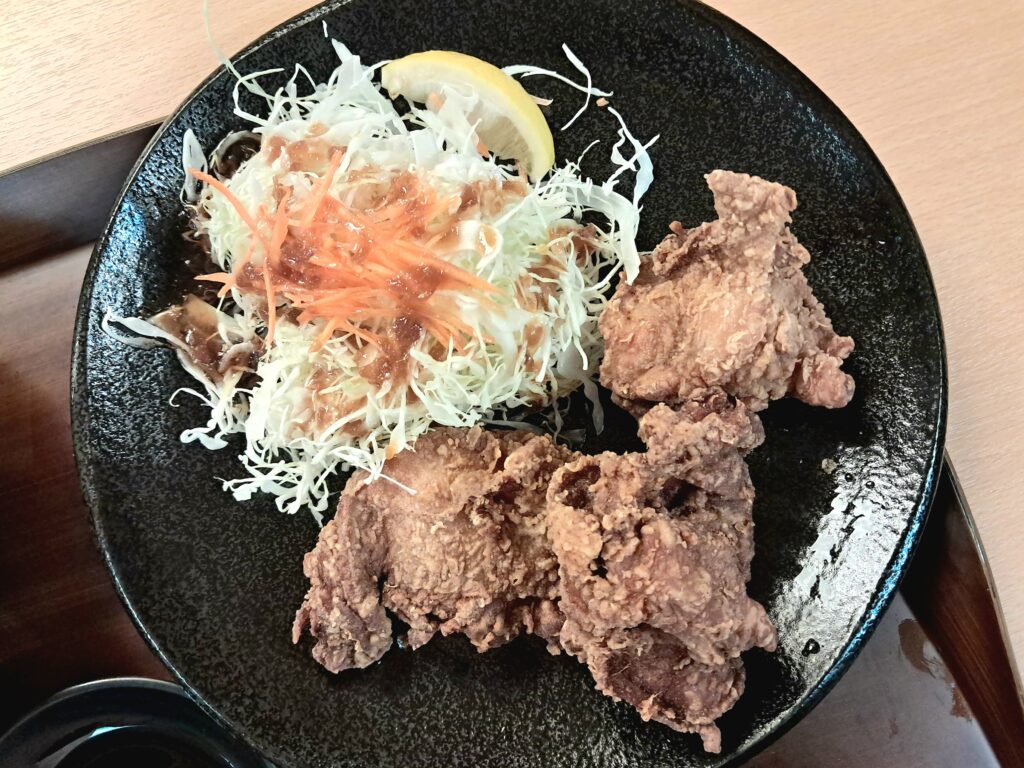
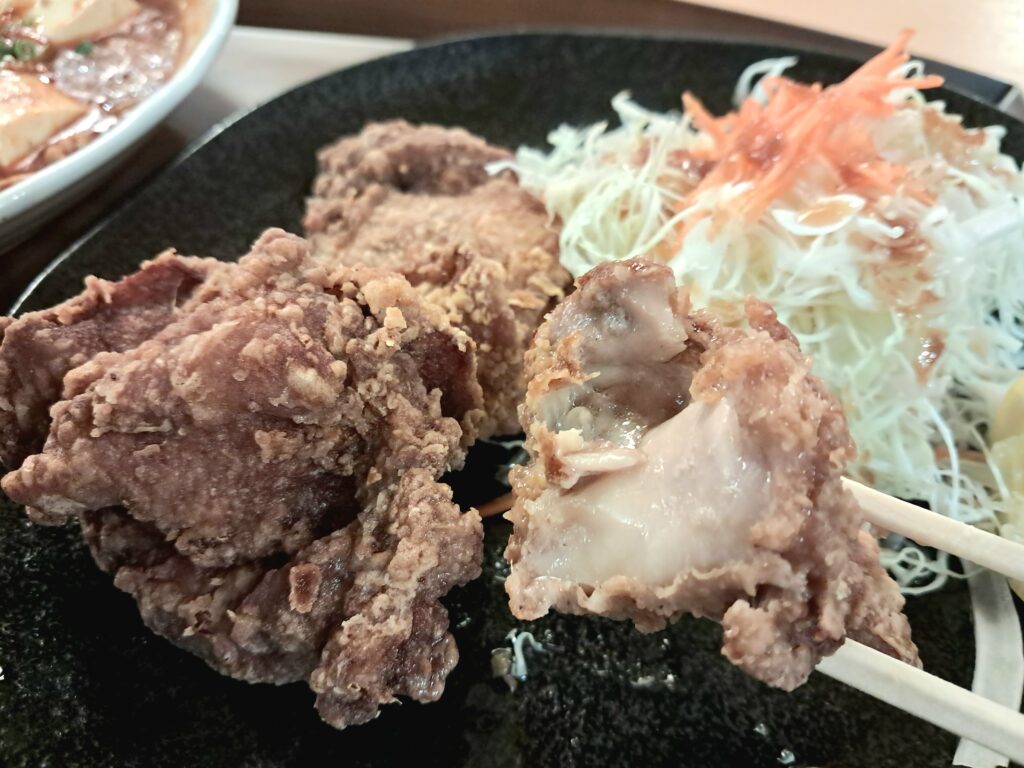
And it’s not just a gimmick based on size—the flavor is outstanding.
The texture is closer to Kentucky Fried Chicken than standard Japanese karaage. The breading is violently crunchy, while the inside yields a heavenly, soft texture.
It’s aggressively seasoned and highly addictive.
The best part is that you can order Baku-Kara by the piece.
Even a small order comes with a mini salad, giving you serious bang for your buck. It’s the perfect sidekick for a beer, or a great add-on when you just want a little something extra with your main dish.
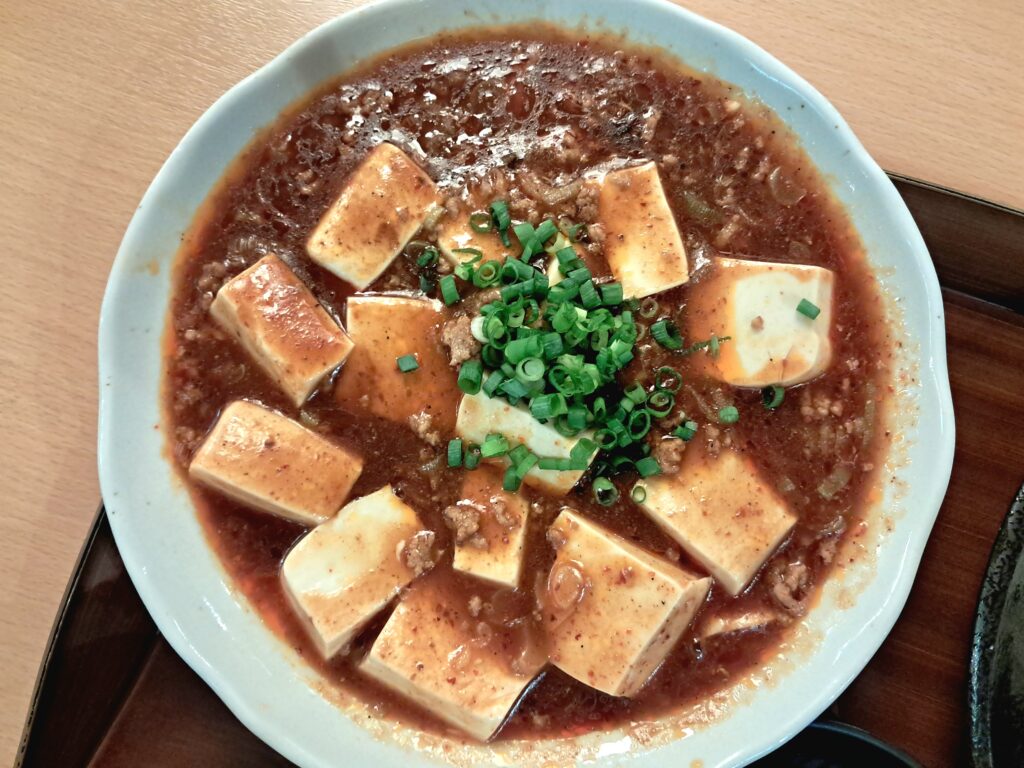
The Mapo Tofu I ordered on a whim was also authentically spicy.
It’s not just pure heat; the numbing kick of Sichuan peppercorns cuts through, making it incredibly delicious.
You can tell the Mapo Tofu is cooked properly in their kitchen, not just dumped from a pre-made bag.
The flavor is intense and demands to be eaten with rice, so you absolutely must order it as a set meal.
Long story short, Hibiki no Yu’s restaurant nails the holy trinity: delicious, cheap, and massive portions. For a hot spring dining facility, it is outrageously elite (honestly, it might hold the all-time record for cost-performance).
“I want to come back just to eat this again…” I honestly felt that level of quality.
Conclusion: Final Rating & Key Points
Alright, let’s give Hibiki no Yu its comprehensive score across all categories.
You can probably tell I had an amazing time, but how does that translate into cold, hard numbers…?
・Access: 2/10
・Uncrowdedness: 9/10
・Staff: 4/10
・Bath Openness: 7/10
・Cleanliness: 5/10
・Water Quality: 8/10
・Bath Variety: 7/10
・Sauna: 10/10
・Amenities/Supplies: 5/10
・System Convenience: 6/10
・Customer Manners: 7/10
・Atmosphere: 6/10
・Food: 9/10
・Rest Area: 5/10
・Cost Performance: 8/10
・Overall: 6.5/10
So, a passing grade of 6.5.
I feel like it genuinely deserves a higher score, but the abysmal access and the salty staff really dragged the final tally down.
To sum up the “Pros” and “Cons” from my visit:▼
・God-tier sauna setup (110℃ + 12℃ water bath).
・Incredibly empty, guaranteeing a comfortable stay.
・Abnormally high restaurant cost-performance; the food is amazing.
・Excellent spatial design in the open-air bath and great tub variety.
・The entire building is gloomily dim (I need some signs of life, please).
・Apathetic, salty customer service from the staff.
・In the middle of absolute nowhere.
・Blatant class disparity between paying bedrock bath users and free users.
・The infuriating 100-yen shoe locker and overly annoying payment system.
The old building and terrible access can’t be helped, but if they just put some effort into the software—like fixing the staff’s attitude—this place would improve dramatically. That’s my honest take.
That being said, the supreme quality of the sauna, the great spring water, the cheap admission, and the cost-performance of the food are absolutely real.
If you have a car, the access issues won’t bother you, and it is 100% worth a visit.
Even if you don’t, the fantastic time you’ll have here will easily make up for the agonizing trek to get there.
If You’re Sightseeing with Hibiki no Yu
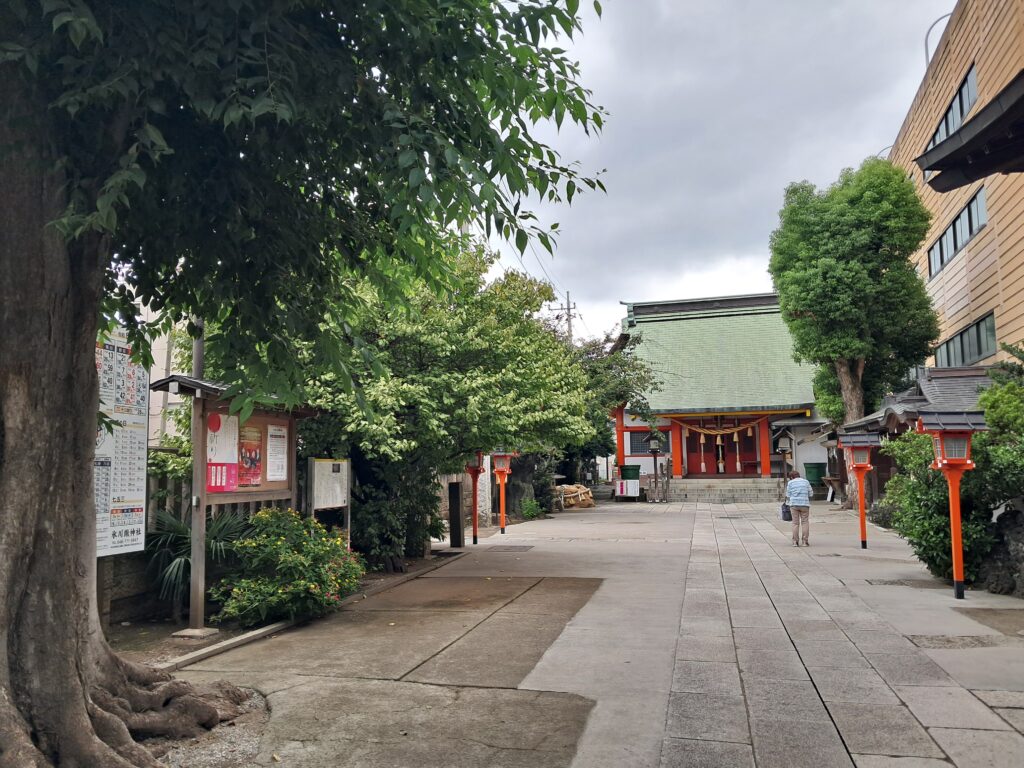
Ageo City, where Hibiki no Yu is located, is the town directly north of Saitama City.
While it severely lacks major sightseeing landmarks, if you broaden your perspective a bit, you’ll find a few charming spots scattered around.
The Two Faces of Ageo: Post-Town Center vs. Arakawa Riverside!
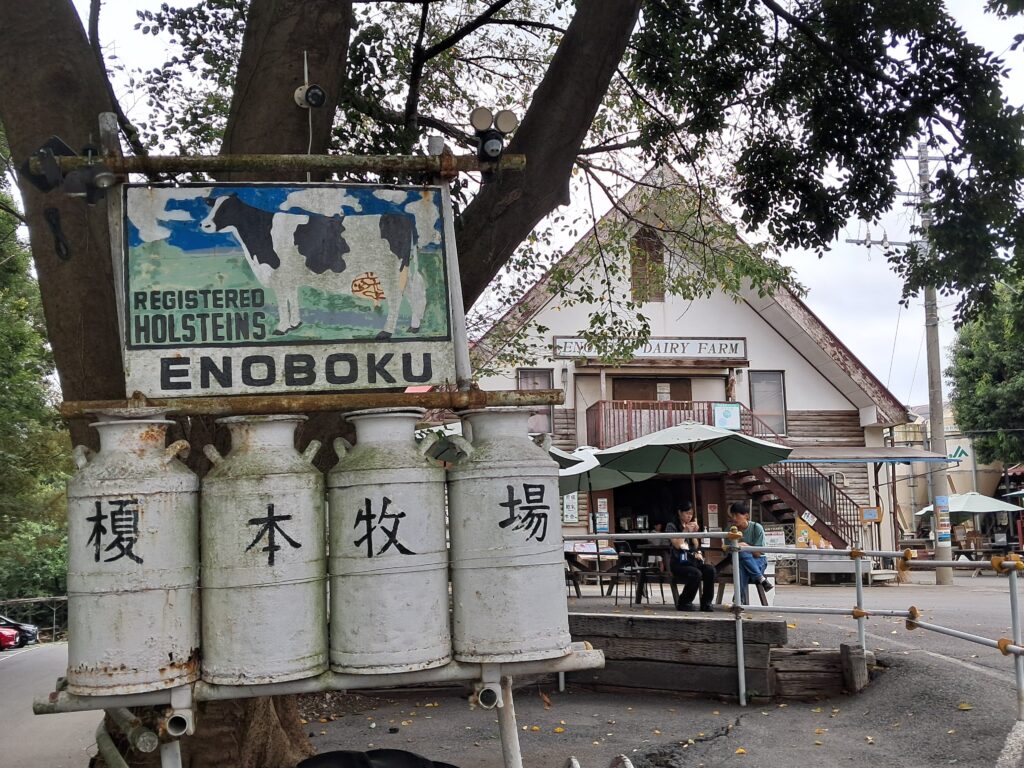
Ageo City has a history of prospering as a post town on the Nakasendo trail.
However, almost none of that historical charm remains in the current downtown area, limiting the sights there.
On the other hand, the Arakawa riverside area, separated from the center, exudes a unique and captivating presence.
With wild cycling roads and a dairy farm famous for its soft serve ice cream, you can uncover an entirely unknown side of Ageo here.
Saitama’s Biggest Metropolis: Omiya
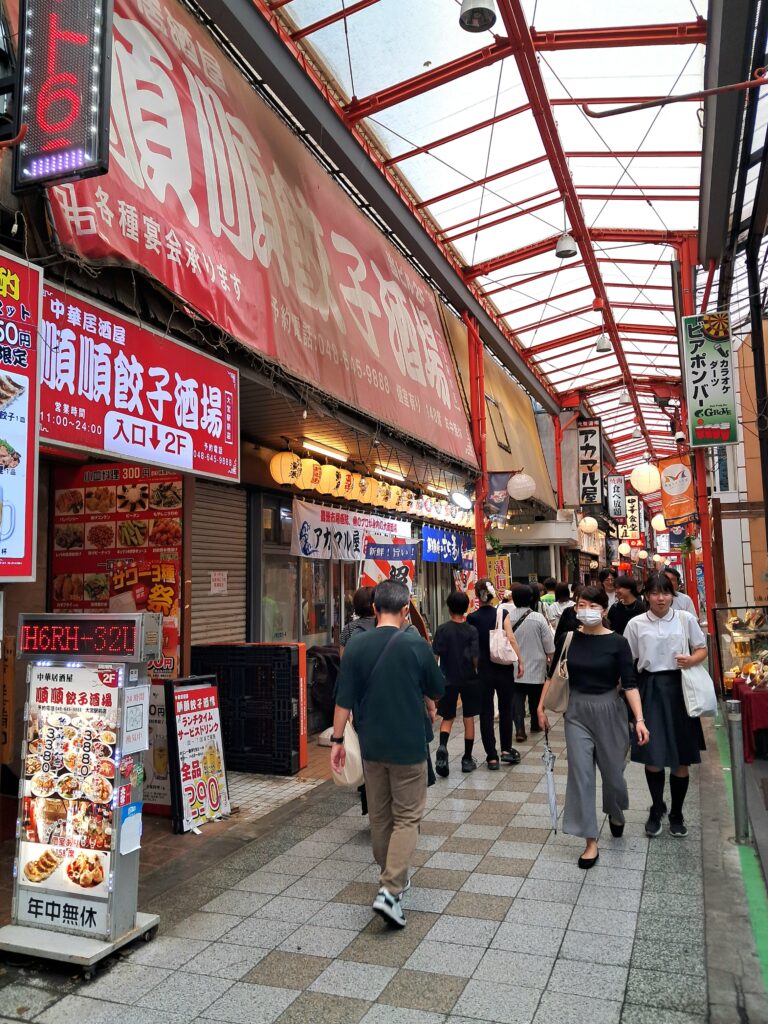
Representing not just Saitama City but the entire prefecture’s nightlife is Omiya.
Boasting a massive terminal station connecting Tokyo and serving as a bullet train hub for rural regions, the area in front of the station feels like it belongs in the heart of Tokyo.
Drawing crowds from all over Saitama, Omiya is heaven if your goal is food, shopping, or urban tourism.
Yet, with historic sites and nature-rich parks dotted around, it’s a wonderful city that shows you a different face no matter how many times you visit.
Comments